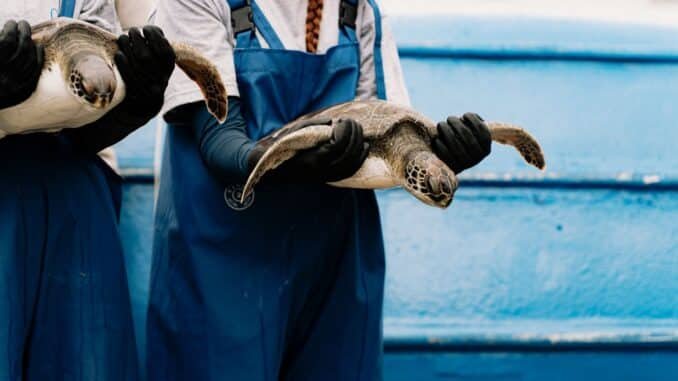
Volunteers in Indian Rocks Beach, Florida, rescued a group of sea turtles found trapped inside a storm drain near Clearwater, according to WSVN 7News. The rescue, reported on September 8, 2026, involved marine reptiles that had gotten stuck in the drainage system and needed to be pulled out by hand by people who happened upon the scene or were called in to help.
The incident points to a recurring hazard along Florida’s Gulf Coast, where storm drains and drainage infrastructure sit close to nesting beaches and can become traps for turtles moving between sand and surf.
What happened near Clearwater
The rescue took place in Indian Rocks Beach, a barrier island community just south of Clearwater on Florida’s central Gulf Coast, WSVN 7News reported. Volunteers found the turtles inside a storm drain and worked to free them, according to the outlet’s report.
WSVN 7News, which first reported the story, did not specify the exact number of turtles involved or the species affected in the material made available. What is confirmed is the basic sequence of events: turtles ended up trapped in a drainage structure, volunteers discovered them, and a rescue effort followed to remove the animals from the drain.
Why storm drains pose a hidden threat to sea turtles
Storm drains are built to move rainwater off streets and beach access roads, not to account for wildlife that might wander into their openings. In coastal towns like Indian Rocks Beach, these systems often run close to the shoreline, connecting roadways and parking areas directly to canals, retention ponds, or the Gulf itself.
For a sea turtle, especially a hatchling or juvenile disoriented by artificial light or unfamiliar terrain, a drain opening can look like a route back to water. Once inside, turtles face a structure built for water flow, not animal movement: narrow pipes, grates, and drop-offs that are difficult or impossible for a turtle to climb out of on its own.
How turtles end up trapped in drainage systems
Sea turtles typically end up in storm drains after leaving the beach in the wrong direction or getting swept into a drainage inlet during high water. Hatchlings emerging from nests at night can be drawn toward artificial lighting instead of the reflection of the moon on open water, sending them inland toward roads and drainage grates rather than the Gulf. Adult or juvenile turtles can also be pushed into drainage systems during storms or unusually high tides, when water levels temporarily connect open drains to areas turtles are moving through.
Once inside a drain, a turtle has few options. Pipes and channels are frequently too narrow to turn around in, and grates at the surface block the animal from climbing back out unassisted. That combination is what makes human intervention, of the kind volunteers carried out near Clearwater, often the only way a trapped turtle survives the encounter.
The volunteer response
The rescue in Indian Rocks Beach was carried out by volunteers, according to WSVN 7News, though the station’s report did not name a specific organization behind the effort. Florida’s Gulf Coast has an established network of turtle-monitoring volunteers and marine rescue groups who patrol nesting beaches and respond to strandings, and incidents like storm drain entrapments typically call for exactly this kind of rapid, hands-on response rather than a formal agency dispatch.
Details beyond the core facts, the location, the storm drain, and the successful rescue, were not included in the available reporting. What the WSVN 7News account makes clear is the outcome: turtles that would otherwise have remained trapped were freed by people on the scene.
Nesting season and Florida’s Gulf Coast risk factors
Florida’s Gulf Coast beaches, including those around Pinellas County where Indian Rocks Beach sits, serve as nesting grounds for sea turtles during the warmer months of the year. That nesting activity puts turtles, particularly hatchlings making their first trip from nest to water, in direct proximity to coastal roads, parking lots, and the drainage infrastructure built to service them.
The geography of a barrier island community adds to the risk. Narrow strips of land separate beach-facing streets from the Gulf on one side and intracoastal waterways on the other, so storm drains are rarely far from either a nesting beach or a turtle’s path toward open water. When drainage systems intersect with nesting habitat, incidents like the one near Clearwater become a predictable, if infrequent, consequence of coastal development sitting alongside an active nesting ground.
What to do if you spot a stranded turtle
Residents who come across a sea turtle in distress, whether trapped in a storm drain, stranded on a road, or disoriented on a beach, are generally advised not to attempt handling the animal without guidance from trained responders. Sea turtles are protected species, and improper handling can injure both the turtle and the person attempting to help.
The standard guidance across Florida’s coastal communities is to contact local wildlife authorities or a marine turtle rescue hotline as soon as a stranded or trapped turtle is spotted, and to keep the animal calm and undisturbed until trained volunteers or officials arrive. The Indian Rocks Beach case, as reported by WSVN 7News, shows how quickly that kind of response can matter: a turtle stuck in a storm drain has a narrow window before dehydration, injury, or drowning during high water becomes a serious risk.
Storm infrastructure and wildlife safety on Florida’s coast
The Indian Rocks Beach rescue is a small-scale version of a much larger tension playing out across Florida’s coastline: infrastructure designed decades ago, before modern wildlife protections and coastal development patterns, now sits directly in the path of nesting and migrating sea turtles. Storm drains, seawalls, and lighted roadways were not engineered with turtle behavior in mind, and as coastal towns continue to grow, the overlap between human infrastructure and turtle habitat isn’t going away.
For now, the response to incidents like the one near Clearwater falls largely on volunteers willing to notice a problem and act on it. That pattern, informal and reactive, worked in Indian Rocks Beach. Whether it keeps working as coastal development expands along Florida’s Gulf Coast will depend on infrastructure choices made well beyond the reach of any single rescue.
Be the first to comment