Congresswoman Luna flags 33 locally acquired dengue cases in Tampa Bay
Rep. Anna Paulina Luna (R-Fla.) is telling constituents to take mosquito-borne illness seriously as locally acquired dengue fever cases climb across the Tampa Bay region. “PSA: Florida Health officials are warning residents as locally acquired dengue cases rise across Tampa Bay,” Luna wrote on X, according to Floridian Press. “As of September 1, [2026], 33 locally acquired cases have been reported in the Tampa” area, she said in the post.
Luna’s message, posted to her social media account and reported by Floridian Press on September 8, 2026, puts a number on what state health officials have been monitoring for weeks: a cluster of dengue infections not tied to travel outside the country. That distinction, locally acquired versus travel-related, is the detail driving public health concern in the region.
What the Florida Health Department’s September 1 numbers show
The figure Luna cited, 33 locally acquired cases as of September 1, 2026, comes from Florida Health Department tracking of dengue activity in the Tampa area. Locally acquired cases are infections in people who had not recently traveled to a country where dengue is endemic, meaning the virus is circulating among mosquitoes within Florida itself.
Florida Health routinely publishes arbovirus surveillance data that separates travel-associated cases from locally acquired ones, and it’s that locally acquired count Luna referenced in her post. The 33-case tally is a snapshot as of the first of September. Case counts in active transmission periods can shift as the health department confirms additional lab results.
How dengue fever spreads and why locally acquired cases matter
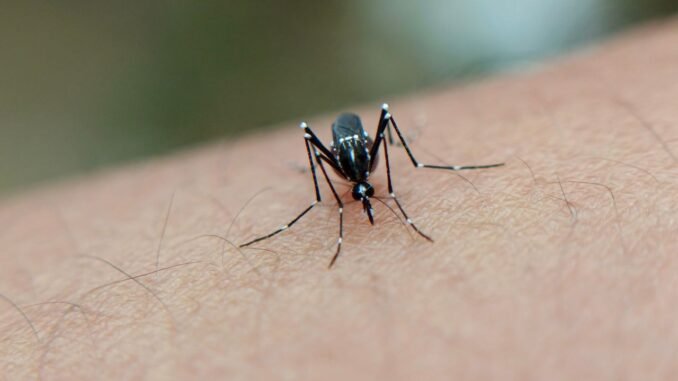
Dengue fever spreads through the bite of infected Aedes aegypti and Aedes albopictus mosquitoes, the same species responsible for transmitting Zika and chikungunya. A mosquito becomes infected after biting a person who already has the virus in their bloodstream, then passes it to the next person it bites. There is no person-to-person transmission through casual contact.
Symptoms typically include high fever, severe headache, pain behind the eyes, joint and muscle pain, rash, and mild bleeding such as nose or gum bleeds. Most infections resolve without complications, but a smaller share of cases progress to severe dengue, which can involve plasma leakage, organ impairment, and dangerously low platelet counts. Severe dengue requires hospitalization and can be fatal without prompt medical care.
Difference between locally acquired and travel-related infections
Travel-related cases involve someone who contracted dengue abroad, often in Latin America, the Caribbean, or Southeast Asia, and then returned to Florida while still carrying the virus. These cases don’t necessarily indicate active transmission within the state, since the infection happened elsewhere.
Locally acquired cases are different: a mosquito in Florida bit an infected person, picked up the virus, and then transmitted it to someone else within the state. Each locally acquired case signals that dengue is actively circulating in the local mosquito population, not just arriving with international travelers. That’s the epidemiological threshold that turns a handful of imported infections into a public health response, and it’s why Florida Health and Luna are drawing attention specifically to the Tampa Bay locally acquired count rather than statewide travel-related totals.
Tampa Bay’s mosquito activity and the region’s climate conditions
Tampa Bay’s subtropical climate is warm and humid and prone to standing water after seasonal rains, conditions that suit Aedes mosquito breeding. Late summer and early fall, when Luna’s warning was issued, coincide with peak mosquito activity in Florida, since consistent heat and rainfall shorten mosquito breeding cycles and expand standing-water habitat in yards, storm drains, and containers.
Aedes aegypti and Aedes albopictus are both established in Florida and are adapted to urban and suburban environments, breeding in small amounts of water such as flowerpots, gutters, and discarded containers rather than large bodies of water. That makes residential neighborhoods, not just wetlands or rural areas, a relevant setting for mosquito-borne disease transmission in a metro area like Tampa Bay.
Luna’s public health message and recommended precautions
Luna’s post framed her warning as a public service announcement aimed at getting ahead of further spread. Beyond citing the case count, her message pointed to the broader guidance Florida Health officials have issued as locally acquired cases rise across the region.
Standard mosquito-borne illness precautions recommended by public health authorities include eliminating standing water around homes, using EPA-registered insect repellent, wearing long sleeves and pants during peak mosquito hours, and making sure window and door screens are intact to keep mosquitoes out of living spaces. Residents in areas with confirmed locally acquired cases are typically urged to be especially vigilant about removing water-holding containers, since even small amounts of stagnant water can support mosquito breeding.
What Florida health officials are doing in response
Florida Health’s Tampa Bay-area offices are the agency tracking and reporting the 33 locally acquired cases Luna referenced, consistent with the department’s role in arbovirus surveillance statewide. When locally acquired dengue cases are confirmed, health departments typically coordinate with local mosquito control districts to increase surveillance and treatment in the areas where cases have been identified.
Mosquito control response in areas with confirmed local transmission generally includes larvicide and adulticide treatments targeted at the specific neighborhoods where cases are clustered, along with expanded mosquito trapping to monitor for the presence of the virus in local mosquito populations. Floridian Press’s report did not detail specific enforcement or treatment actions taken in response to the September 1 case count, but the pattern of surveillance and vector control response is standard practice when local transmission is confirmed.
Context: dengue’s recent trajectory in Florida and what residents should watch for
Florida has dealt with periodic locally acquired dengue activity in recent years, with case counts fluctuating by season and by region depending on mosquito populations, rainfall, and the presence of infected travelers entering local transmission cycles. The 33 cases reported in Tampa Bay as of September 1, 2026, are the latest data point in that pattern. Luna’s decision to publicize the number points to the concern that locally acquired transmission, rather than isolated travel-related cases, poses in a densely populated metro region.
Residents in Tampa Bay and across Florida should watch for official updates from the Florida Department of Health as the mosquito season continues, since case counts can rise through the fall months when conditions remain favorable for Aedes mosquito activity. Anyone experiencing dengue symptoms, particularly high fever combined with severe headache or joint pain after potential mosquito exposure in an affected area, should seek medical evaluation rather than assume a routine illness. With Luna’s warning now amplifying the state’s own data, the practical takeaway for Tampa Bay residents is straightforward: treat standing water removal and repellent use as immediate, not optional, steps while local transmission remains active.
Be the first to comment