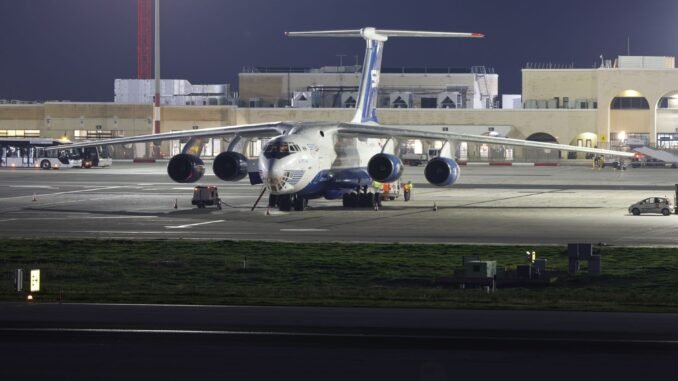
An Amazon-branded cargo plane crash-landed near Miami International Airport, and an aviation expert believes pilot error was the likely cause, according to WSVN 7News, which first reported the story on September 8, 2026. The outlet’s headline, “Expert believes pilot error likely cause of Amazon cargo plane crash near MIA,” frames the incident around that early assessment rather than a confirmed finding. No official cause has been determined, and any conclusion about pilot error remains an expert opinion pending a formal investigation.
What happened at Miami International Airport
WSVN 7News reported that the aircraft came down near MIA, prompting a response from airport personnel. The station’s initial coverage didn’t detail the exact flight path, the point at which the aircraft lost stability, or the extent of damage to the plane. What is confirmed is that the event happened close enough to MIA to draw immediate attention from airport staff and become the subject of expert commentary on-air.
The source material available at publication time is limited to WSVN’s report and doesn’t include a full incident narrative. This article won’t speculate on details like injuries, fatalities, or the precise sequence of events beyond what the station has confirmed. More facts are expected to surface as WSVN and other Miami-area outlets continue covering the story.
Who was flying the plane
The aircraft was operating in connection with Amazon’s cargo network. Amazon doesn’t fly its branded cargo jets itself in most cases; it typically contracts the flying to third-party cargo carriers under its Amazon Air program, which has grown since it launched. WSVN 7News’s report didn’t specify which operating carrier was flying the aircraft at the time, nor did it identify the aircraft type or tail number.
Given those limits, this piece doesn’t name a specific contracted carrier or aircraft model for this flight. Readers should watch for follow-up reporting from WSVN 7News and any statements from Amazon or the operating carrier for those confirmed details.
Flight details and timeline
WSVN 7News’s initial report doesn’t lay out a minute-by-minute timeline of the flight, including departure origin, scheduled destination, or the specific phase of flight (takeoff, approach, or landing) during which the crash occurred. Without a confirmed sequence, no specific timeline is assigned here. Aviation incidents involving cargo aircraft near major airports typically draw scrutiny of the approach and landing phase first, since that’s when crews make time-sensitive decisions, but WSVN hasn’t confirmed that this crash fits that pattern.
The expert’s assessment of pilot error
WSVN 7News’s report centers on an aviation expert’s assessment that pilot error is the likely explanation for the crash landing. The station’s summary states that “an aviation expert weighed in on what he believes went wrong during the crash landing of an Amazon cargo plane at Miami International Airport.” That’s an opinion offered for broadcast, not a determination from the National Transportation Safety Board (NTSB) or the Federal Aviation Administration (FAA), both of which would need to complete their own review before any official cause is assigned.
Outside experts commenting on aviation incidents right after they happen, before investigators have retrieved flight data, work from whatever video, radio communications, and general knowledge of similar accidents are publicly available. Their assessments carry weight because of professional experience, but they aren’t a substitute for the formal investigative process.
What “pilot error” means here
In aviation investigations, “pilot error” is a broad category. It can cover misjudging altitude or airspeed during approach, a delayed or incorrect response to a mechanical warning, miscommunication between crew members, or a failure to follow standard operating procedures during a critical phase of flight. It’s distinct from mechanical failure, air traffic control mistakes, or weather-related causes, though investigators often find that more than one factor contributes to a single accident.
WSVN 7News’s report doesn’t specify which particular error the expert believes occurred, whether it involved approach speed, landing configuration, or something else. Until the NTSB or FAA releases findings, naming the specific type of pilot error involved would go beyond what has been confirmed.
Immediate aftermath at MIA
Personnel at Miami International Airport responded to the scene after the crash landing, according to WSVN 7News. The station’s summary references “members” involved in the response, though the full detail of who responded, whether airport fire rescue, airline personnel, or federal officials, was cut off in the material available for this article. What’s clear is that the incident required an on-site response consistent with how airports handle aircraft emergencies near active runways and taxiways.
Impact on airport operations
WSVN 7News’s initial report doesn’t say whether the crash landing caused runway closures, flight delays, or diversions at MIA, one of the busiest airports in the United States and a major hub for passenger and cargo traffic alike. Incidents near active runways commonly prompt at least a temporary halt to nearby operations while emergency crews clear the area and assess the aircraft, but that outcome isn’t confirmed here absent direct reporting on it.
What investigators will look at next
Standard aviation accident investigations focus on a defined set of evidence: the aircraft’s flight data recorder and cockpit voice recorder (commonly known as the “black boxes”), maintenance and inspection records, weather conditions at the time of the incident, and communications between the flight crew and air traffic control. Investigators typically also interview surviving crew members, review the aircraft’s mechanical history, and examine the wreckage for signs of structural or system failure before drawing conclusions.
None of that evidence has been made public in connection with this crash landing, based on the reporting available. Any theory about pilot error, mechanical failure, or another cause will need to be weighed against that evidence before a final determination is reached.
The role of federal aviation authorities
The NTSB is the federal agency responsible for investigating civil aviation accidents in the United States and determining probable cause, while the FAA oversees aviation safety regulation and certification. In cargo aircraft incidents, both agencies typically get involved: the NTSB leads the investigation into what happened, and the FAA reviews whether existing regulations, crew training standards, or maintenance protocols played a role. These investigations often take months, and preliminary reports, when issued, are typically followed much later by a final report with a formal probable-cause finding.
Until the NTSB opens and completes an investigation into this crash landing, the assessment reported by WSVN 7News remains an expert’s opinion rather than a government-confirmed cause.
Context: cargo plane safety and MIA
Cargo aircraft operate under the same FAA safety regulations as passenger airlines, even though they carry freight rather than paying passengers, and incidents involving cargo jets draw the same level of federal scrutiny as those involving commercial airliners. Miami International Airport is a major cargo gateway connecting the United States to Latin America and the Caribbean, and it handles a high volume of freight traffic alongside its passenger operations. WSVN 7News’s report doesn’t detail MIA’s broader accident history, and this article draws no conclusions about the airport’s overall safety record beyond noting that federal investigators will treat this crash landing as an isolated case pending their findings.
Readers following this story should watch for the NTSB’s preliminary report, expected in the weeks after the agency opens its investigation, which will offer the first government-vetted account of what caused the aircraft to go down near MIA.
Be the first to comment