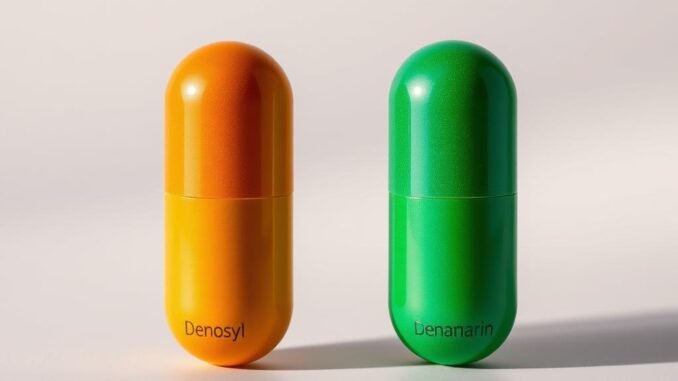
More than 10% of adult dogs show signs of liver stress on routine bloodwork. Yet, most owners don’t notice early changes. This makes a clear Denosyl vs Denamarin comparison vital for anyone considering a pet health supplement for liver health.
Both products come from Nutramax Laboratories Veterinary Sciences, a trusted leader in veterinarian-recommended care. Each uses SAMe to aid detoxification and boost glutathione. This helps shield liver cells from medications and toxins. The main difference is that Denosyl delivers pure SAMe, while Denamarin pairs SAMe with silybin, a concentrated milk thistle extract.
This supplement comparison helps decide which is better for a dog or cat based on their needs. Pets needing straightforward SAMe support may do well with Denosyl. Those who benefit from extra antioxidant activity may fit Denamarin. Tablets are enteric coated, given on an empty stomach, and should not be split or crushed—details that can affect outcomes.
Readers will find clear guidance ahead on formulation differences, how SAMe supports brain aging in dogs, and why blister-packed tablets protect quality. With careful veterinary input and a balanced comparison, owners can choose the right path for liver health for pets.
Overview of Pet Liver Health Supplements for Dogs and Cats
Dogs and cats rely on their liver for detox, nutrient processing, and bile flow. Many supplements aim to protect this work and keep liver enzymes healthy. Owners look for vet-recommended products with clear benefits and solid science.
Denosyl and Denamarin from Nutramax Laboratories are well-known. They target liver health in different ways, making them useful for daily care and for when pets need extra help.
Why liver support matters for pet health
The liver filters out toxins and waste. Stress can harm cells and slow down bile flow. Supplements can help pets stay resilient and comfortable, which is important for older pets or those with liver issues.
They can also help with appetite and energy. With vet advice, owners can pick the right supplement for their pet’s needs.
Role of antioxidants and detoxification in liver function
Antioxidants protect liver cells from damage. Glutathione is key, but pets with liver problems often have low levels. SAMe helps make more glutathione and supports bile flow.
Milk thistle extracts, like silybin, add more antioxidant power. Together, these ingredients can show clear benefits in pets.
Veterinarian-recommended options for liver health
Denosyl gives pure SAMe for liver support. Denamarin adds silybin for extra protection. Both are easy to digest and best taken on an empty stomach.
Here’s a quick comparison to help talk about liver health with your vet. It shows how these supplements differ and where they might match your vet’s advice.
| Product | Core Actives | Primary Aim | Notable Features | Typical Use Case |
|---|---|---|---|---|
| Denosyl | SAMe | Glutathione support and membrane stability | Enteric-coated; multiple strengths for cats and dogs | When streamlined SAMe therapy is veterinarian recommended |
| Denamarin | SAMe + silybin (milk thistle) | Added antioxidant activity alongside SAMe | Enteric-coated; combines two well-studied actives | When extra antioxidant coverage may offer benefits |
| Clinical Focus | Detoxification and bile flow | Oxidative stress defense | Consistency and proper timing of doses | Ongoing monitoring to refine comparison and outcomes |
Key Ingredients Explained: SAMe and Milk Thistle
Pet owners often hear about SAMe and milk thistle when a vet talks about liver support. These two ingredients work in different ways but share antioxidant benefits. Knowing how they work helps in choosing the right supplements for pets.
What SAMe does: transmethylation, transsulfuration, aminopropylation
SAMe fuels three key pathways in the liver. It helps cell membranes stay flexible and supports bile flow. It also feeds the body’s glutathione, the liver’s main antioxidant.
SAMe also supports tissue comfort and joint health. This is why many vets see it as a key supplement. It boosts liver health and overall vitality.
Glutathione support and antioxidant protection for liver cells
Glutathione is the liver’s main defender. SAMe helps raise glutathione levels. This neutralizes harmful compounds and keeps liver cells healthy.
For pets with high oxidative demands, SAMe helps maintain balance. Owners often see better appetite and energy. This shows stronger antioxidant defenses.
Silybin/milk thistle basics and how it complements SAMe
Milk thistle, rich in silybin, adds plant-based antioxidants. It works well with SAMe to support cell membranes and balance inflammation. In products like Nutramax Denamarin, silybin boosts SAMe’s glutathione support.
When pets need extra antioxidant protection, vets often recommend this duo. The combination offers strong benefits for long-term liver health in dogs and cats.
Denosyl vs Denamarin
Pet owners often compare Denosyl and Denamarin when a vet suggests liver support. Both are vet-recommended and use enteric-coated SAMe. The goal is to find the best fit for each pet, not just one solution.
Core formulation differences: pure SAMe versus SAMe plus silybin
Denosyl has pure SAMe and focuses on glutathione and brain health. Denamarin adds silybin, a milk thistle extract, for extra liver protection. These differences help in choosing the right supplement for dogs and cats with different needs.
When a vet might suggest one over the other
Vets might pick Denosyl for basic SAMe support, like boosting glutathione or helping with brain aging in dogs. They might choose Denamarin for extra antioxidant protection, depending on the pet’s health and lab results. The decision often depends on the pet’s specific needs, not just a general preference.
Supplement comparison for liver health in pets
| Feature | Denosyl | Denamarin | Practical Takeaway |
|---|---|---|---|
| Primary Actives | SAMe only | SAMe + silybin | Choose based on need for extra antioxidant activity |
| Focus Areas | Glutathione and cognitive support | Antioxidant synergy and hepatocyte defense | Different paths to similar liver goals |
| Formulation Tech | Enteric-coated for SAMe stability | Enteric-coated SAMe plus silybin complex | Both protect SAMe from stomach acid |
| Use Case Triggers | Mild enzyme changes, aging brain support | Oxidative stress or need for added protection | Lab values and history drive choice |
| Veterinary Preference | Veterinarian recommended for pure SAMe plans | Veterinarian recommended when broader coverage is desired | Consultation refines which is better for the pet |
This comparison makes it clear how Denosyl and Denamarin differ. It helps owners talk to their vet about the best choice for their pet. Even small differences are important, and a vet’s advice ensures the right fit for each pet’s needs.
Benefits of Denosyl for Pets
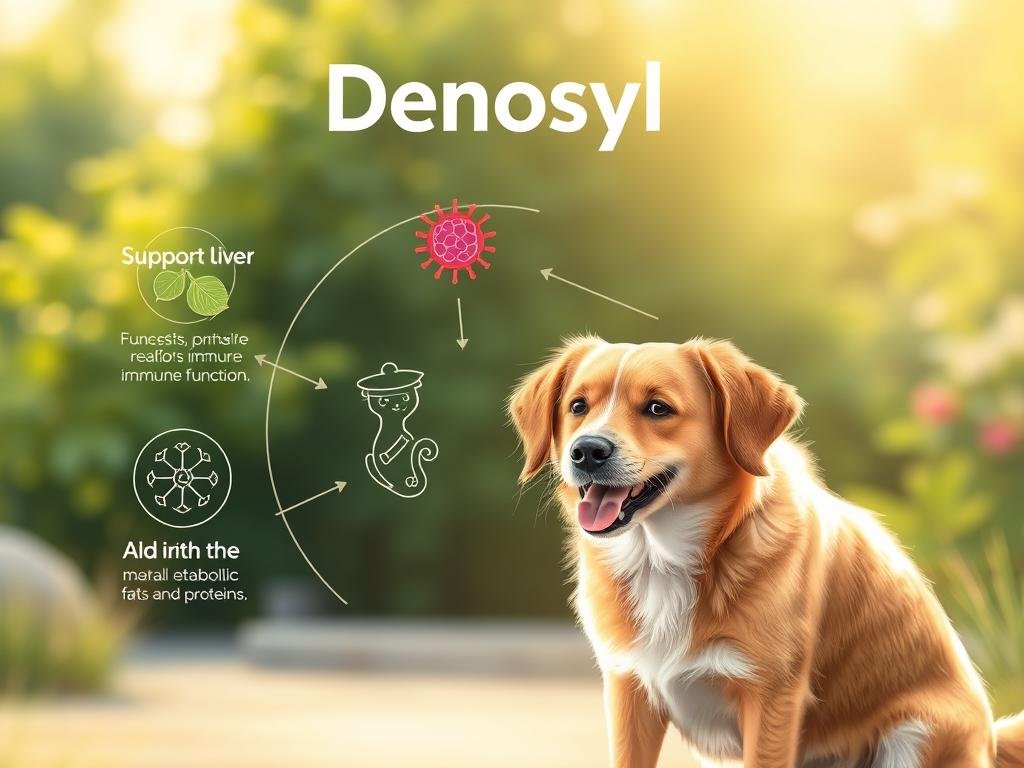
Denosyl gives pets S-adenosylmethionine (SAMe) to help their liver and brain. Pet owners often compare denosyl and denamarin to find the best daily supplement. Knowing how SAMe works helps us see how denosyl benefits pets in real life.
Liver detoxification support via glutathione production
Denosyl provides SAMe, which boosts glutathione in the liver. Glutathione is the liver’s main antioxidant. It helps remove toxins from the body, protecting liver cells.
Cats with hepatic lipidosis can benefit from this support. Dogs also stay healthy in their livers, even under stress or long-term treatments.
Brain and cognitive support in aging dogs
SAMe supports the brain, helping dogs stay mentally sharp. Regular use can improve mood and sleep in senior dogs.
This brain support is a key benefit of denosyl, helping dogs with age-related issues.
Enteric-coated tablets for bioavailability
Denosyl’s tablets are coated to protect SAMe in the small intestine. This design ensures better absorption and keeps SAMe potent.
The coating means tablets should be given whole. This makes it easier to compare denosyl and denamarin based on consistent dosing.
Veterinarian recommended by a leading supplement company
Nutramax Laboratories Veterinary Sciences supports Denosyl with research and protection against air and moisture. It’s a top choice for veterinarians in the U.S.
Denosyl comes in various strengths for different pet sizes. This ensures accurate dosing and long-term liver health for pets.
| Feature | Why It Matters | Real-World Takeaway |
|---|---|---|
| SAMe-driven glutathione support | Enhances detox pathways and shields liver cells | Helps pets facing toxins, medications, or fatty liver stress |
| Neuroprotective benefits | Supports cognition and mood in seniors | Aids dogs with age-related decline after steady use |
| Enteric-coated delivery | Improves SAMe stability and uptake | More consistent outcomes and easier comparison of denosyl vs. denosamarin effectiveness |
| Veterinarian recommended brand | Nutramax Laboratories pedigree and quality controls | Trusted choice for sustained liver health for pets |
| Blister-pack protection | Shields tablets from air and moisture | Preserves potency from first dose to last |
Benefits of Denamarin for Complete Liver Support
Denamarin combines SAMe with silybin from milk thistle for full liver care. It boosts glutathione and adds more antioxidants. This mix often answers the question of which supplement is better for complex needs.
SAMe plus silybin synergy for added antioxidant activity
SAMe helps with methylation and boosts glutathione, a key liver protector. Silybin adds targeted antioxidant effects on liver cells. Together, they make liver cells more resilient and protect them better than SAMe alone.
Use cases where extra antioxidant protection may help
Pets with ongoing enzyme issues, bile duct problems, or age-related oxidative stress may need extra help. The SAMe–silybin duo can help stabilize lab results and comfort pets. It’s best given on an empty stomach for better absorption.
Positioning as a best liver support supplement for pets
Denamarin shines in a comparison of pet supplements for its all-around support. It offers both glutathione support and milk thistle’s protective benefits. This makes it a great choice for dogs and cats needing strong, ongoing antioxidant care.
Effectiveness and Real-World Use
Pet owners want to know if denosyl or denamarin works better. This section explores what makes a difference in everyday care. The journey from tablet to small intestine is as important as the formula itself.
Denosyl vs. Denamarin effectiveness in liver support
Both products aim to get SAMe absorbed in the right place. Denosyl has SAMe alone, while Denamarin adds silybin. Vets look at how pets act and enzyme levels to decide which is better.
They also consider what owners say and lab results. This helps them make a fair comparison. In some cases, the combo in Denamarin is preferred for extra antioxidant support. Denosyl is a good choice for pets needing just SAMe.
How absorption and enteric coating influence outcomes
Enteric-coated tablets protect SAMe from stomach acid. They release it in the small intestine. This helps pets absorb SAMe better.
Keeping SAMe in a blister pack helps it stay potent. Giving the tablet on an empty stomach is best. This way, food doesn’t get in the way. Better absorption can lead to more energy and appetite in pets.
In older dogs, pets may seem more alert after 4–6 weeks. This shows the supplement is working well.
Considerations for long-term use and monitoring
Using these supplements long-term is common with a vet’s watch. They check liver enzymes, weight, and behavior. They adjust the dose as needed.
This keeps the supplement plan effective. Regular checks ensure the plan is right for the pet. If things get better, they might tweak the plan. But they always keep an eye on the pet’s liver health.
Safety, Side Effects, and Cautions
Pet owners want to know how safe a health supplement is. Many products have benefits, but it’s important to know about use, storage, and drug interactions. For the best results with SAMe, follow your vet’s advice and keep the dosage simple and consistent.
Common tolerability and occasional digestive upset
SAMe is usually safe for dogs and cats. Some pets might get a little sick, like vomiting or soft stool, after taking it. These issues are usually short-lived and don’t stop the supplement from helping the liver.
If your pet won’t eat after taking SAMe or keeps having stomach problems, watch them closely. Call your vet for advice. Also, if your pet acts strangely or seems tired, get them checked out right away.
Serotonin syndrome theoretical risk with certain drugs
There’s a chance of serotonin syndrome if SAMe is mixed with certain drugs. This includes tramadol, selegiline, and some antidepressants. Tick collars with amitraz also need caution.
Even though this risk is low, it’s best to talk to your vet about all medications. They can help avoid any problems. For more information, see this veterinary guidance on SAMe.
Why dosing guidance must come from a veterinarian
Getting the right dose is key, based on your pet’s weight, health, and other medicines. Don’t split tablets, as it can make them less effective. A vet can help balance safety and benefits, even with other treatments.
Always tell your vet about all supplements and medicines your pet takes. This helps avoid any bad interactions and keeps your pet’s care plan up to date.
Empty-stomach administration and proper storage
SAMe works best when taken on an empty stomach. Give it at least an hour before or two hours after eating. This helps keep the benefits steady over time.
Keep the tablets in their original packaging to protect them from air and moisture. Discard any broken ones. Store them where children and other pets can’t get to them. Also, avoid using SAMe in pregnant or breeding animals unless a vet says it’s okay.
| Topic | Key Details | Practical Tip | Why It Matters |
|---|---|---|---|
| Tolerability | Occasional vomiting, diarrhea, or reduced appetite may occur | Monitor mild signs; contact the clinic if they persist | Supports safety while preserving possible benefits |
| Drug Interactions | Theoretical serotonin syndrome with tramadol, selegiline, fluoxetine, clomipramine, amitriptyline, or amitraz | Review all meds and supplements before starting SAMe | Clarifies differences among therapies and prevents overlap |
| Dosing | Weight and condition guide dose; tablet size is not a dose | Follow veterinarian recommended instructions; do not split enteric tablets | Ensures reliable absorption and consistent outcomes |
| Administration | Best given on an empty stomach for improved uptake | Schedule 1 hour before or 2 hours after meals | Enhances the benefits of the pet health supplement |
| Storage | Blister packs protect from air and moisture; discard broken tablets | Keep sealed until use; store safely away from children and pets | Maintains product integrity and overall safety |
Dosing, Administration, and Product Quality
Getting SAMe right is all about care. A licensed vet sets the right dose based on the pet’s history. The shape or color of the tablet doesn’t determine the dose. Instead, the pet’s weight, liver health, and other meds are key.
Why tablet size is not a dose indicator
Different strengths can look the same, and bigger tablets don’t always mean more SAMe. That’s why a vet’s advice is essential. Owners should not compare supplements by looks alone. What matters is the label and the milligrams per tablet.
Enteric coating, blister packs, and moisture protection
SAMe is sensitive to acid, so enteric coating helps it reach the small intestine. Denosyl and Denamarin use coated tablets and sealed packs to protect against air and moisture. If a pack is damaged or a tablet is soft, throw it away and open a new pack.
Do not split or crush SAMe tablets
Splitting, crushing, or chewing SAMe tablets breaks the enteric barrier and lowers absorption. Pets should take SAMe on an empty stomach with water. This ensures the supplement works well, following vet advice from Nutramax Laboratories.
Supplement versus drug: quality control implications
In the U.S., SAMe is seen as a nutritional supplement, not a drug. This means it’s tested differently than prescription meds. Choosing a reputable brand is critical. Denosyl and Denamarin have strict production and batch testing, ensuring reliable dosing and quality.
Buying Considerations and Reviews
Pet owners look at different options and read reviews when picking supplements. Nutramax Laboratories Veterinary Sciences makes it easy to choose. They list strengths and formats, helping buyers pick the best for their pets with a vet’s advice.
Buy Denosyl online: sizes, strengths, and formats
Those buying denosyl online will find 90 mg tablets for small pets. They come in 30, 90, and 180-count packs. The tablets are enteric-coated and blister-packed to keep potency and support absorption.
Before buying, shoppers check storage tips and shipping policies. Many retailers highlight Nutramax as the maker. They also provide weight-based dosing charts for vet use. For more details, see this source on Denosyl for dogs and cats. Always confirm the dose with a vet.
Comparison review Denosyl and Denamarin from pet owners
In comparing denosyl and denamarin, buyers look at SAMe versus SAMe plus silybin. They check reviews for appetite, energy, and tolerance. They also consider the pet’s size and diet.
Some see quick results, while others notice changes over weeks. Because results vary, owners rely on vet check-ins and lab work. This helps them decide which is better for ongoing care.
Choosing veterinarian-recommended pet supplements
Vet-recommended supplements ensure quality control for SAMe products. Buyers look for clear lot dating, intact packaging, and return policies. They also compare prices to find the best value.
Before buying denosyl online, many pet parents check weight-based dosing and storage directions. With careful review of options, they choose the best for their pets.
Conclusion
In the Denosyl vs Denamarin debate, both support liver health in pets. They do this by providing SAMe to boost glutathione and protect liver cells. Denosyl offers pure SAMe, which also helps with brain function in older dogs.
Denamarin, on the other hand, combines SAMe with silybin from milk thistle. This gives a wider range of antioxidant benefits. These differences help pet owners and vets choose the best option for their pet’s needs.
How you give the tablets is important. They are enteric-coated and should be given on an empty stomach. They must be kept in a dry place. Most pets can take them well, but some might have mild stomach upset.
It’s also important to remember that SAMe can interact with some drugs in rare cases. This is why it’s best to get a vet’s advice for safety and the right dosage.
Quality matters in supplements, so choosing a trusted brand like Nutramax Laboratories is key. The size of the tablet doesn’t tell you the dose. The right dose depends on your pet’s weight and health goals.
For simple SAMe support, Denosyl is a good choice. For pets needing extra antioxidant protection, Denamarin is better. With a vet’s guidance, either option can help keep your pet’s liver healthy and active every day.
FAQ
Denosyl vs. Denamarin: what’s the difference?
Denosyl has pure S-Adenosylmethionine (SAMe) for liver and brain health. Denamarin adds silybin, a milk thistle extract, for more antioxidant benefits. Both are vet-approved, come in enteric-coated tablets, and support liver health in dogs and cats.
Why does liver support matter for pet health?
The liver cleanses pets from toxins and medications. It also helps with metabolism. Extra support keeps liver cells safe, which is key for pets with liver issues or toxin exposure.
How do antioxidants and detoxification protect the liver?
Antioxidants like glutathione fight oxidative damage in liver cells. SAMe boosts glutathione levels. Silybin from milk thistle offers more antioxidant protection, reducing cell stress.
Which veterinarian-recommended liver supplements should pet owners know?
Denosyl (pure SAMe) and Denamarin (SAMe plus silybin) from Nutramax Laboratories Veterinary Sciences are top choices. They have research-backed formulas and quality control.
What does SAMe do in the body?
SAMe supports cell membranes and bile flow. It also boosts glutathione production and aids in anti-inflammatory functions.
How does SAMe increase glutathione and protect liver cells?
SAMe turns into glutathione, the liver’s main antioxidant. This helps protect liver cells from toxins and oxidative stress, common in liver disease.
What is silybin (milk thistle), and how does it complement SAMe?
Silybin is the most active part of milk thistle. It adds plant-based antioxidant and liver-protective effects to SAMe, making Denamarin a strong option.
What are the core formulation differences between Denosyl and Denamarin?
Denosyl is pure SAMe. Denamarin combines SAMe with silybin for extra antioxidant benefits. Both use enteric-coated tablets to protect SAMe and improve absorption.
When might a veterinarian suggest Denosyl instead of Denamarin?
Vets might choose Denosyl for pure SAMe benefits, like boosting glutathione or supporting brain health in older dogs, without extra botanicals.
When might Denamarin be preferred?
Denamarin is often suggested for pets needing extra antioxidant protection, like those with ongoing liver enzyme elevations or chronic liver stress.
How do these supplements compare for liver health in pets?
Both support liver detoxification and cell protection with SAMe. Denamarin adds silybin for more antioxidant benefits. The choice depends on the pet’s condition and vet advice.
What are the benefits of Denosyl for pets?
Denosyl boosts glutathione for detoxification and supports liver cells. It may also help brain health in senior dogs. It’s formulated with enteric coating and blister packs for potency.
Can Denosyl help with brain and cognitive support in older dogs?
Yes. SAMe has neuroprotective effects and may improve alertness and cognitive function in aging dogs with consistent use under vet supervision.
Why is enteric coating important for SAMe tablets?
Enteric coating protects SAMe from stomach acid, releasing it in the small intestine for better absorption and effectiveness.
Is Denosyl veterinarian recommended?
Yes. Denosyl is from Nutramax Laboratories Veterinary Sciences, the #1 vet-recommended supplement company, and is used for liver and cognitive support.
What are the benefits of Denamarin for liver support?
Denamarin combines SAMe’s glutathione-boosting action with silybin’s antioxidant effects, providing strong liver support for pets needing more than SAMe alone.
In which cases might extra antioxidant protection help?
Chronic liver conditions, ongoing oxidative stress, or high liver enzymes may prompt vets to add silybin via Denamarin for extra protection.
Is Denamarin a best liver support supplement for pets?
It’s a top choice for all-around support, when a vet wants SAMe plus milk thistle synergy. But, individual needs vary, so a vet’s guidance is key.
How effective are Denosyl and Denamarin for liver support?
Effectiveness depends on delivering intact SAMe to the small intestine. Both products are designed for this, and vets assess outcomes by clinical signs and liver enzyme trends.
How do absorption and enteric coating influence results?
Proper absorption requires enteric-coated tablets given on an empty stomach. This ensures SAMe delivery, helping both products achieve their intended effects.
Are these supplements safe for long-term use?
Generally yes, with vet oversight. Regular check-ups allow for dose adjustments based on weight, lab values, and response over time.
What side effects can occur with SAMe products?
Most pets tolerate them well. But, occasional vomiting, diarrhea, or decreased appetite can happen. Giving on an empty stomach as directed helps absorption.
What is the serotonin syndrome concern with SAMe?
There’s a theoretical risk when SAMe is combined with drugs that raise serotonin, like certain antidepressants. Always consult a vet before combining therapies.
Why must dosing guidance come from a veterinarian?
SAMe dosing is individualized, and tablet size is not a dosing indicator. A vet considers weight, diagnosis, and medications to set the correct regimen.
How should these supplements be given and stored?
Administer on an empty stomach—about 1 hour before or 2 hours after food. Keep tablets in original blister packs to protect from moisture. Discard broken tablets.
Is tablet size an indicator of the correct dose?
No. Tablet size does not equal the right dose. Only a vet can determine the appropriate strength and schedule for your pet.
Why do enteric coating and blister packs matter?
SAMe is moisture- and acid-sensitive. Enteric coating helps absorption, and blister packs protect potency by limiting air and humidity exposure.
Can SAMe tablets be split or crushed?
No. Splitting or crushing damages the enteric coating, reducing absorption and effectiveness. Use intact tablets as directed by your vet.
How does supplement status affect quality control?
SAMe is regulated as a nutritional supplement, so quality varies. Name-brand veterinary products like Denosyl and Denamarin are preferred for standardized production and reliability.
Where can pet owners buy Denosyl online, and what sizes are available?
Denosyl is sold by reputable pet pharmacies and retailers. For small dogs and cats, 90 mg tablets are common, with 30-, 90-, and 180-count packs. Always follow vet guidance.
What do pet owner reviews say about Denosyl and Denamarin?
Many report improved appetite, energy, or lab trends, with high satisfaction ratings. Results vary by condition and adherence to dosing and administration guidelines.
How should pet owners choose veterinarian-recommended supplements?
Work with a vet, prioritize trusted brands, confirm proper strengths for your pet’s weight, and check storage and return policies. Consider whether pure SAMe or SAMe plus silybin best fits your pet’s needs.
Be the first to comment