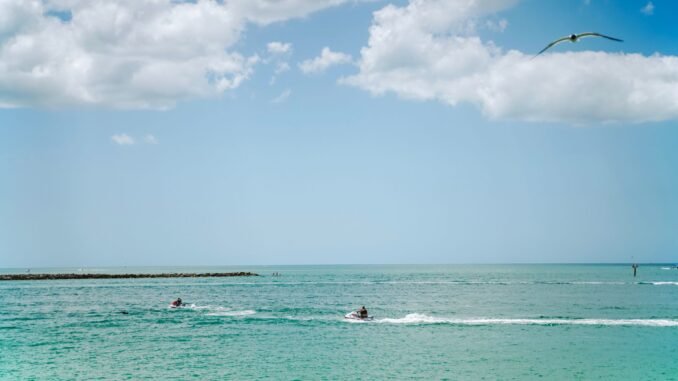
A man was fighting for his life Saturday evening after he was reportedly struck by lightning while jet skiing at Fort De Soto Park, according to the Pinellas County Sheriff’s Office, as reported by WFLA. The strike happened during an evening outing on the water at the Pinellas County park, a peninsula known for its beaches and boat traffic at the mouth of Tampa Bay.
What happened Saturday evening at Fort De Soto
The man was riding a jet ski at Fort De Soto Park on Saturday evening when he was reportedly struck by lightning, according to WFLA’s report citing the Pinellas County Sheriff’s Office. Details about the exact time and location within the park’s waterways haven’t been released. Fort De Soto sits on a cluster of islands at the entrance to Tampa Bay, an area used by boaters, anglers and jet ski riders throughout the summer, when Florida’s afternoon and evening thunderstorms are most frequent.
The victim’s condition and ongoing medical response
The man was left fighting for his life following the strike, according to the report. No further details on his identity, age or medical status have been made public. Lightning strike victims can suffer cardiac arrest, severe burns and neurological damage, and survival often depends on how quickly bystanders or first responders begin treatment. Authorities haven’t disclosed the extent of his injuries or his current condition.
How the Pinellas County Sheriff’s Office responded
The Pinellas County Sheriff’s Office confirmed the incident to WFLA, identifying it as a lightning strike involving a jet ski rider at Fort De Soto Park. Deputies are the only source of information on the case so far, and the agency hasn’t released additional statements beyond confirming the strike occurred and that the man was in life-threatening condition.
Timeline of the 911 call and rescue
Specific details of the 911 call, response time and rescue operation haven’t been released publicly. WFLA’s report, published August 30, 2026, doesn’t include a minute-by-minute account of how the man was found or transported for treatment. Any additional timeline details would need to come from a follow-up release by the Sheriff’s Office or Pinellas County emergency medical services.
Fort De Soto Park’s exposure to lightning risk
Fort De Soto Park’s open water and exposed beaches leave boaters and jet ski riders with few places to take shelter once a storm builds. The park is a set of five interconnected islands with long stretches of open Gulf and bay water, so anyone on a personal watercraft can end up far from shore when lightning develops. Storms in this part of Florida often form quickly during summer afternoons and evenings, giving water users a narrow window to reach land safely.
Florida’s status as the lightning capital of the US
Florida is widely recognized as the lightning capital of the United States. The state’s frequent summer thunderstorms come from heat and humidity colliding with sea breezes off both the Gulf of Mexico and the Atlantic. The Tampa Bay area, where Fort De Soto is located, sits within a corridor of the state that regularly sees high lightning strike density during the warmer months. That risk is a recurring public safety message for beachgoers, boaters and water sports participants across the region.
Lightning safety guidance for jet skiers and water sports users
Water offers no protection from lightning and conducts electricity efficiently, which makes jet skiers, boaters and swimmers among the most exposed people during a thunderstorm. Standard safety guidance calls for getting off the water and away from open areas as soon as thunder is heard or lightning is seen, rather than waiting for a storm to arrive overhead. Personal watercraft riders are especially vulnerable because they sit low on the water with no enclosed cabin or grounding structure, and because engine noise can make it harder to hear approaching thunder.
Warning signs boaters and swimmers often ignore
Darkening skies, a sudden drop in temperature and increasing wind are common signs of an approaching thunderstorm that boaters and swimmers sometimes dismiss, especially when they’re already out on the water and reluctant to cut a trip short. Distant thunder is frequently underestimated too, even though it can mean a storm is close enough to pose a strike risk. Safety officials generally recommend leaving the water at the first sign of thunder rather than waiting to see how the storm develops, since lightning can strike miles ahead of the visible storm cell.
What comes next in the investigation
The Pinellas County Sheriff’s Office hasn’t said whether further investigation is planned beyond confirming the circumstances of the strike, since lightning incidents are typically classified as weather-related accidents rather than criminal matters. Updates on the man’s condition and any additional details are expected to come from the Sheriff’s Office or local hospital officials as the case develops. Anyone on the water at Fort De Soto or similar exposed locations during Florida’s storm season should treat distant thunder as a signal to head to shore immediately, not a reason to wait it out.
Be the first to comment