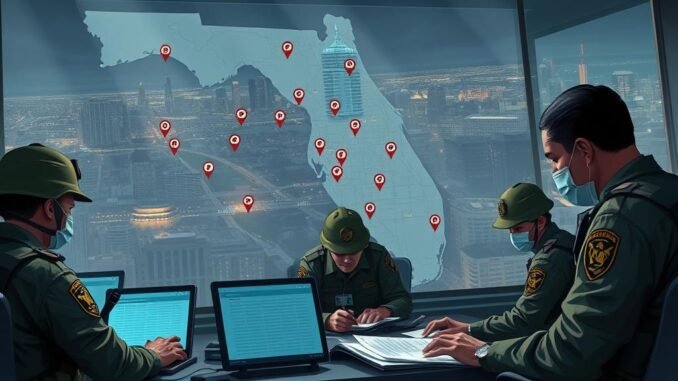
In just two weeks, authorities found 122 children across Central Florida. They were between 23 months and 17 years old. This number beat the previous “Operation Dragon Eye” total of 60. It was a big surprise to the seasoned agents who track the missing every day.
Florida Attorney General James Uthmeier announced a new push called Operation Home for the Holidays. The U.S. Marshals and the FBI led it, with help from state and local partners. They focused on Jacksonville, Orlando, and Tampa to find missing children at risk.
United States Marshal Bill Berger said the US Marshals were proud to lead. Teams worked quickly as tips came in. Six felony arrests were made, with more expected for crimes like sexual battery on a child and custodial interference.
Many of the missing children needed urgent care after being found. Medical support, trauma counseling, and safe places were provided right away. This Roundup post explores how the U.S. Marshals worked together to find 120-plus young people. It also looks at what’s next for the families and communities in Jacksonville, Orlando, and Tampa.
Operation Home for the Holidays: A multi-agency child recovery success
Teams worked fast and carefully across Central Florida and beyond. Operation Home for the Holidays brought together federal and local efforts. It helped find children in danger, giving hope to families looking for “missing kids near me”.
Partners relied on real-time intelligence, rapid decisions, and steady follow-up to guide each safe recovery.
Scope and timing of the operation
For two weeks, teams searched in many Florida cities and nine other states. They focused on quick results, moving fast from one tip to the next. This kept the search going strong and protected evidence for future cases.
Data-sharing hubs worked quickly, sharing alerts in minutes. This speed helped teams find addresses, check identities, and lower risks.
Agencies involved: FBI, US Marshals, state and local partners
The FBI and US Marshals led with deep investigations and national databases. State and local teams added local knowledge and support. Together, they connected cases and found missing children.
They had regular briefings to keep everyone on the same page. When one team paused, another moved forward.
Real-time intelligence and field operations tactics
Analysts mixed cell data, social media, and license plate hits to guide teams. They used this info to find the best times to contact children, like at work or transit stops. Teams wore plain clothes to keep the kids calm.
On the scene, they checked identities and cleared rooms carefully. They aimed to keep the kids safe and avoid any trouble.
Victim advocates and child welfare specialists on the ground
Victim advocates and child welfare specialists were there for every child. They provided immediate care, safety plans, and access to services. Children got clothes, food, and a safe place before anything else.
Case managers noted the children’s needs while law enforcement kept the focus on safety. This balance helped the kids heal and ensured justice.
| Component | Lead Participants | Primary Goal | Key Outcome |
|---|---|---|---|
| Command & Coordination | FBI, US Marshals | Unify strategy and share real-time intelligence | Faster targeting across states |
| Local Deployment | State and local authorities | Execute field operations with neighborhood insight | Safe, low-profile recoveries |
| Child Support | Victim advocates, child welfare specialists | Stabilize minors post-recovery | Immediate care and services access |
| Case Development | Investigators and prosecutors | Preserve evidence for related offenses | Ongoing leads and possible arrests |
Jacksonville, Orlando, Tampa: Where children were found and how communities responded
In Jacksonville, Orlando, Tampa Bay, and Fort Myers, the US Marshals worked fast. They used tips from families and schools to find children quickly. Hospital care, like at Wolfson Children’s Hospital, helped with urgent cases.
Jacksonville recoveries: 22 children and local coordination
In Jacksonville, 22 children were found by the US Marshals, FBI, and local police. They checked on children and talked to them right away.
The community helped a lot. School counselors and neighbors told the team where to look. Wolfson Children’s Hospital helped with quick medical checks.
Orlando operations: 14 children located across Central Florida
In Orlando, 14 children were found by sharing information quickly. They looked in parks, transit areas, and short-term rentals.
Churches and child welfare groups helped with safe pickups. The US Marshals worked with county agencies to guide caregivers fast.
Tampa Bay focus: 57 children recovered in the area
Tampa Bay had the most, with 57 children found. They watched areas closely and checked in at dawn and dusk.
Local hotlines and youth groups helped find children fast. Medical and protective services were there to help right away.
Fort Myers and regional reach: 29 children and broader support
In Fort Myers and nearby, 29 children were found. They worked in both rural and coastal areas. This showed they could reach more places.
Regional groups helped move children to safe places quickly. The community kept helping, with many cases linked to missing children reports.
| Location | Children Recovered | Primary Support Channels | Key Community Response |
|---|---|---|---|
| Jacksonville | 22 | US Marshals, FBI, local police, Wolfson Children’s Hospital | School alerts, neighborhood tips, rapid medical screening |
| Orlando | 14 | US Marshals, county agencies, child welfare partners | Faith-based outreach, transit monitoring, caregiver guidance |
| Tampa Bay | 57 | US Marshals, city task forces, youth advocates | Hotline leads, mapped patrols, on-scene placements |
| Fort Myers | 29 | US Marshals, regional services, protective shelters | Rural-coastal coordination, fast handoffs, new leads from 4 missing children reports |
Note: The figures reflect coordinated recoveries and immediate transfers to protective care across each region.
Key results and public safety impact
Operation Home for the Holidays made a big difference in public safety. It helped reunite families and started criminal cases for missing people. The US Marshals and state partners led this effort, making it a success in Florida.
These outcomes reflect a larger shift in strategy. They use real-time leads and help victims while chasing down suspects. The numbers show how much progress was made, even more than in Operation Dragon Eye.
122 children rescued, ages 23 months to 17 years
Authorities found 122 children, from 23 months to 17 years old. They were found in cities and suburbs thanks to tips and outreach. This shows how wide the effort reached.
Every child found helps make our communities safer. They are taken away from bad situations. At the same time, teams work to understand why they went missing.
Six felony arrests with more expected
During the operation, six people were arrested for felonies. More warrants are being looked at. The US Marshals are helping task forces with new evidence and interviews.
Teams focus on suspects who have harmed many or are part of big groups. This is based on new information.
Criminal charges: sexual battery on a child and custodial interference
Prosecutors are getting ready to charge people with serious crimes. These include sexual battery on a child and custodial interference. These charges are for the worst cases found.
Victim advocates work with detectives. They make sure statements and timelines match up with medical care and court needs.
Exceeding prior “Operation Dragon Eye” benchmarks
The results were better than Operation Dragon Eye’s. This was thanks to quicker alerts and better sharing of data. Analysts say this made a big difference.
This shows we are doing better at finding missing people and solving cases. Public safety is always the main goal.
US Marshals leadership and collaboration
Strong US Marshals leadership was key. Teams had clear goals, shared data, and acted fast. An FBI partnership helped with intelligence, and task forces followed leads across counties.
Statement from United States Marshal Bill Berger
United States Marshal Bill Berger said the Service was proud to help find missing children. He stressed the importance of working together when time is short. His words highlighted the role of legal authority and field discipline.
Coordinating across nine other states for wider recoveries
The mission grew through interagency coordination to nine more states. This allowed for multi-state recoveries by tracking suspects beyond Florida. The U.S. Marshal wanted list and federal databases helped track suspects and protect children.
How federal, state, and local teams synchronize efforts
Central command connected the U.S. Marshals with the FBI, highway patrols, and sheriff’s offices in real time. The FBI partnership allowed for quick sharing of leads and safe warrant service. Local teams acted first, while federal squads handled cross-border and custody transfers.
Briefings set priorities, and units deployed with shared checklists. Victim services were ready to help. This kept communication tight, reduced duplication, and allowed for quick changes as new information came in.
Trauma-informed care after rescue: What comes next for a missing child

After a child is found, teams focus on trauma care. They use calm routines and ask for consent. Child welfare specialists make plans that respect the child’s dignity and help them feel in control.
Immediate needs: safe spaces and stabilization
The first hours are critical. A safe space helps reduce stress and improves sleep and eating. Child welfare specialists and advocates set up gentle check-ins and explain choices.
They also avoid overwhelming reunions or interviews. Stabilization means predictable routines and trusted adults. When fear rises, they pause and make the environment calm and safe.
Therapy for exploitation, neglect, and substance abuse
Licensed therapists work with children on complex trauma and sexual exploitation. They use methods like TF-CBT and EMDR to help manage flashbacks and shame.
For substance abuse, counselors focus on preventing relapse while addressing trauma. Sessions are tailored to the child’s comfort level and may include peer support.
Academic catch-up and family reunification services
Schools and teams work together to help children catch up academically. They offer flexible plans, tutoring, and testing help. The goal is steady progress without stress.
Deciding on family reunification is done carefully. Safety checks, supervised visits, and coaching are used to determine the best option. This could be reunification or a stable alternative.
Medical care and rehabilitation underway
Medical care starts with full exams, vaccinations, and screenings. Specialists address sleep issues, nutrition gaps, and chronic conditions.
Rehabilitation includes occupational and speech therapy when needed. It also focuses on healthy routines for exercise and rest. Child welfare specialists ensure consistent care over time.
Community awareness: recognizing the signs and finding help
Neighbors, teachers, and coaches play a big role in spotting changes. They look out for teens with new injuries, those who suddenly stop hanging out, or adults who seem too controlling. If a story doesn’t add up or a child vanishes, it’s not just another missing person.
Parents searching for “missing kids near me” need quick answers. They share names, last seen locations, vehicles, and social media handles. This helps the US Marshals and local police act fast. Victim advocates and child welfare specialists guide parents on what to do and stay safe while waiting.
Clear details help find missing people faster. Parents should document everything and call the police. It’s not about being a detective; it’s about giving the right information to the right teams.
Key point: Speak up, even if it seems small. A license plate, a nickname, or a dating-app chat can lead to finding someone.
- Immediate actions: Save texts, note times and places, and provide clear reporting tips to dispatchers.
- Who to call: Local police, the US Marshals task force line through your district office, or your county sheriff’s office.
- Support partners: Victim advocates, school counselors, and child welfare specialists can assist families while officers investigate.
| What to Notice | Why It Matters | How to Report | Who Responds |
|---|---|---|---|
| Sudden changes in friends, travel, or unexplained cash | Can signal grooming or movement patterns | Share dates, locations, and any vehicles seen | Local police and US Marshals coordinate field checks |
| Controlling adult, no ID, coached answers | Common in recognizing trafficking indicators | Describe behavior, physical traits, and setting | Patrol units, detectives, and child welfare specialists |
| Online lures, secret accounts, abrupt school absences | Often precede the missing status | Provide screenshots, handles, and timeline | Cyber units, school resource officers, victim advocates |
| Searches for “missing kids near me” tied to a local case | Signals urgent community awareness and leads | Call in tips with exact addresses or intersections | Joint teams deploy based on verified reporting tips |
Florida leadership: statements and next steps from Attorney General James Uthmeier
Florida leaders say the rescue effort is a model for quick action and care. Attorney General James Uthmeier talked about working together with the US Marshals and local groups. He mentioned using clear metrics for the public to follow, like how many people go missing in the US each year.
“One of the single largest child-rescue operations in U.S. history”
Attorney General James Uthmeier described the effort as massive and fast. He praised the teams working on the ground. His office linked updates to official public reporting. The US Marshals helped search across many areas and states to find missing youth fast.
Commitment to prosecute abusers to the fullest extent
Uthmeier said Florida will go all out in prosecuting. He talked about ongoing felony cases, like sexual battery on a child and custodial interference. He said investigators are working with the US Marshals, the FBI, and local sheriffs to build evidence.
Ongoing felony case development and victim support
State teams are working on both criminal cases and supporting victims. They help children get medical care, counseling, and safe places. Prosecutors are keeping track of felony cases while trauma-informed staff help families. Leaders also answer public questions, like how many people go missing in the US, to show why quick action and alerts are important.
| Priority | Lead Partner | Action Underway | Intended Outcome |
|---|---|---|---|
| Criminal accountability | Attorney General James Uthmeier | Pursue charges and prosecute to the fullest extent | Stronger sentencing in felony cases |
| Interstate coordination | US Marshals | Share warrants, tips, and field leads | Faster location of missing children |
| Victim support | Child welfare and advocates | Therapy, medical care, and family services | Stability and long-term recovery |
| Public awareness | State and local agencies | Guidance on reporting and data such as how many people go missing every year in the US | More timely tips and safer communities |
Search interest and related topics people explore
When news breaks about missing kids, people seek practical tools. They search for missing kids near me and check the U.S. Marshal wanted list. They aim to find tips, names, and faces quickly.
They also look for trusted local help in Jacksonville. This support is key for recovery and care.
missing kids near me and the U.S. Marshal wanted list
Families use “missing kids near me” to find alerts for their area. They compare these alerts with the U.S. Marshal wanted list. This helps neighbors act quickly and stay informed.
how many children are missing in the US and how many people go missing every year in the US
Readers often ask how many children are missing in the US. They also wonder how many people go missing every year in the US. They want to understand the bigger picture.
Clear figures guide policy talks and safety plans. They also inspire volunteer efforts.
the missing, just another missing person, 120 as a milestone figure
Cases are often called “the missing,” but each is a unique life. The number 120 is a milestone many remember. It highlights the ongoing search efforts.
Local anchors: Wolfson Children’s Hospital resources in Jacksonville
After a child is found, care is essential. In Jacksonville, families turn to Wolfson Children’s Hospital. They offer trauma-informed care and guidance.
Follow-up care helps kids stabilize and reconnect with school. It also ensures they get counseling without delay.
Conclusion
Operation Home for the Holidays showed the power of teamwork. The US Marshals, FBI, and Florida partners worked quickly. They found 122 children, arrested six, and are solving more cases.
This effort did more than just numbers. It brought back trust, scared off predators, and showed families help is always ready. Every minute counts, not miss minutes.
Help doesn’t stop after finding the kids. Experts give medical care, counseling, and school support. They also help with practical needs like safe homes and advice on setting up a room for a child.
Florida leaders promise to go after offenders hard while focusing on the kids. The US Marshals and local teams will keep sharing info and improving their methods. They set a high standard for others to follow.
The goal is clear and urgent: protect kids, punish offenders, and keep communities safe. Operation Home for the Holidays made this mission clear and measurable. It shows that prevention starts at home and action begins with a call. Recovery grows with ongoing support that lasts long after the first night back.
FAQ
What is Operation Home for the Holidays and when did it take place?
Operation Home for the Holidays was a two-week effort. It aimed to find and rescue missing children in Central Florida and nine other states. The operation used real-time data and on-the-ground tactics to locate and recover 122 children.
Which agencies led and supported the operation?
The U.S. Marshals Service and the FBI led the effort. They worked with Florida’s Attorney General, state and local law enforcement, and community groups.
How did teams find and recover the children so quickly?
Teams used data and shared information quickly. They worked together, using centralized commands to align efforts. This ensured safe recoveries.
What role did victim advocates and child welfare specialists play?
Advocates and specialists helped immediately after recovery. They provided medical care, safety planning, and referrals to services.
How many children were found in Jacksonville, and how was the response organized?
In Jacksonville, 22 children were found. The U.S. Marshals, FBI, and local police worked together. They used community resources for quick support.
What were the results in Orlando and surrounding Central Florida communities?
Orlando teams found 14 children. Quick information sharing and tactical efforts helped in their safe recovery.
Why did Tampa Bay report the highest number of recoveries?
Tampa Bay had 57 recoveries, the most. Strong local coordination and tips led to these successes.
How did Fort Myers factor into the overall effort?
Fort Myers teams found 29 children. This showed the operation’s reach beyond major cities. Local support was key.
How many children were rescued overall, and what were their ages?
A total of 122 children were rescued. Their ages ranged from 23 months to 17 years old.
Were there arrests, and are more expected?
Yes, six felony arrests were made. More arrests are expected as investigations continue.
What criminal charges are being developed?
Charges include sexual battery and custodial interference. These reflect the severity of the crimes.
How does this operation compare to earlier efforts like Operation Dragon Eye?
This operation found more children than Operation Dragon Eye. It marked a significant improvement in scale and success.
What did United States Marshal Bill Berger say about the operation?
Bill Berger praised the unified effort. He said the Marshals were honored to help find missing children.
Did the operation extend beyond Florida?
Yes. It spanned nine additional states. The U.S. Marshals Service worked across jurisdictions to track suspects and children.
How do federal, state, and local teams synchronize during such missions?
Teams share real-time intelligence and deploy joint forces. They use centralized commands to prioritize and execute efforts.
What immediate needs do recovered children have?
The first need is safety and stabilization. Children receive medical care and a plan for support and protection.
What kinds of therapy and services are common after rescue?
Children often need therapy for exploitation, neglect, and trauma. Services include counseling and access to resources.
How are schooling and family reunification handled?
Educational support helps children reenter school. Family reunification is evaluated for safety and the child’s best interests.
What medical care and rehabilitation are underway?
Medical evaluations and treatment plans start immediately. Victim advocates and specialists guide long-term recovery efforts.
How can communities recognize signs of trafficking, neglect, or exploitation?
Look for sudden isolation, injuries, controlling behavior, and frequent absences. Reporting tips quickly helps law enforcement.
What did Attorney General James Uthmeier say about the operation’s scale?
He called it a major child-rescue effort. He credited Florida law enforcement and federal partners for their diligence.
How committed are state leaders to prosecutions?
Florida leaders pledge to prosecute to the fullest extent. Multiple felony cases are already in development.
What ongoing support will victims receive?
Victims will get ongoing medical care, rehabilitation, and therapy. This ensures their safety and empowerment.
What do people mean by “missing kids near me,” and where should they look?
It’s about searching for local missing children cases. Contact local police or the FBI for help.
How does the U.S. Marshal wanted list relate to child recoveries?
The list helps track fugitives. Reviewing it can lead to tips for missing child cases.
How many children are missing in the US, and how many people go missing every year in the US?
Numbers vary yearly. Focus on verified tips and alerts to help missing children.
Why do people search terms like “the missing,” “just another missing person,” or “120” as a milestone?
These searches show interest in similar cases and the operation’s success. Crossing the 120 mark was a major milestone.
What local resources exist in Jacksonville, such as Wolfson Children’s Hospital?
Families in Jacksonville use Wolfson Children’s Hospital for care. Local organizations also provide support.
How can residents in Tampa, Orlando, and Jacksonville help in future operations?
Share tips, follow alerts, and partner with local groups. Quick reporting and vigilance improve recovery chances.
What is the role of community searches like “missing child,” “us marshals,” or “Jacksonville” in public safety?
These searches connect people to official updates and resources. They help law enforcement act faster.
Where can people find updates about recoveries or related cases?
Check the U.S. Marshals Service, FBI, Florida Attorney General’s office, and local police websites for updates.
Are hospital-linked and nonprofit partners part of the recovery process?
Yes. Partners provide medical care, rehabilitation, and long-term services for recovered children.
Be the first to comment