
In the late 1990s, one in five U.S. homicide arrests were of people under 18. This is the context of the Fort Walton Beach 1999 murder. In April 2019, a judge ordered Ronald Bell and Kristel Maestas to be resentenced to life. This decision was influenced by changes in juvenile sentencing laws and the lasting impact of the Cordell Richards case.
The case involved 31-year-old Air Force veteran and line cook Cordell Richards, whose death shocked Okaloosa County. Prosecutors said the cruelty started with an abduction and ended in a wooded area. After appeals and Supreme Court rulings on juvenile sentencing, both were resentenced to life in 2019. This reaffirmed the seriousness of their actions.
Ronald Bell Jr was 17, and Kristel Maestas was 16 at the time. Their names are linked to the darkest side of youth violence. The resentencing did not erase the tragedy but clarified their legal responsibility. Families left the courtroom with tears, grief, and a sense of relief.
This article looks at how the Fort Walton Beach 1999 murder happened. It explores why the Cordell Richards case came back to light. It also explains the impact of the new rulings. It follows the journey from the crime scene to the resentencing day. It shows why Ronald Bell and Kristel Maestas are significant in Florida’s legal history.
Overview of the 1999 Fort Walton Beach case and 2019 resentencing
The Fort Walton Beach case started in 1999 with a homicide involving three teens and Air Force veteran Cordell Richards. Twenty years later, the case was revisited, leading to resentencing in 2019 for the surviving defendants. This case shows how community impact and legal changes can shape justice for youth.
Why the case resurfaced after the Supreme Court ruling on juvenile life without parole
A Supreme Court ruling changed how minors are sentenced. This ruling led to a review of cases like the Fort Walton Beach one. It allowed Ronald Bell and Kristel Maestas to have their sentences reevaluated.
This change meant judges had to consider youth and the possibility of change. Lawyers looked at the case again, focusing on the violence and the new legal standards. This set the stage for the 2019 resentencing.
The April 2019 hearing and outcomes for both defendants
In April 2019, Judge William Stone reviewed the case. He looked at past sentences and the facts of the crime. Ronald Bell was resentenced to life in prison, and Kristel Maestas received the same sentence.
The hearing was emotional. Family members of Cordell Richards spoke out after the verdict. They highlighted the lasting impact of his death and the long journey to justice.
Key figures: Ronald Bell, Kristel Maestas, Renee Lincks, and victim Cordell Richards
Key figures include Ronald Bell and Kristel Maestas. Bell was once Florida’s youngest inmate on death row. Maestas rented a room from Richards and faced resentencing too.
Renee Lincks played a role in the case, helping shape the evidence. At the heart of it all is Cordell Richards, a father, Air Force veteran, and victim. His death is what makes the Fort Walton Beach case so significant.
Background on the victim, Air Force veteran Cordell Richards
Cordell Richards was a steady presence in Fort Walton Beach. He balanced work and parenting with quiet resolve. Friends saw him as dependable, private, and loyal to family. His life shows the human cost behind the headlines.
Personal profile: veteran, line cook, and father
At 31, Cordell Richards worked as a line cook and picked up extra hours. He carried discipline from his Air Force days. He also rented a room in early 1999 to steady his finances.
Those close to him remember him as a focused worker and devoted father. He was not flashy; he was reliable and rooted in routine.
Discovery of the charred remains chained to a tree
After weeks missing, searchers found charred remains chained to a tree in March 1999. The body was bound at the wrists and burned so badly that investigators could not confirm the sex at first. A partial thumbprint later identified the remains as Cordell Richards.
The scene, isolated and scarred by fire, shaped the early narrative of the investigation into the Fort Walton Beach victim.
Autopsy findings: blunt force trauma and throat slashing
The Richards autopsy documented severe blunt force trauma consistent with repeated beatings, followed by a fatal throat slashing. Evidence of attempted arson aligned with the charred remains chained to a tree found in the woods. These clinical notes placed timing, method, and injuries in a tight sequence for the case file.
| Profile Detail | Key Facts | Relevance to Case |
|---|---|---|
| Name | Cordell Richards | Central identification of the Fort Walton Beach victim |
| Service | Air Force veteran | Establishes background, discipline, and community ties |
| Occupation | Line cook | Explains steady work pattern and financial pressures |
| Discovery | Charred remains chained to a tree | Defines crime scene conditions and early uncertainty |
| Identification | Partial thumbprint match | Confirms identity after severe fire damage |
| Richards autopsy | Blunt force trauma; throat slashing | Clarifies cause of death and sequence of injuries |
Events leading up to the crime according to investigative records
Records show a simple room dispute turned into a violent night in a Fort Walton Beach apartment. The situation grew tense, with shifting alliances and a confrontation involving many teenagers.
Room rental arrangement and tensions inside the apartment
Kristel Maestas moved into Cordell Richards’ apartment after being kicked out by her parents. Her boyfriend, Ronald Bell, paid the rent, hoping for a stable home. But, the living situation quickly became strained.
Small arguments over privacy, money, and space grew louder. The apartment felt cramped, making every issue seem bigger.
Allegations of harassment reported by Maestas
Maestas told police that Richards made her uncomfortable. She said he exposed himself and pushed her after she refused sex. This left a visible bruise.
Bell tried to make her feel safer by installing a deadbolt. He also told her to call him if she felt threatened. This advice would be important later.
Initial confrontation and escalation inside the residence
On February 2, 1999, Maestas and her friend Renee Lincks were in the apartment. Maestas said Richards harassed them and tried to break in. She called Bell, who arrived and things quickly got out of hand.
Bell put Richards in a chokehold until he lost consciousness. In the chaos, Bell asked the teens to get rope and a baseball bat. This led to a severe beating, according to authorities, which left Richards with broken bones.
Kidnapping, torture, and murder timeline reconstructed from court documents
Court files and sworn testimony outline a detailed kidnapping timeline. It starts with a confrontation in an apartment and ends at a remote site. The plan evolved hour by hour, showing torture details and choices that prosecutors linked to motive and intent.
Abduction from the apartment and transport in the trunk
After a beating, Cordell Richards was wrapped in a blanket or rug. He was then placed in the trunk of Ronald Bell’s car. Witnesses said the group left quickly, taking a route to avoid main roads.
The kidnapping timeline shows Richards was alive when they left. The group checked the trunk during brief stops to make sure he was subdued.
Assaults in the wooded area, chaining to a tree, and arson
The group drove to a secluded site for the attack. Richards was dragged through underbrush, chained to a tree, and hit with a baseball bat. Before a fatal blow, Bell boasted of being “Babe Ruth.”
Prosecutors said there was an arson attempt using lighter fluid. Flames were set but then abandoned as the suspects left. These torture details were later confirmed by expert testimony.
Return to the scene, attempted neck snap, purchase of a meat cleaver, and fatal throat slashing
The next day, they found Richards alive and calling for help. Renee Lincks said Bell tried to snap Richards’ neck but failed. He then left to gather supplies.
They went to Target to buy a meat cleaver and duct tape. Target surveillance showed Bell in the aisle before checkout. They returned, used the cleaver to slash Richards’ throat, and later rinsed the blade with Sprite to reduce blood.
Investigators linked the receipt, store footage, and packaging to the timeline. This included the Target surveillance, the wooded area attack, and the earlier arson attempt.
| Phase | Location | Key Acts | Evidence Cited | Relevance to Timeline |
|---|---|---|---|---|
| Abduction | Apartment and parking lot | Wrapping, trunk transport | Witness statements; trunk checks | Establishes start of kidnapping timeline |
| Initial Assaults | Secluded wooded area | Beating, chaining to a tree | Bat impressions; chain marks | Defines torture details and confinement |
| Arson Effort | Same wooded site | Lighter fluid ignition | Burn patterns; accelerant traces | Documents arson attempt after beating |
| Return Visit | Crime scene | Attempted neck snap | Co-defendant testimony | Shows victim was alive on second day |
| Store Trip | Target | Meat cleaver purchase, duct tape | Target surveillance; receipt | Ties retail records to suspects’ movement |
| Final Attack | Wooded area | Throat slashing | Tool marks; blood evidence | Completes sequence of wooded area attack |
| Cleanup | Off-site | Sprite rinse and return attempt | Packaging recovery; statements | Connects disposal steps to timeline end |
Investigation, evidence, and witness accounts
Detectives worked hard to piece together the case. They used lab results and street reports. Each bit of forensic evidence Fort Walton Beach helped them understand what happened. People who were around that day gave them important information.
Luminol blood detection in the apartment
After finding the remains, detectives went back to the apartment. They used luminol blood testing to find clues. The results showed a fight had happened.
They took swabs and photos. These will help match the evidence later.
Tire impressions, duct tape, and the Sprite bottle
At the wooded site, they found tire impressions and a roll of duct tape. A Sprite bottle was also found. These items helped show how people moved between places.
Department store surveillance tied to the meat cleaver purchase
They looked at Target surveillance and found Ronald Bell bought a meat cleaver. The time and receipts matched phone records and police logs. This linked the store visit to the tools found later.
Eyewitnesses reporting teens near a car with a broken window
A couple saw three teens near a car with a broken window. This was around the time of death. Then, police saw a car with a black bag over the back window. Bell and Kristel Maestas were inside, leading to questions.
Initial trials and original sentences
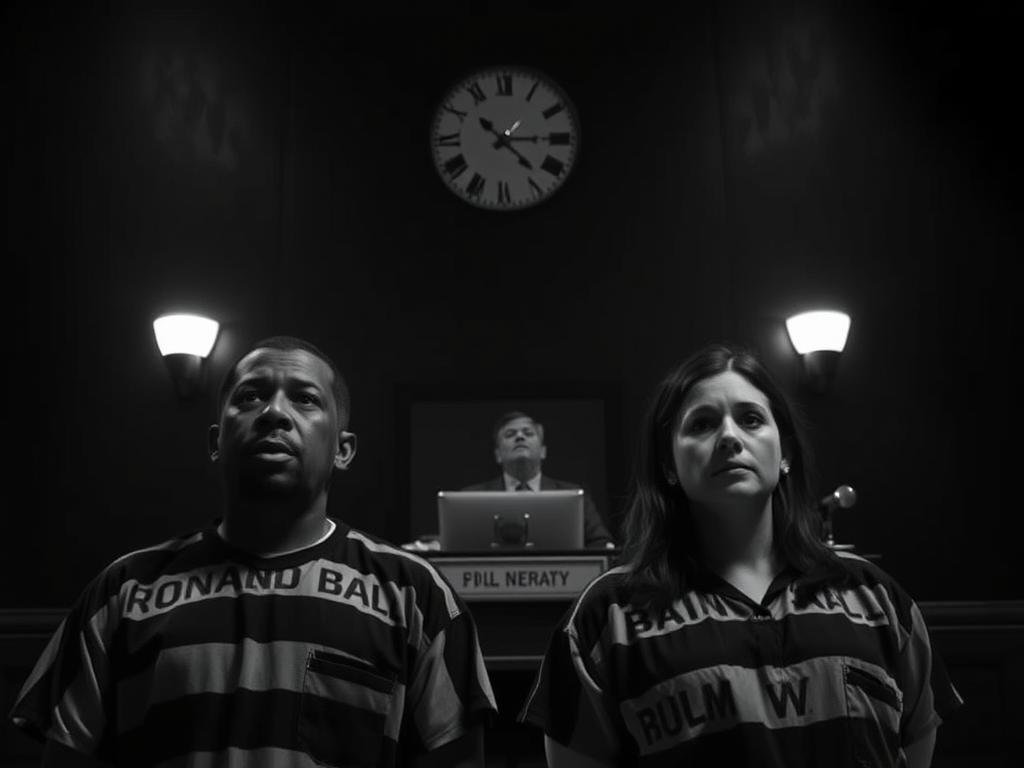
The early courtroom outcomes set the baseline for the case. Reporters with NWF Daily News documented how each defendant faced separate proceedings and distinct penalties. These original sentences shaped later appeals and resentencing arguments.
Kristel Maestas: life sentence plus 30 years for kidnapping
Kristel Maestas was tried first and received life plus 30 years for first-degree murder and kidnapping. Coverage by Oxygen’s Killer Couples and NWF Daily News noted the judge’s emphasis on the calculated nature of the crime. These original sentences became a reference point during later legal reviews.
Ronald Bell: original death sentence and 2002 overturning based on age consideration
Ronald Bell was sentenced to death in 2000 for murder and kidnapping. He was the youngest person on Florida’s death row at that time. His death sentence was overturned in 2002 after the court reexamined how his age factored into sentencing. The case returned to focus in appeals and subsequent hearings. Records cited by NWF Daily News traced the path from capital punishment to new proceedings.
Renee Lincks: plea, testimony, and 15-year sentence with 2012 release
Renee Lincks entered a plea deal for manslaughter and false imprisonment and testified as a cooperating witness against her co-defendants. She received up to 15 years and was released in 2012 after serving most of her term, as reported by NWF Daily News. Her testimony later figured into narrative timelines and evidentiary summaries.
Supreme Court decisions that triggered resentencing
The Supreme Court changed how courts handle young offenders. In 2012, they ruled mandatory LWOP unconstitutional for minors. This meant judges must consider youth, development, and each case’s facts.
This change led to new hearings and careful reviews across the country.
Juvenile life without parole deemed unconstitutional
The Court said mandatory LWOP for juveniles was unfair. They rejected one-size-fits-all punishments. This led to case-by-case analysis and opened the door for resentencing.
It highlighted the importance of change, family background, and peer pressure.
How the ruling applied to co-defendants in the Richards case
Both defendants were under 18 in 1999. The Supreme Court’s ruling led to new hearings. Their records, maturity, and behavior in custody were key in resentencing.
The court looked at both aggravating and mitigating factors.
Impact on similar juvenile offender cases nationwide
The ruling led to audits of old files and expert evaluations. States built protocols for juvenile resentencing. Newsrooms and court watchers followed the outcomes.
| Legal Shift | Pre-2012 Practice | Post-2012 Practice | Practical Effect |
|---|---|---|---|
| Sentencing Standard | Automatic life without parole for certain crimes | Mandatory LWOP unconstitutional; individualized hearings | Judges assess youth, trauma, and growth |
| Scope of Review | Limited post-conviction options | Broad juvenile resentencing eligibility | Old cases reopened for new findings |
| Evidence Considered | Static trial record | Developmental science and prison conduct | Dynamic records influence outcomes |
| Public Lens | Sparse, case-by-case coverage | Kids Behind Bars legal context frames debates | Greater scrutiny of fairness and public safety |
April 2019 resentencing outcomes and courtroom reactions
The April 2019 hearing was packed with people, all quiet and tense. When the verdict was read, everyone watched the judge and the defense team closely. This moment set the stage for reactions in the courtroom, guided by law and memory.
Life sentences reimposed for both Maestas and Bell
In court, Judge William Stone confirmed the life sentences for Ronald Bell and Kristel Maestas. This decision followed legal standards and kept them in custody. It also reflected the changes in juvenile sentencing laws.
Maestas cried, while Bell looked straight ahead. The courtroom was silent, with some people holding hands. Their reactions showed the gravity of the situation and the long journey to this moment.
Statements from the victim’s family after the hearing
Outside, Reanna Richards talked about her father and the long wait for the hearing. She said the family was trying to understand and heal. Her words were among the most important of the day.
She thanked those who supported them and remembered Cordell Richards. The family’s words were steady, even as they talked about their loss.
Judge William Stone’s ruling in context
From the bench, Judge William Stone explained the legal basis for his decision. He said the ruling followed constitutional rules and kept the punishment in place. This helped focus reactions on the law, not just emotions.
The sequence below summarizes how the decision fit within the modern framework and the practical effects that followed the April 2019 hearing.
| Element | Details | Relevance |
|---|---|---|
| Sentences | Life reimposed for Ronald Bell and Kristel Maestas | Clarifies custody status and duration |
| Judicial Authority | Presided by Judge William Stone | Establishes legal basis and oversight |
| Proceeding | April 2019 hearing with packed gallery | Explains timing and public interest |
| Public Response | Measured courtroom reactions; quiet gallery | Signals community attention and decorum |
| Family Perspective | Victim’s family statements from Reanna Richards | Provides human impact and continuity |
Where are the co-defendants now
The record after the 2019 hearing answers common searches about where is she now and the broader co-defendants status. Court files and local reporting show no change to the life terms imposed at resentencing.
Kristel Maestas now and status following resentencing
As of the April 2019 resentencing, Kristel Maestas remains in state prison on a life sentence. Interest in “Kristel Maestas now” and “Kristel Maestas 2021” grew after the hearing, yet records reflect the same outcome.
Questions about a “Kristel Maestas release date” appear often. Because the court reimposed life, there is no announced date tied to release.
Renee Lincks’ 2012 release and role as a cooperating witness
Renee Lincks served time under a plea deal and testified against the others. She left custody in 2012 after completing most of a 15-year term, according to contemporaneous news coverage.
Her earlier cooperation remains part of the case history and helps frame the current co-defendants status.
Clarifying search interest: kristel maestas release date, ronald bell jr. released
Searches asking “Ronald Bell Jr. released” can be clarified. Ronald Bell continues to serve a life sentence set at the 2019 hearing.
For readers tracking “Kristel Maestas release date,” the available record lists no release, consistent with the resentencing. These details address “Kristel Maestas now” and provide context seen in 2020 and “Kristel Maestas 2021” search spikes.
| Person | Custody Status | Key Event | Current Note |
|---|---|---|---|
| Kristel Maestas | Incarcerated, life sentence | April 2019 resentencing | No listed Kristel Maestas release date; queries about Kristel Maestas now and Kristel Maestas 2021 reflect public interest |
| Ronald Bell Jr. | Incarcerated, life sentence | April 2019 resentencing | Not Ronald Bell Jr. released; remains in prison under life term |
| Renee Lincks | Released | 2012 release after plea and testimony | Cooperating witness; reference point for co-defendants status |
Media coverage, cultural references, and related keyword clarifications

True-crime shows like A&E Kids Behind Bars: Life or Parole and Oxygen Killer Couples have revisited the Fort Walton Beach case. They explore the motives and courtroom turns of the case. This section also clears up a common name mix-up tied to famous searches.
Coverage on A&E’s Kids Behind Bars: Life or Parole and Oxygen’s Killer Couples
A&E Kids Behind Bars: Life or Parole looks at how Supreme Court rulings have changed resentencings. This case is part of a bigger debate on juvenile punishment. Oxygen Killer Couples focuses on the relationship between co-defendants and how they planned the crime.
Both shows highlight the impact on victims, the investigation, and the courtroom reactions. They use interviews, archives, and timelines to follow the abduction and resentencing. They focus on verified reports and public records, avoiding sensationalism.
Distinguishing this case from Ronald Bell, the Kool & the Gang American musician and songwriter
News often mentions Ronald Bell Kool & the Gang, a famous American musician and songwriter. His legacy includes jazz-funk innovation and global tours, unrelated to the Florida homicide. Newsrooms and networks make sure to distinguish between the two to avoid confusion.
When the name Ronald Bell appears in program guides or summaries, it refers to different people. This distinction keeps music fans and true-crime viewers from mixing up biographies.
Avoiding confusion with Ronald Bell music career, discography, awards, achievements, and biography searches
Searches for Ronald Bell’s music career, discography, awards, achievements, and biography are about the Kool & the Gang member. Music queries lead to studio credits, songwriting milestones, and touring history. Case-related queries are about court documents, resentencing coverage, and custody records.
To avoid confusion, media guides and episode descriptions separate entertainment terms from legal terms. This helps readers and viewers find the right Ronald Bell, whether they’re looking for music or case details.
| Topic | What Viewers Learn | Where It Appears | Key Terms Often Used |
|---|---|---|---|
| Juvenile Resentencing | How law changed the outcomes and parole eligibility reviews | A&E Kids Behind Bars: Life or Parole | resentencing, courts, victims, records |
| Co-Defendant Dynamics | Relationships, planning, and actions before and after the crime | Oxygen Killer Couples | motive, timeline, interviews |
| Music Legacy Clarification | Separation between the case and Ronald Bell Kool & the Gang | Program notes and news explainers | American musician and songwriter, discography |
| Search Accuracy | Directing music fans to biography, awards, achievements | Media FAQs and summaries | Ronald Bell biography, awards, achievements |
Conclusion
The Fort Walton Beach murder roundup has reached its end. From February to March 1999, the timeline shows Cordell Richards was kidnapped, tortured, and killed. Forensic evidence like blood, tire marks, and duct tape supported the case in court.
The story of Ronald Bell and Kristel Maestas is clear. They were first sentenced to life plus 30 years and death, respectively. But after appeals, they were resentenced to life in prison in 2019. This shows the importance of justice for Cordell Richards.
Media like Oxygen and A&E kept the focus on facts, not rumors. They highlighted Renee Lincks’ role as a witness and cleared up name confusion. This case is known for its solid evidence and careful legal process.
In the end, the cases of Ronald Bell and Kristel Maestas are about justice and memory. The law has changed to consider youth sentencing. But the families’ pain remains, reminding us of the importance of truth and fairness.
FAQ
What is the latest on Ronald Bell and Kristel Maestas in the 1999 Fort Walton Beach case?
Ronald Bell and Kristel Maestas were resentenced in April 2019. They got life in prison for their roles in the kidnapping, torture, and murder of Cordell Richards. This was after changes in the law about juvenile sentencing.
Why did the case resurface after the Supreme Court ruling on juvenile life without parole?
In 2012, the U.S. Supreme Court said it’s unconstitutional to sentence juveniles to life without parole. This led to resentencing for Bell and Maestas, who were 17 and 16 at the time.
What happened at the April 2019 hearing for Ronald Bell and Kristel Maestas?
Circuit Court Judge William Stone sentenced both to life in prison. Maestas cried when she heard the news. The court found life terms fitting for the crime’s brutality.
Who are the key figures in the case of Cordell Richards?
The case involves victim Cordell Richards, an Air Force veteran and father. Co-defendants Ronald Bell and Kristel Maestas are also key. Renee Lincks, who was 15, also played a role.
Who was Cordell Richards?
Cordell Richards, 31, was a hardworking Air Force veteran and father. He rented a room to Kristel Maestas in early 1999 due to financial struggles.
How were Richards’ remains discovered?
Richards’ charred and disfigured remains were found chained to a tree in a wooded area near Fort Walton Beach. A partial thumbprint confirmed his identity.
What did the autopsy reveal?
The autopsy showed Richards suffered extensive blunt force trauma. It confirmed a throat slashing caused his death after torture and an attempted burning.
What living arrangement preceded the crime?
Maestas rented a room from Richards after being kicked out by her parents. Ronald Bell helped arrange and pay for the rental. Tensions soon escalated inside the apartment.
What allegations did Maestas make about Richards?
Maestas told police Richards acted sexually inappropriate. She claimed he exposed himself and entered her room scantily clad. She also said he once pushed her, causing a bruise.
How did the confrontation begin on February 2, 1999?
Maestas called Bell after claiming Richards harassed her. Bell arrived, a fight erupted, and he put Richards in a chokehold. The teens then gathered rope and a baseball bat.
How was Richards abducted from his apartment?
After the initial beating, Richards was wrapped and placed in the trunk of a car. He was transported to a wooded area while the teens planned further violence.
What occurred in the woods that night?
Richards was dragged, chained to a tree, beaten with a baseball bat, and doused with lighter fluid before being set on fire. He was left at the scene, alive.
What happened when the group returned the next day?
Finding Richards alive, Bell tried to snap his neck. They then went to a department store to buy a meat cleaver and duct tape. Surveillance later tied Bell to the purchase. Richards’ throat was slashed with the cleaver.
What did investigators find in the apartment?
Using Luminol, investigators detected blood evidence that supported a violent encounter inside Richards’ residence, aligning with witness accounts.
What other evidence supported the timeline?
Investigators documented tire impressions, a roll of duct tape, and a Sprite bottle at the scene. The Sprite was linked to cleaning the meat cleaver before it was returned to the store.
How did store surveillance factor into the case?
Department store (Target) surveillance showed Bell purchasing a meat cleaver later used in the fatal throat slashing. The cleaver was reportedly washed with Sprite and returned for a refund.
Were there eyewitness accounts?
Yes. A couple reported seeing three teens near a car with a broken window around the estimated time of the crime. Police later observed a vehicle with a busted rear window covered by a garbage bag, with Bell and Maestas inside.
What sentence did Kristel Maestas originally receive?
Maestas was convicted of first-degree murder and received life in prison plus 30 years for kidnapping, as reported by NWF Daily News and Oxygen’s Killer Couples.
What was Ronald Bell’s original sentence and why was it overturned?
Bell was sentenced to death in 2000, becoming Florida’s youngest death row inmate at that time. In 2002, the sentence was overturned for inadequate consideration of his age, leading to later resentencing issues.
What was Renee Lincks’ sentence and status?
Lincks pled to manslaughter and false imprisonment in exchange for testifying. She received up to 15 years and was released in 2012 after serving about 12 years.
What did the Supreme Court decide about juvenile life without parole?
The Court ruled in 2012 that mandatory life without parole for juveniles is unconstitutional. Sentences must consider youth and individual circumstances.
How did that ruling affect Bell and Maestas?
Because both were minors at the time of the crime, the decision required a resentencing review. In April 2019, the court reimposed life terms after considering the factors.
Did the ruling change outcomes for other juvenile offenders?
Yes. States reviewed cases involving juveniles who received automatic life terms. The issue was also explored in A&E’s Kids Behind Bars: Life or Parole.
What were the outcomes at the April 2019 resentencing?
Judge William Stone resentenced both Maestas and Bell to life in prison. The court noted the severity and cruelty of the crime while aligning with constitutional requirements.
How did the victim’s family respond?
After the hearing, Richards’ daughter, Reanna Richards, expressed ongoing grief. She thanked God that the judge ruled as he did, saying nothing could restore their loss.
What did Judge William Stone’s ruling emphasize?
The ruling acknowledged the Supreme Court’s guidance on juvenile sentencing. It concluded that life terms were warranted given the extreme brutality and evidence.
Where is Kristel Maestas now?
As of the April 2019 resentencing, Maestas remains incarcerated, serving a life sentence. Searches such as “kristel maestas release date,” “kristel maestas now,” and “kristel maestas 2021” reflect public interest, but no release was ordered.
What is the status of Renee Lincks?
Lincks, the cooperating witness, was released in 2012 after serving most of her 15-year sentence. Her testimony helped secure convictions against Bell and Maestas.
Has Ronald Bell Jr. been released?
No. Queries like “ronald bell jr. released” can be clarified: Ronald Bell remains imprisoned under a life sentence following the 2019 resentencing.
How has the case been covered in the media?
The crime and resentencing were profiled on Oxygen’s Killer Couples and referenced in A&E’s Kids Behind Bars: Life or Parole. Coverage focused on the brutality, legal milestones, and the family’s voice.
Is Ronald Bell in this case the same as Ronald Bell from Kool & the Gang?
No. The defendant is not Ronald Bell, the American musician, songwriter, and composer from Kool & the Gang. Searches about Ronald Bell’s music career, discography, awards, achievements, and biography pertain to the musician, not the Fort Walton Beach case.
How can readers avoid confusion with Ronald Bell’s music-related searches?
Use context. For the homicide case, pair “Ronald Bell” with terms like “Fort Walton Beach,” “Cordell Richards,” or “1999 case.” For the musician, include “Kool & the Gang,” “American musician,” or “songwriter.”
Be the first to comment