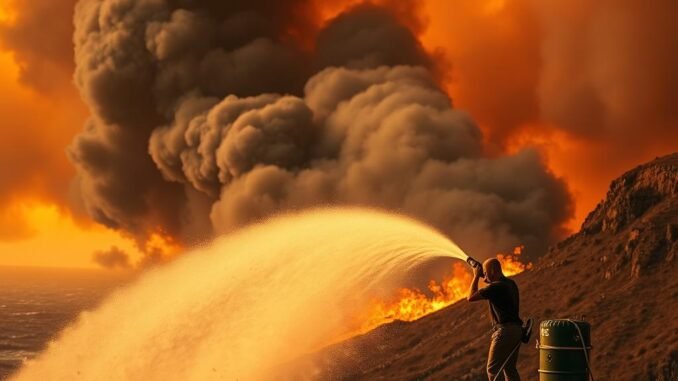

California has the world’s largest civilian firefighting air fleet, with over 60 aircraft ready to fly. But only a few can fly over the Pacific and load quickly. They also face limits due to weather and corrosion.
This raises a big question every fire season: can salt water put out fires when lakes and reservoirs are low?
The short answer is yes, but there are details to consider. During calm times, special planes can carry about 1,500 gallons and drop water exactly where needed. But, teams think carefully before using salt water because of the risks to equipment and nature.
So, can salt water be used to fight fires near the coast? In Los Angeles, it has been used in some cases when winds were calm and the ocean was the closest water source. Yet, high winds can break up the water into mist, and salt can damage equipment. This is why salt water is used only as a last resort.
Many people wonder if salt water can be used to fight fires on steep slopes, in extreme heat, or when hydrants are not available. Experts say the decision depends on timing, the type of aircraft, and the care needed to protect equipment and nature. For more on this, see this report on why ocean water isn’t always used.
This article explains when seawater is a good choice, how planes use it, and the risks of corrosion and damage to soil. It also talks about the importance of combining smart aerial tactics with ground work. It gives a clear and detailed answer to a common question.
Overview: Why seawater for wildfires is tempting but complicated
Seawater is close to many fires, making it seem like a quick fix. Crews wonder if salt water can put out fires when water sources run low. The answer depends on timing, wind, and the equipment’s ability to handle salt.
Abundant ocean supply versus limited freshwater during crises
During fires, water systems often struggle. Wind can lower pressure, and pumps may not keep up. People ask if ocean water can help when water is scarce.
Los Angeles officials say water supply stayed strong despite early issues. Rep. Judy Chu noted that even with strong winds, the system held up. Yet, crews question if using salt water near the shore is worth the risk.
Emergency use in Southern California during calm wind windows
When the wind is calm, planes can quickly scoop up water and drop it on fires. In these moments, the ocean is the fastest way to refill water tanks.
But these calm periods are short-lived. Swells, turbulence, and drones can stop planes from scooping water. Crews constantly ask if using salt water is effective and worth the effort.
Roundup focus: what works, what doesn’t, and why it matters
Targeted water drops from planes work when conditions are right. But using salty water in pipes or on hillsides doesn’t. The big question is if using ocean water to fight fires is worth the risks to equipment and the environment.
This roundup explores when speed helps and when it hurts. It looks at if using ocean water near communities is safe and if it protects the soil and prepares for future fires.
| Factor | Why It Tempts Crews | What Complicates Use | Operational Takeaway |
|---|---|---|---|
| Supply | Ocean access enables rapid, repeated fills close to coastal fires | Freshwater networks face pressure dips, but can rebound after outages | Use seawater for short bursts; conserve freshwater for sustained ops |
| Weather | Calm wind windows make precise drops feasible | Santa Ana winds scatter drops into mist and raise safety risks | Time scoops to lulls; pause when winds exceed safe thresholds |
| Equipment | Aircraft can reach the ocean faster than distant reservoirs | Salt accelerates corrosion in pumps, valves, tanks, and lines | Limit exposure and plan post-mission flushing and inspections |
| Environment | Quick suppression protects homes and habitats | Salt can stress chaparral and trees and alter soil chemistry | Target drops to fire edges; avoid sensitive recovery zones |
How firefighting aircraft actually use the ocean
On clear, calm days along the Pacific, pilots show how precise ocean scooping can be. The question many ask—can you use ocean water to put out fires—meets a practical answer in the air, not on the ground. Crews plan routes, watch the swells, and time drops for impact near the flame front.
Super Scoopers: CL-415 planes skimming 1,500 gallons to 14,000 pounds per load
Bombardier CL-415 “Super Scooper” aircraft skim about 1,500 gallons per pass, lifting roughly 14,000 pounds per load. When winds are light, they can place water with pinpoint accuracy over hot spots.
The result is quick turnarounds right off the beach. For those wondering can ocean water put out fires, these sorties show how a fast scoop-and-drop can slow a head fire so ground crews can move in.
Operational limits: ocean swells, turbulence, and drone interference
Sea state rules every scoop. High swells and chop raise the risk of hull strikes and aborted runs. Over the fire, heat columns create harsh turbulence that can scatter a drop.
Wind adds another check. Santa Ana gusts can shear a water line into mist above 30 mph, wasting a pass. Unauthorized drones also ground aircraft; during the Palisades Fire, a drone strike sidelined an active Super Scooper mid-operation.
Why only a few aircraft can scoop from the Pacific
California fields many aircraft, but only a small subset can scoop from open water. Most large air tankers are built for retardant, not repeated sea skims. Hull design, intake doors, and corrosion protection set the Super Scooper apart.
This is why crews weigh options each day. Using salt water to put out fires from the ocean takes the right platform, a safe sea window, and tight airspace control.
The short answer: yes, but with trade-offs and context
So, can you use ocean water to put out fires? Yes—under the right conditions and with the right aircraft. The tactic works best near the coast, in calm wind, with trained CL-415 crews.
Because the goal is effect on the flame front, teams choose the moment. When they do, can ocean water put out fires becomes a practical tool in a broader plan, even as they balance limits, safety, and mission tempo.
When speed matters and access is tight, they reach for salt water to put out fires from the Pacific—fast scoops, fast drops, and a narrow window to make them count.
Corrosion risks: why salt water is tough on equipment
Firefighting teams often debate using salt water to fight fires. They wonder why they can’t use ocean water, which is nearby and free. The reason lies in chemistry and the damage it causes.
Salinity as an electrolyte accelerating rust in pumps, pipes, and hydrants
Salt makes water conductive. This is bad news for steel equipment like pumps and hydrants. It causes rust, leading to damage and leaks.
Fire departments also worry about corrosion from generators and rigs. This is because salt water can cause different metals to react. This is why they can’t use ocean water in municipal pipes.
Aircraft designed for retardant vs. water and the maintenance burden
Many airtankers are built for fire retardant, not water. Salt water corrodes their parts, shortening their life. This includes welds, hinges, and fasteners.
Helicopters with buckets can fight fires, but salt water use means more maintenance. Crews face inspections, washdowns, and part replacements. This is why they prefer not to use salt water.
Why rapid flushing isn’t feasible during active wildfires
Flushing equipment after salt exposure takes time and fresh water. During fast-moving fires, this is not possible. Aircraft and engines need to move quickly.
When time is of the essence, delaying flushing to avoid damage is a risk. This is why crews choose not to use salt water during intense fires.
| Component | Primary Vulnerability | Saltwater Effect | Operational Impact | Typical Mitigation |
|---|---|---|---|---|
| Pumps and Impellers | Metal pitting and seal wear | Accelerated rust, cavitation, leaks | Reduced pressure and flow, sudden failure | Freshwater flush, anti-corrosion coatings, frequent seal changes |
| Pipes and Hydrants | Galvanic corrosion at joints | Wall thinning, thread seizure | Unsafe connections, downtime | Avoid routing seawater, cathodic protection, post-use rinsing |
| Airtanker Tanks and Lines | Weld and fastener corrosion | Clogged nozzles, structural stress | Shorter service intervals, higher costs | Immediate washdown, inspections, part replacement |
| Helicopter Buckets and Hooks | Cable and hinge oxidation | Stiff action, reduced strength | Lift limits, safety risk | Rinse, dry, lubricate, scheduled overhauls |
| Hand Tools and Nozzles | Surface rust on steel parts | Sticking valves, rough threads | Slower deployment, replacements | Freshwater cleaning, protective oils, storage dry-out |
Environmental impacts on soil and vegetation

Firefighters often wonder if sea water can be used to fight fires near the coast without harming the environment. Sea water can cool flames quickly, but the salt it contains can harm plants and soil for months. When deciding to use salt water on fires, they must think about the effects it has after the steam goes away.
Salinity stress on chaparral and trees in historically salt‑free ecosystems
Los Angeles chaparral, coast live oak, and sycamore are not used to salt. A small amount of salt can burn leaves, close stomata, and slow photosynthesis. This can make it hard for roots to get water, even if the soil looks wet.
Using sea water to fight fires near these plants is a big decision. It might help control the fire but could also harm the plants. Salt water can make it harder for plants to grow back after a fire.
Soil chemistry changes: clay dispersion, carbon leaching, and long-term effects
Salt can break down clay particles, making it hard for water to soak into the soil. This can hurt the roots of plants and make it hard for them to grow. Plants need a stable base to grow, but salt can make the soil unstable.
Studies have shown that salt can cause the soil to lose organic matter. This is important because it helps plants grow and keeps the soil healthy. The question is not just about fighting fires, but also about the long-term effects of salt on the soil.
Dry conditions letting salt linger and hinder plant recovery
After a fire, dry weather in Southern California can leave salt on plants and soil for weeks. Without rain, the salt can build up and make it hard for plants to recover. This can slow down the growth of new plants and make it harder for existing plants to grow back.
Dry weather makes it harder to decide if using salt water to fight fires is a good idea. Even a little salt can harm plants that have already been stressed by the fire. In coastal areas, wind can keep salt in the air for days, making it hard for plants to recover.
What recent fires in Los Angeles reveal
Los Angeles crews battled wind, heat, and tough access during the Palisades and Eaton fires. They wondered if ocean water could help put out fires. The answer changed with the weather and the situation.
Wind constraints: Santa Anas turning drops into mist above 30 mph
When Santa Ana winds hit 30 mph, aerial drops lost their effect. The wind turned the water into fine spray, making it hard to cover the fire. Crews waited for calm moments to make targeted drops, then retreated when the wind picked up.
Water pressure concerns and agency assurances about freshwater supply
Weak hydrant pressure was a problem at first. Agencies said that using too much water and losing power at pumps caused the issue. Once they balanced the loads, the water pressure stayed strong, making ocean water less of an option.
Why seawater remained a tactical, not primary, option
Super Scoopers made short, precise runs when the wind was calm. They helped slow down the fire and cool hot spots. But using seawater was a careful choice due to corrosion risks and the impact on plants.
Insights from the TEMPEST coastal forest experiment
At the Smithsonian Environmental Research Center, scientists tested something rare. They used controlled saline pulses on coastal forest plots by the Chesapeake Bay. Their aim was to see how plants react in real life, not just in labs.
This experiment gives us clues about using sea water to fight fires. It shows us what salt does to plants.
Escalating exposures: 10-hour, 20-hour, and 30-hour saltwater events
The team tested bay water in three summers. A 10-hour exposure in June 2022 didn’t change much. Plants grew normally later that season.
In June 2023, a 20-hour dose also showed little change. But by June 2024, a 30-hour pulse caused stress signs within weeks.
This mirrors what coastal communities might face if sea water is used to fight fires. The length and strength of the exposure mattered a lot.
Early leaf browning, canopy loss, and slowed water uptake
After the longest event, leaves turned brown early in August. The canopy thinned by September. In 2023, sensors showed tulip poplars taking water more slowly before any visible signs.
This slow uptake was a warning sign. It shows how plants might react to ocean water used for fires.
Rainfall versus drought: how post-event weather changes outcomes
Rains after the 2022 and 2023 pulses helped flush salts out. This eased the stress on plants. But a major drought after the 2024 pulse trapped salts, pushing levels too high for plants.
Soil water stayed brown for a long time. This was linked to carbon leaching and clay dispersion seen before. Weather swings are key when deciding to use sea water for fires.
When rain is scarce, salt residues stay, causing more harm over time. This is important to consider when fighting fires near salt-sensitive areas.
When using seawater makes sense
Fire crews consider speed, distance, and weather before using seawater. They ask if salt water can put out fires based on timing and access. If the coastline is near and planes can fly back and forth quickly, seawater can help fast.
Proximity to coastlines and immediate need for mass water drops
Near the shore, a CL-415 can scoop 1,500 gallons and return in minutes. Short flights mean more water drops per hour. This makes seawater a practical choice for quick fire suppression.
Teams also consider staging sites, boat traffic, and swell height. If the ocean is calm and closer than reservoirs, they can drop water more often and effectively.
Calm wind windows enabling precision drops
Precision is key. Wind over 30 mph can ruin water drops, making them less effective. Calm winds allow pilots to make precise drops on targets.
When winds are calm, using seawater to fight fires is safe and effective. Crews plan their water drops carefully to avoid damage and protect escape routes.
Risk mitigation: post-mission equipment flushing and targeted application
Salt can damage equipment quickly. Agencies rinse tanks, pumps, and valves soon after missions. This keeps aircraft and gear in good shape.
Targeted water drops reduce salt damage to soil and plants. Crews focus on cooling hotspots and reinforcing lines. In dry times, they use seawater carefully to avoid harming the environment.
Alternatives and complements to seawater drops

Agencies consider speed, safety, and the environment before filling tanks. They ask not just if ocean water can fight fires, but how to stay effective without harming the environment. A mix of methods helps find a balance.
Prioritizing freshwater sources when available
Teams use freshwater from hydrants, reservoirs, and lakes first. This choice protects equipment and helps plants and soil. While salt water can fight fires, freshwater is preferred for its benefits.
In cities, Los Angeles, San Diego, and Cal Fire use nearby water sources. This shortens refill times and keeps aircraft ready. It also avoids the need for extensive flushing after use.
Recycled wastewater and emerging tech as sustainable options
Utilities are growing purple-pipe networks for more refill points during droughts. Advanced treatment makes this water safer for equipment than seawater. The debate shifts to recycled water when it’s nearby and logistics work.
New technologies include mobile filters, modular tanks, and AI for dispatch. These innovations increase capacity without harming the environment with salt.
Ground tactics and fire retardants under high-wind conditions
When winds make water drops ineffective, teams use dozers, hoses, and foam. Many planes carry retardant to slow fire spread. In these situations, using salt water is less important than ground work and retardant.
Helicopters and planes work with ground crews to control fires. If the sea is rough or visibility is bad, they rely on land and chemicals until it’s safer to drop water.
Search intent roundup: addressing related questions
People often ask about seawater and flames. They want to know if it works, when it’s used, and what holds it back. The answers below group the most common searches in plain terms.
can you use salt water to put out a fire and does salt water put out fires
Yes, salt water can put out fires in many outdoor settings. It cools the fuel and removes heat, stopping the flame. So, does salt water put out fires? It does, for vegetation and brush when quick action is needed near the coast.
Crews choose the right method for each situation. They consider wind, access, and the gear they have. The goal is to cool things down fast without causing new problems.
can ocean water be used to fight fires and why don’t they use ocean water to put out fires
Ocean water can fight fires when planes can scoop it up close and winds are calm. CL-415 Super Scoopers and similar planes make quick trips. This is key during peak heat when time is of the essence.
But, why don’t they use ocean water all the time? Salt can corrode pumps, pipes, and aircraft parts. After missions, gear needs thorough flushing, which is hard during a fast-moving incident. Waves, swells, and drones can also stop scooping runs.
can sea water be used to put out fires and will salt water put out a fire
Yes, sea water can be used to put out fires, and agencies keep it as an option. It’s most effective when the drop zone is near the shoreline and winds are below typical red-flag levels.
Will salt water put out a fire every time? It will knock down flames, but crews weigh trade-offs. Salt can stress plants and alter soil in places not used to salinity. That’s why freshwater is the first choice when it’s available.
| Question | Short Answer | Best Use Case | Main Limits |
|---|---|---|---|
| can you use salt water to put out a fire | Yes, for many outdoor fires | Coastal drops with quick turnarounds | Corrosion, cleanup time, wind and swell |
| does salt water put out fires | Yes, by cooling and smothering | Brush and grass near shorelines | Equipment wear and soil salinity |
| why don’t they use ocean water to put out fires | Trade-offs outweigh routine use | Last-resort or surge support | Maintenance burden and limited aircraft |
| will salt water put out a fire | Yes, with context | Calm wind windows and short scoops | Wind shear, drift, environmental impacts |
Conclusion
Seawater can stop flames, but it’s not a solution for all fires. When winds calm down, planes like the Bombardier CL-415 can drop water close to the coast quickly. In these moments, salt water and ocean water can put out fires, helping when time is of the essence.
But, there are downsides. Salt can damage equipment and pipes, making maintenance harder when crews are already busy. It’s hard to clean systems during firefighting efforts. Salt also harms plants and changes soil chemistry, affecting plants and soil health.
Agencies often choose freshwater over salt water. They use retardants and ground crews in windy conditions. They also use recycled water and new technologies to increase their water supply.
In short, salt water is useful in certain situations. It’s good for fires near the coast and when it’s calm. But, it’s not the main strategy. Instead, it’s used carefully, with targeted water drops and cleaning after the fire.
Seawater is a helpful tool when speed and location are key. It’s used with caution, in specific situations. But, long-term, planners focus on reliable freshwater sources and equipment protection.
Be the first to comment