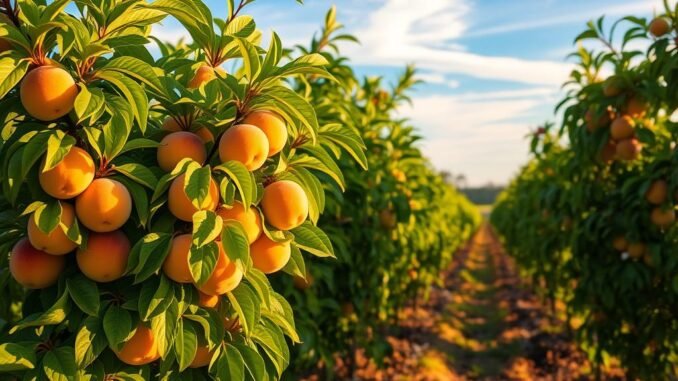

University of Florida breeders have made peaches grow in Florida as early as late March. This is weeks before Georgia starts picking. They used low-chill varieties that wake up quickly in mild winters. This change shows that peaches can grow well in Florida, not just in the Panhandle.
So, can you grow peaches in Florida? Yes, you can. Gardeners need to match trees to local chill hours, choose full sun, and prune them right. UF/IFAS says yellow peaches usually do best, but white ones have fans too. With the right care, your orchard can start producing fruit the spring after planting. It will keep producing for about 8–10 years.
For peach cultivation in Florida to succeed, you need three things: the right variety, good drainage, and steady pest control. UF/IFAS has bred low-chill varieties that bloom well in places like Fort Myers. Because peaches ripen early, timing is key. This guide will help you understand how to grow peach trees in Florida’s warm weather. It will also show you how to choose the right chill hours for your area and why a well-aired canopy is important for flavor.
From pruning tips to keeping fruit flies away, this guide has everything you need. It’s perfect for both small yards and homesteads. With the right start, growing fruit in Florida can be both practical and tasty.
Florida’s climate and chill hours for peaches
Florida growers face mild winters and quick springs. This makes timing dormancy critical. Chill hours guide bloom and bud break, affecting yield and quality. Those growing peaches in warm climates closely watch winter patterns and use tips for growing peaches in Florida to stay on schedule.
Why chill hours matter in subtropical climates
Chill hours are the total hours between 32°F and 45°F that help trees rest, reset, and bloom together. In Florida’s long shoulder seasons, adequate chill keeps flowers uniform and fruit sizing consistent. Too little chill can stagger bloom, reduce set, and stretch the harvest window in ways that strain labor and wildlife control.
This is why peaches in subtropical climates rely on cultivars bred for low chill. It also explains why growing peaches in warm climates requires monitoring winter cool spells and adjusting pruning and nutrition to match tree readiness.
Recommended chill hour ranges for Florida peach varieties
Many Florida selections now target about 300 chill hours to match recent winters. South Florida often favors ultra-low-chill choices around 100–200 hours, while North Florida leans closer to 300–350 hours for reliable bloom.
| Region | Typical Chill Range (hrs) | Noted Examples | Grower Focus |
|---|---|---|---|
| South Florida | 100–200 | ‘UF Sun’ (~100), ‘Florida Prince’ (~150), ‘Tropic Snow’ (~200) | Early markets, rapid warm-ups |
| Central Florida | 200–300 | Low to mid-chill mixes | Balance chill with bloom timing |
| North Florida | 300–350 | ‘FloridaCrest’ (~350) and similar types | Frost risk management |
For homeowners using tips for growing peaches in Florida, matching the tree’s chill need to the local average is the simplest way to avoid erratic flowering.
How warm winters impact bloom and fruit set
When winter stays warm, trees may not meet their chill need. Buds can open weakly or in waves, and pollination becomes hit or miss. This leads to small crops, mixed fruit sizes, and a longer, less efficient pick.
Growers track chill from January 1 and note late-arriving cool spells in February or March. If chill stacks up late, bloom may shift into a frost window or collide with early heat. For peaches in subtropical climates, that swing highlights why growing peaches in warm climates means watching forecasts and applying practical tips for growing peaches in Florida to protect both flowers and set.
Best peaches for Florida and low-chill varieties
When looking for the best peaches for Florida, gardeners focus on trees that wake up quickly after mild winters. This is because Florida’s climate is warm and has short chill periods. Choosing the right variety is key for flavor, firmness, and when to harvest.
UF/IFAS-bred cultivars adapted to warm climates
The University of Florida’s UF/IFAS program created peaches that do well in short-chill seasons. ‘FloridaCrest’ needs about 350 chill hours and has a soft, semi-clingstone flesh. ‘FloridaDawn’ also has a soft flesh, blooms longer, and finishes fruit development faster than most.
For growers who want firm fruit, ‘UFGold’ and ‘UF2000’ are great choices. ‘UFGold’ is a 200-chill, non-melting clingstone known for a heavy, reliable crop and roughly 80 days from bloom to ripe. ‘UF2000’ needs about 300 chill hours and finishes 15–18 days before ‘UFGold’, making it easier to pack when growing peaches in a warm climate.
Non-melting vs. melting flesh options for Florida
Melting-flesh peaches are juicy and soft. They’re perfect for eating fresh and in desserts. Non-melting flesh is firmer, travels better, and is better for canning and markets.
In Florida, choosing the right flesh type is important. Home growers might prefer melting for fresh eating. Market growers cultivating peaches in Florida often choose non-melting to keep fruit fresh during transport.
Timing the harvest: late March through early June
Florida’s peach season starts early. Central and south Florida blocks begin in late March and end in early May. Ultra-low-chill orchards can go into June. ‘Florida Prince’ ripens in May, ‘Tropic Snow’ in mid-June, and ‘UF Sun’ in June, giving a range of harvest times when growing peaches in a warm climate.
The harvest schedule also depends on the UF/IFAS non-melting set. ‘UFGold’ is about 80 days from bloom to harvest, and ‘UF2000’ finishes 15–18 days sooner. This helps with planning labor, sales, and finding the best peaches for Florida in the spring.
Florida peach varieties homeowners should know
Home growers have more choices than ever, thanks to UF/IFAS breeding and nurseries that serve warm regions. The right pick depends on chill hours, fruit texture, and ripening window. These florida peach varieties also align with trends seen in peach orchards in florida and broader peach farming in southern states.
‘FloridaCrest’ and ‘FloridaDawn’ for North Florida
‘FloridaCrest’ needs about 350 chill hours and is a melting, semi-clingstone peach. It suits North Florida where late cold snaps are common. The fruit is aromatic and juicy, perfect for fresh slices.
‘FloridaDawn’ also offers melting, semi-clingstone flesh. It blooms over a longer period, which can help when frost threatens. It is known for the shortest fruit development time among named cultivars, bringing early bites to the table.
‘UFGold’ and ‘UF2000’ non-melting clingstone choices
For firmer fruit that travels and keeps well, ‘UFGold’ and ‘UF2000’ shine. ‘UFGold’ needs around 200 chill hours and ripens about 80 days after bloom. The texture holds up in lunchboxes and roadside coolers.
‘UF2000’ needs close to 300 chill hours and typically harvests 15–18 days earlier than ‘UFGold’. Both bear heavy annual crops, a plus for busy families and small lots. Their steady output fits the rhythm of peach farming in southern states.
South Florida standouts: ‘Florida Prince,’ ‘Tropic Snow,’ ‘UF Sun’
Ultra-low-chill choices keep the season alive near Miami and the Keys. ‘Florida Prince’ sits near 150 chill hours, with firm yellow flesh and May ripening. It tolerates heat and sets a reliable early crop.
‘Tropic Snow’ brings white-fleshed freestone fruit at roughly 200 chill hours. Its attractive look and mid-June timing make it a market favorite. ‘UF Sun’ needs near 100 chill hours and offers non-melting, semi-cling flesh with a deep red blush.
Nurseries such as Canterbury Farms regularly stock warm-climate picks, including Florda Grande, Florda Prince, Tropic Beauty, Tropic Prince, Tropic Snow, and Tropic Sweet. These options help homeowners match site and schedule, a common need across peach orchards in florida.
| Cultivar | Chill Hours (approx.) | Flesh/Stone | Ripening Window | Key Traits | Best Region |
|---|---|---|---|---|---|
| FloridaCrest | 350 | Melting, semi-cling | Early season | Juicy texture; strong flavor | North Florida |
| FloridaDawn | Low–moderate | Melting, semi-cling | Very early | Extended bloom; shortest development period | North Florida |
| UFGold | 200 | Non-melting, clingstone | ~80 days from bloom | Firmer fruit; reliable crops | Central–North Florida |
| UF2000 | 300 | Non-melting, clingstone | 15–18 days before UFGold | Early harvest; heavy bearing | Central–North Florida |
| Florida Prince | ~150 | Firm yellow, cling | May | Heat tolerant; early fruit | South Florida |
| Tropic Snow | ~200 | White, freestone | Mid-June | Attractive fruit; sweet flavor | South–Central Florida |
| UF Sun | ~100 | Non-melting, semi-cling | June | Deep red over yellow; early set | South Florida |
Tip: Non-patented trees like ‘FloridaCrest’ and ‘FloridaDawn’ are often easiest to find for backyard orders, aligning with what many nurseries offer to support florida peach varieties.
Choosing the right site and soil for peach trees in Florida
Choosing the right spot is key for a good harvest. Peach trees in Florida do best in sunny, breezy areas with quick drainage. This helps with strong blooms and clean fruit. It also lowers disease risk and makes care easier during the rainy season.
Full sun exposure and well-drained soils
Peach trees need full sun from morning to late afternoon. Eight or more hours of sun keeps the canopy dry and flowers productive. Sandy loams or loamy sands that shed water quickly help roots breathe and limit scab and rust.
On heavier ground, pick the high spot. Avoid low pockets where water lingers after storms. Good airflow moves humidity out of the canopy and boosts color and flavor.
Raised beds and soil amendments for improved drainage
In wet summers, a raised bed protects roots. Build beds 8–12 inches high and crown the center so water runs off. Blend composted pine bark or finished compost to improve structure and aeration.
Before planting, test soil and adjust pH toward 6.0–6.5. These steps are core tips for growing peaches in Florida because they reduce root stress and support steady growth.
Spacing and canopy planning for vase-shaped training
Plan room for a mature spread and the open-vase form. Keep three to four main scaffolds with wide, up-swept angles to let light reach every fruiting shoot. Do not hollow the center to bare wood; leave dappled shade to protect limbs from sunburn.
Thoughtful layout also streamlines peach tree care in Florida. Proper distance prevents shaded alleys, improves spray coverage, and helps fruit dry fast after rain.
| Cultivar (Florida) | Mature Height x Spread | Recommended Spacing | Site & Soil Notes | Training Fit |
|---|---|---|---|---|
| Florda Grande | Up to 20 ft x 18–20 ft | 16–18 ft between trees; 20 ft between rows | Best on raised beds in seasonal rains; needs high sun | Open-vase with strong scaffold selection |
| Florida Prince | Up to 15 ft x 14–16 ft | 14–16 ft between trees; 18 ft between rows | Thrives in well-drained loamy sand; benefits from airflow | Open-vase for light in center canopy |
| Tropic Beauty | Up to 12 ft x 12–14 ft | 12–14 ft between trees; 16 ft between rows | Responds well to composted pine bark and slight mounding | Open-vase with compact footprint |
| Site & Soil Checklist | Full sun; high ground | Drainage test: water gone in 24 hours | pH near 6.0–6.5; organic matter added | Airflow corridors preserved |
Applied well, these tips for growing peaches in Florida provide a sturdy start. With proper siting, peach trees in Florida deliver cleaner foliage, better set, and easier peach tree care in Florida all season long.
Planting peaches in a warm climate: timing and technique
Success starts with the calendar. For cultivating peaches in Florida, cooler months ease transplant shock. They help roots settle before summer heat hits. This approach also supports growers who are growing peaches in a warm climate. They want steady early growth without stress.
Why late fall to early spring planting works best
Plant during dormancy—from late fall into early spring—so the tree puts energy into roots, not leaves. In warm winters, soil stays workable and moist. This aids quick establishment. Avoid peak summer starts in Florida; high heat and wind can dehydrate young trees fast when growing peaches in warm climates.
Planting steps: hole prep, backfill, watering, mulching
Choose full sun and a well-drained spot. Dig a hole about twice the width of the root ball, keeping depth the same as the nursery line. Backfill with native soil, blending in compost only if drainage and organic matter need a boost.
Water thoroughly to settle soil and remove air pockets. Add a 2–3 inch mulch ring, keeping it a few inches off the trunk to prevent rot. During the first season, keep soil evenly moist but never soggy. For more on soil, spacing, and sun, see this trusted guide on planting peaches.
Special first-year cutback to establish strong structure
Right after planting, make a bold cutback to set up the open vase form. Remove weak side shoots and shorten the leader so new scaffolds form at hip to chest height. It may look drastic, yet this step pays off with sturdy limbs, easier harvest, and brighter light inside the canopy when cultivating peaches in florida.
Maintain a simple routine in year one: deep, infrequent watering, quick weed control, and vigilant mulch care. With this foundation, trees adapt well to growing peaches in a warm climate. They are poised to flower and set fruit the following spring under good conditions.
Peach tree care in Florida: irrigation, fertilization, and training
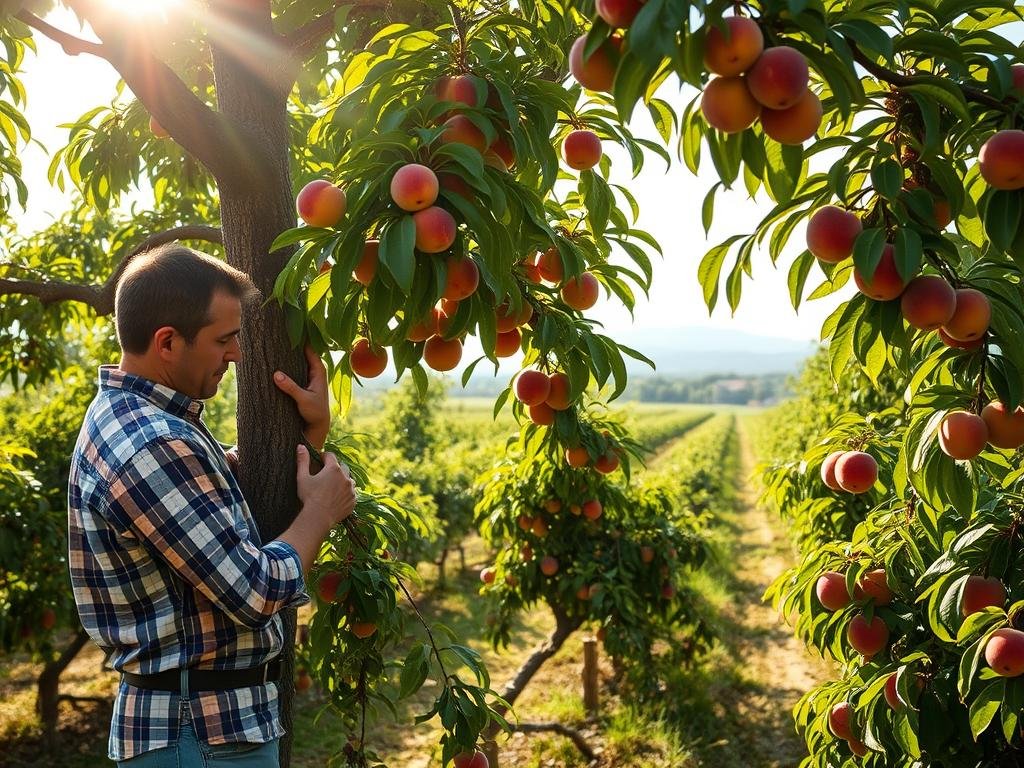
Healthy trees need regular care. In Florida, peach trees thrive with consistent watering, timely feeding, and proper training. These practices are key to growing vibrant and tasty peaches.
Deep weekly watering vs. sugar dilution in fruit
They water deeply once a week to grow strong roots and bigger fruit. As fruit ripens, they reduce watering to avoid diluting sugars. Too much water can make peaches taste bland, a big risk in South Florida’s dry season.
Mulch helps keep the soil moist and cool, but it must not touch the trunk. This balance helps peach trees grow well in Florida’s spring heat and sudden rains.
Seasonal fertilization schedules for vigorous growth
Nutrition changes with the seasons. In South Florida, growers use three light feedings in June, August, and October. They use a fruit-tree blend and adjust based on growth, not just feeding.
They first look for pests like Sri Lanka weevil and scales. They use beneficial insects and soft treatments before harsh chemicals. UF/IFAS also advises on disease prevention after harvest to protect the tree.
Maintaining the open vase canopy for light and airflow
Training aims for an open vase shape. This keeps the center airy and prevents sunburn. It also improves light and airflow, boosting fruit quality.
Regular pruning keeps the tree healthy and promotes fruiting. This canopy structure makes peach cultivation in Florida more reliable, improving fruit color and reducing disease.
| Practice | Florida‑Focused Tip | Why It Works | Season |
|---|---|---|---|
| Irrigation | Deep weekly soak; taper near ripening | Builds roots and size while protecting sugars | Year‑round; reduce late spring to pre‑harvest |
| Mulching | 2–3 inches, off the trunk | Evens soil moisture and cuts weed stress | Apply in late winter; refresh as needed |
| Fertilization | 8‑3‑9 light splits (June, Aug, Oct in South FL) | Matches warm‑season growth without flushy surges | Post‑harvest through fall |
| Monitoring | Scout for Sri Lanka weevil and scales; favor beneficials | Protects canopy with minimal disruption | Weekly during active growth |
| Canopy Training | Open vase, up‑angled scaffolds | Boosts light and airflow; limits fungal pressure | Winter shaping; light summer touch‑ups |
| Preventive Care | Post‑harvest disease management per UF/IFAS | Safeguards leaves and next season’s bloom | Immediately after harvest |
Pruning and thinning strategies for productive peach trees
Good pruning keeps energy where it matters and supports steady yields. In Florida, peach trees do best with a light touch and a clear plan. These tips help home growers and small producers keep trees balanced and fruit focused.
Winter structural pruning and post-harvest summer pruning
In late winter, shape the tree into a gentle open vase with three to four strong scaffolds. Keep main limbs up-swept, and do not hollow the center so much that interior wood sunburns. After harvest, use a lighter summer cut to let in light and renew fruiting shoots.
For step-by-step guidance, this concise primer on peach pruning best practices aligns well with UF/IFAS advice and fits the rhythm of peach orchards in Florida.
Removing pencil-thin and “blind” wood
During structure and renewal cuts, take out shoots thinner than a pencil and any blind wood that lacks leaves or fruit buds. Branches that carry fruit but no leaves should go; leaves power sugar and size. Clean, outward-facing cuts protect scaffolds and reduce split risk.
This approach boosts light in the canopy and improves airflow, two pillars behind successful peach growing in Florida.
Fruit thinning for size, flavor, and annual bearing
Once natural drop ends, thin clusters so fruit sits several inches apart along the shoot. Leave the strongest fruit and match crop load to the tree’s vigor. Thinning improves flavor, limits limb stress, and helps avoid off-years.
Applied with care, these steps become core tips for growing peaches in Florida and support reliable harvests in peach orchards in Florida across their most productive seasons.
Pests and diseases in Florida peach orchards
Summer storms and warm nights make growing peaches in Florida tough. Growers must scout early, keep trees clean, and follow routines to stop pests. These steps help protect leaves, blossoms, and fruit quality.
Managing peach rust and scab with preventative fungicides
Rust and scab are common due to rain. Programs start after harvest to protect new leaves and next year’s flowers. Growers use sulfur, Oxidate, and Bacillus-based products like Serenade on a regular basis.
They also use stone-fruit-safe fungicides during peak pressure. Scab can damage the skin but usually doesn’t harm the flesh. This keeps the flavor and texture good.
Keep trees open with light pruning and remove mummified fruit. Avoid overhead irrigation in the evening. These steps help grow peaches in Florida’s subtropical climate.
Caribbean fruit fly, squirrels, and raccoons: protection tactics
The Caribbean fruit fly is a big problem in South Florida. Traps and sanitation help, but physical barriers are key when fruit starts to blush. Netting trees before peak color keeps squirrels and raccoons away without harming pollinators.
For wider peach cultivation in Florida, keep grass short and pick fruit quickly. Remove drops daily. Simple hygiene lowers scent cues that attract pests and makes monitoring easier.
Bagging fruit and netting trees to reduce losses
Bagging young fruit stops pests and protects from scab spores. Paper or mesh sleeves go on early and stay until harvest. Spot checks catch mealybugs inside.
Whole-tree netting adds extra protection, mainly for early cultivars. These barriers are effective in subtropical climates where rain and wildlife are common. They reduce sprays, save labor, and protect the fruit’s finish.
| Problem | Early Signs | Primary Window | Best Actions | Notes for Florida |
|---|---|---|---|---|
| Peach rust | Orange leaf spots; premature leaf drop | Post-harvest through late summer | Rotate sulfur and bio-fungicides; maintain airflow | Start soon after picking to protect next bloom |
| Peach scab | Olive specks on fruit skin; rough patches | Fruit swell to pre-harvest | Preventative sprays; bagging to block splashes | Affects appearance more than internal quality |
| Caribbean fruit fly | Stings on skin; soft, leaking spots later | Pre-blush to harvest | Early fruit bagging; whole-tree netting; sanitation | High risk in South Florida; act before color |
| Squirrels & raccoons | Bite marks; missing fruit overnight | First blush to full color | Net trees; harvest promptly; remove drops | Pressure spikes near ripeness |
| Sri Lanka weevil & scales | Notched leaves; sooty mold on twigs | Warm, humid months | Monitor; encourage predators; use soft controls first | Integrated approach suits backyard and small farms |
Balanced, preventative care supports resilient peach cultivation in Florida and keeps trees productive despite the unique pressures of peaches in subtropical climates.
Melting vs. non-melting, clingstone vs. freestone
Texture and pit type affect how we buy, store, and use peaches. For those growing peaches in warm climates, these traits are key. Gardeners and markets look for firmness, juiciness, and easy pitting.
How texture impacts shelf life and kitchen uses
Melting peaches get very soft and juicy as they ripen. They’re perfect for fresh slices, cobblers, and ice cream. But, they don’t last long on the counter.
Non-melting peaches stay firm longer and are great for transport. Modern types, like UF/IFAS selections, offer juicy flavor and keep their shape for canning and grilling.
Matching fruit type to home use and local markets
Home cooks who eat fruit quickly prefer melting flesh. For roadside stands and CSA boxes, non-melting clingstones like UFGold and UF2000 are better. They travel well and provide steady crops.
This choice is important for peach growing in Florida. Early heat can make peaches ripen fast. Picking by texture helps match supply with demand in warm climates.
Flavor expectations for yellow vs. white-fleshed peaches
Yellow-fleshed peaches are top sellers in Florida. They have a sweet-tart taste that’s great in pies and jams. Many people prefer their bright color.
White-fleshed peaches taste sweeter and have less acid. In warm areas, Tropic Snow is a freestone favorite for its fragrant slices. These choices help growers meet different tastes in Florida.
Regional guidance: North, Central, and South Florida considerations
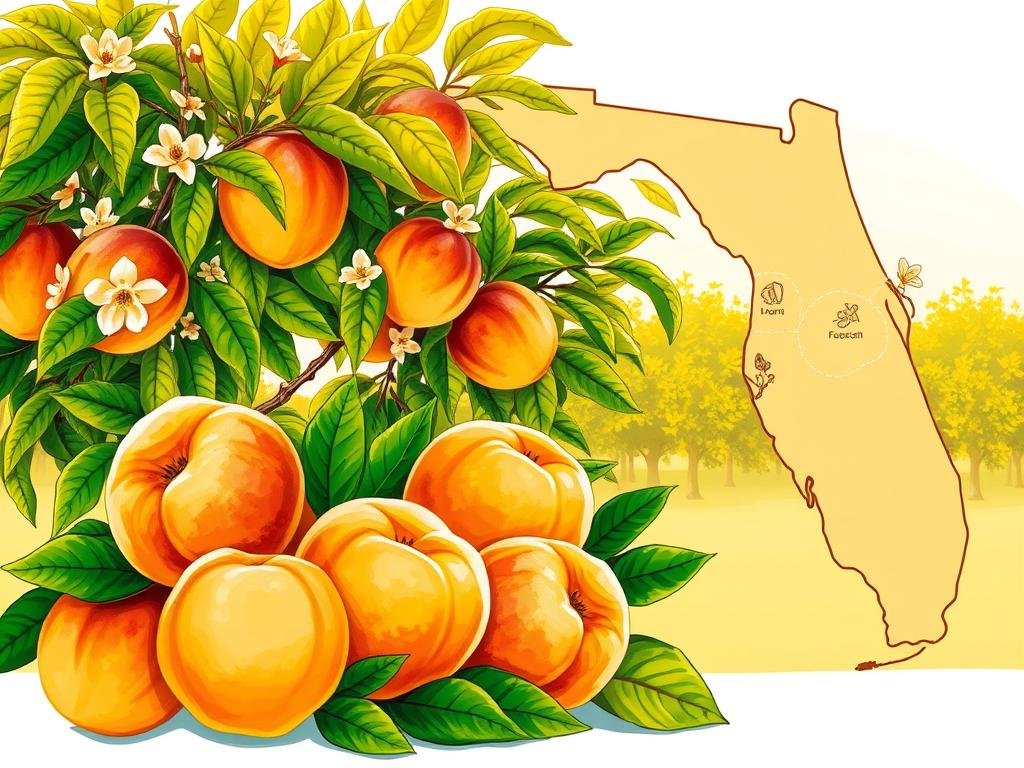
Growers often wonder if they can grow peaches in Florida successfully. The answer varies based on chill hours, bloom timing, and pest pressure. With UF/IFAS guidance, they can find the right peach varieties for each region. This keeps peach farming in southern states strong, even in warmer winters.
North Florida: 300–350 chill hour cultivars and frost risks
In North Florida, growers do best with 300–350 chill hours. ‘FloridaCrest’ and ‘FloridaDawn’ are good choices, with ‘FloridaCrest’ at 350 and ‘FloridaDawn’ being semi-clingstone. An extended bloom window helps protect against late frosts.
When growing peaches near the Georgia line, it’s important to spread risks. Plant trees on slight slopes, avoid frost pockets, and use windbreaks. These steps help match peach varieties with Florida’s weather.
Central Florida: balancing chill with bloom timing
Central Florida is in a middle band, so growers choose 200–300 chill hour options. Non-melting varieties like ‘UF2000’ and ‘UFGold’ are good choices. They have firm texture and handle well. Bloom timing is key to avoid warm spells.
For peach farming in southern states, steady irrigation and light pruning are key. This ensures good canopy light and airflow. Choosing the right cultivars is about finding the sweet spot between too early and too late.
South Florida: ultra-low-chill choices and fruit fly management
South Florida needs ultra-low-chill selections. ‘UF Sun’ around 100 hours, ‘Florida Prince’ near 150, and ‘Tropic Snow’ near 200 are good choices. They ripen from May to June, matching the area’s brief dormancy and quick spring warm-ups.
Caribbean fruit fly is a big challenge. Growers bag fruit, irrigate deeply but not too much, and fertilize in June, August, and October. In this zone, growing peaches is all about managing pests and keeping the orchard clean.
Note: Recent winters have delivered fewer chill hours statewide, so many orchards now favor the 300-hour range over older 400–500-hour picks for stronger bloom consistency.
| Region | Target Chill Hours | Recommended Cultivars | Key Risks | Management Focus |
|---|---|---|---|---|
| North Florida | 300–350 | FloridaCrest; FloridaDawn | Late frost; variable chill | Site selection, extended bloom buffering, windbreaks |
| Central Florida | 200–300 | UF2000; UFGold | Early bloom after warm spells | Balanced pruning, steady irrigation, bloom timing |
| South Florida | 100–200 | UF Sun; Florida Prince; Tropic Snow | Caribbean fruit fly; sugar dilution | Fruit bagging, 8-3-9 fertilization, disciplined watering |
Conclusion
Florida growers can grow sweet, local peaches by choosing the right varieties for their area. They should plant during the dormant season. UF/IFAS offers several varieties like ‘FloridaCrest’ and ‘FloridaDawn’ for different parts of Florida.
Warm winters mean growers need to track chill hours closely. They should pick varieties needing 100–350 chill hours. Early bloom leads to early harvests, usually from late March to early June.
For growing peaches in Florida, remember to provide full sun and well-drained soil. An open-vase canopy is also key for light and air circulation. These tips help ensure a bountiful harvest.
Proper care enhances flavor. Water deeply but infrequently to avoid diluting sugar. Prune in winter and after harvest to promote fruiting. Use sprays to prevent rust and scab, and protect fruit from wildlife and pests.
With the right care, Florida orchards can produce peaches for 8–10 years. For those wondering if they can grow peaches in Florida, the answer is yes. Follow these tips for a successful harvest.
Be the first to comment