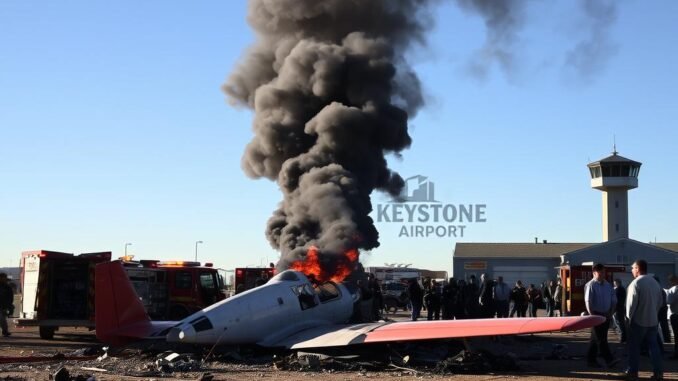

Less than 1 in 10 fatal aviation accidents are aerobatic flights. Yet, this weekend, a seasoned pilot died in Florida. Warren Cilliers, a 46-year-old from St. Augustine, lost his life at Keystone Airport. His plane crashed during a routine display, catching fire on impact.
First responders arrived quickly. The FAA and NTSB started an inquiry the same day. They found no signs of foul play.
Early data shows a controlled flight pattern before a sudden drop. This caught national attention. Aviation attorney Ed Booth shared the details.
The St. Augustine Airport remembered Cilliers as an “exceptional aerobatic pilot.” Fellow pilot Patty Wagstaff praised his safety-first approach. Witnesses near the crash site described a steep climb, rapid descent, and fireball.
The St. Augustine plane crash is under scrutiny. Officials urge patience. A preliminary report could come in weeks, while the final cause may take a year or more.
For now, the community mourns. The fact remains stark: a man died in a plane crash. Experts are working to understand why.
Breaking update on the Keystone Airport plane crash in Florida
The latest news from keystone heights florida shows a small stunt plane crashed near Airport Road by the FIRM. Officials say the scene was fast-moving, with the plane crashing and starting a brief fire. The story is being updated with new information as it comes in.
What local authorities confirmed at Keystone Heights Airport
Bradford County Fire Rescue and the Bradford County Sheriff’s Office confirmed a plane crash at Keystone Airport. It happened near the Florida International Rally & Motorsports Park. The single-engine plane crashed near the field edge, and crews quickly put out the flames.
Drivers in keystone heights fl were told to avoid State Road 100 while responders worked to secure the area.
Timeline: from first calls to fire containment
Emergency calls came in around 10:41 a.m., saying a plane was down near the runway and tree line. The pilot was pronounced dead at about 10:48 a.m. Fire units then worked to cool hot spots.
Florida Highway Patrol later said the plane crashed near Airport Road in Starke around 11 a.m. This matches the response time in keystone heights florida.
| Key moment | Local time | Agency note |
|---|---|---|
| First 911 reports | 10:41 a.m. | Callers describe a plane crash flordia near the FIRM |
| Fatality confirmed | 10:48 a.m. | On-scene confirmation by first responders |
| FHP incident time | ~11:00 a.m. | Single-engine plane crashed near Airport Road |
| Fire contained | Shortly after | Crews prevent spread along State Road 100 corridor |
Why investigators say the inquiry continues
FAA and NTSB teams are looking at wreckage, maintenance logs, and flight data to find out why the plane crashed. They are considering mechanical issues, pilot factors, and weather. There’s no sign of foul play, but the investigation takes time.
Editors note: This update reflects confirmed checkpoints while the florida plane crash review remains active around keystone heights fl.
St. Augustine pilot remembered: community mourns a beloved stunt pilot
In Northeast Florida, people talk about a skilled man from St. Augustine. He amazed everyone with his flying at local shows. His care for others was as big as his skill in the air.
Warren Cilliers, 46, was known for his precise flying and patient teaching. His steady hands made his stunts look easy. Neighbors remember him always ready to help, with tools in hand.
Tributes to Warren Cilliers from the St. Augustine aviation community
At Northeast Florida Regional Airport, his peers remember him as a generous mechanic and teacher. He always put safety first. The St. Augustine Airport community praises his careful checks and briefings.
Local flyers say his hangar was open to all. He was always ready to help, whether it was spotting or teaching. His patience helped many pilots improve.
Patty Wagstaff on his safety-first approach and flight discipline
Patty Wagstaff, a famous aerobatic champion, respects his cautious style. She notes his strict adherence to briefings and safety rules. His steady judgment made him stand out.
Wagstaff praises his checklist approach, from engine checks to wind shifts. This mindset made him a pilot who planned well and debriefed thoroughly.
How his passion for competition flights shaped his legacy
Friends say his love for competition sharpened his focus. He flew with precision, not for the crowd. His hours of practice built a reputation for restraint.
Stories after the crash show he was not reckless. He chose altitudes carefully and checked margins before each stunt. His approach inspired many to fly safely and skillfully.
| Aspect | What Peers Noted | Impact on Community |
|---|---|---|
| Safety Discipline | Strict checklists, box limits, and clear abort points | Raised standards for every plane and pilot on the field |
| Mentorship | Hands-on guidance in aerobatic energy management | More confident trainees and safer practice sessions |
| Competition Focus | Precision sequences over crowd-pleasing risks | Model for balancing show value with caution |
| Mechanical Skill | Engine tuning, airframe care, and preflight rigor | Fewer cancellations and smoother operations |
What witnesses saw near Keystone Heights FL during the aerobatic flight
Just before the crash, people near the airfield saw a plane doing tricks. The routine seemed perfect until it suddenly climbed steeply. This caught the attention of drivers and families nearby.
Eyewitness accounts: steep climb, descent, impact, and fireball
Witnesses said the plane went up sharply, then fell quickly. A brief pause in the fall ended with a hard hit and a fireball. Smoke went up beyond Airport Road, reminding some of past plane crashes.
The sound changed right before the crash, followed by heat and smoke. This quick sequence shocked everyone who saw it.
Jeep fundraiser attendees describe the moment the plane crashed
At a Jeep fundraiser, people watched as the plane went straight up and then fell. Wendy Drinkwater, with 20 years in naval aviation, said the plane climbed straight up and hit on its back side.
Kaila Acosta felt a rush of emotion as a fireball appeared. Their stories added to the news, matching what others saw and heard.
Immediate 911 calls and response near Airport Road and the FIRM
People called 911 right away. Florida Highway Patrol and Bradford County Fire Rescue rushed to Airport Road and the FIRM. They handled a small fire and kept people away.
Their quick response was typical for plane crashes. As the night went on, the crash was linked to past incidents in the area.
| Witness Location | Observed Sequence | Noted Cues | Immediate Action |
|---|---|---|---|
| Jeep Fundraiser Area | Steep climb, rapid descent, impact | Engine pitch change, fireball, smoke | Called 911, moved spectators back |
| Airport Road Shoulder | Vertical maneuver, roll, ground strike | Heat wave, dark plume | Directed traffic, flagged responders |
| FIRM Perimeter | Low pass, climb, sudden drop | Dust and debris on impact | Guided units to exact location |
Official details: FAA and NTSB plane crash investigation status
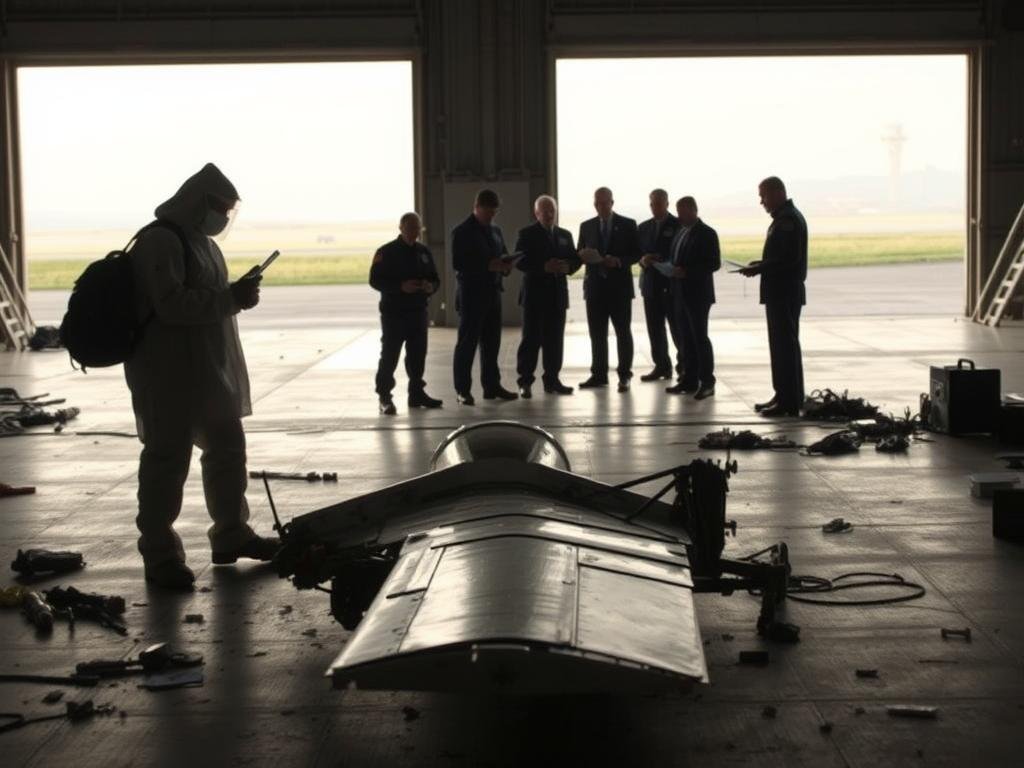
Federal teams from the FAA and NTSB are working together on the plane crash investigation. They are gathering facts, saving wreckage, and documenting the site. There is no sign of foul play as they look into the plane’s recent activities and the pilot’s planning.
Preliminary focus areas: mechanical, pilot, and environmental factors
Investigators are looking into three main areas. They are checking for mechanical issues with the plane, pilot training and recent flights, and environmental factors like wind and altitude. This is similar to what they do in other plane crash investigations.
They are also comparing what witnesses say with data from the plane. They want to see if a control issue, a system problem, or weather matches the crash.
What the preliminary report may include and expected timelines
The NTSB’s first report is expected in a few weeks. It will include details like the aircraft type, flight path, weather, and witness accounts. But it won’t say what caused the crash.
The final report with the cause might take a year or more. This is usual for plane crash investigations. It doesn’t change, no matter how much attention the crash gets.
How maintenance history and flight data guide the inquiry
Teams are checking the plane’s maintenance history, engine and propeller status, and any recent repairs. They compare this to parts found at the crash site to find any oddities.
Flight data, when available, helps them understand the plane’s performance. Aviation attorney and pilot Ed Booth said the plane flew a lot in October. The pilot had a full day planned in Keystone, from 9 a.m. to 5 p.m. This supports a detailed look at the pilot’s planning and preflight steps.
| Inquiry Element | What Investigators Collect | Why It Matters | Applies To |
|---|---|---|---|
| Mechanical | Wreckage layout, engine teardown, control continuity | Identifies component faults or failures | This case and latest plane crashes |
| Pilot | Training logs, currency, medical, recent sorties | Frames workload, decision-making, proficiency | All aerobatic operations |
| Environment | Weather, NOTAMs, airspace, field conditions | Shows external pressures on performance | Airpark and plane crash in florida on highway contexts |
| Documentation | Maintenance records, work orders, service bulletins | Links history to on-scene findings | Every plane crash investigation |
| Data Sources | ADS-B, GPS traces, avionics logs, photos, video | Reconstructs flight profile and timing | fl plane crash reviews and beyond |
Flight data insights: Extra EA-300/EA-330 performance before impact
Flight track data gives us a close look at the plane and pilot’s actions before the crash. The Extra EA-330, known for its aerobatic skills, followed a familiar path before disaster struck. A pilot flying such a high-performance plane must be extremely precise, as small mistakes can be fatal.
Rectangular pattern indicating control, then sudden loss
Experts found a clean rectangular track, showing steady turns and headings. This pattern suggests the pilot was setting up for aerobatic maneuvers. But then, the pattern stopped abruptly, leading to a crash.
Rapid altitude changes: 2,700 to 3,800 feet, then a drop to 1,000
At around 10:30 a.m., the plane quickly rose from 2,700 feet to 3,800 feet. Then, in just two minutes, it plummeted to 1,000 feet. Such rapid changes are unusual, even for skilled pilots.
Descent rate context: why 13,440 fpm indicates uncontrolled flight
The descent rate was an astonishing 13,440 feet per minute. In aerobatics, pilots control descent with the throttle and angle. But this rate is far beyond what’s normal for this plane. It shows the moment when control was lost and the crash became inevitable.
Safety context for aerobatic flying and stunt pilot operations
High-energy routines need strict discipline. Before a stunt, pilots plan escape routes and brief ground crews. They also check the weather and fuel.
FAA rules: safety zones, altitude minimums, and airspace use
The Federal Aviation Administration sets rules for aerobatic flying. These include waivered airspace, crowd setbacks, and minimum altitudes. Safety lines are marked, and pilots fly away from people and roads.
After serious events, teams review waivers and certificates. They check if the plane followed the flight area and altitude rules. This helps understand what happened in a crash.
Why low-altitude manoeuvres increase risk in a florida plane crash
Low altitude makes it hard to recover from a stall or power loss. A small mistake can lead to a crash. That’s why flying low is risky.
When a pilot dies in a crash, experts talk about speed, G-load, and terrain. Even skilled pilots can lose altitude during a stunt or mechanical issue.
Extra EA 300/EA-330 safety record and pilot training standards
The Extra EA-300 and EA-330 are known for their safety. They are used by Red Bull Air Race pilots and U.S. flight schools. Their safety record shows strict checks and training.
Training focuses on energy management and emergency procedures. After a crash, maintenance logs and instructor sign-offs are reviewed. This helps understand the pilot’s preparation.
Community impact in Keystone Heights Florida and St. Augustine
News of a plane crash in Keystone Heights Florida and St. Augustine shocked everyone. People followed keystone heights fl news for updates. Families checked on friends at events nearby.
Local aviation groups shared memories and advice for coping. This helped the community in the days following.
Event disruption at the nearby fundraiser and public safety messaging
A Jeep fundraiser paused when a loud boom startled everyone. People moved away from State Road 100. First responders secured the area around the plane.
The Bradford County Sheriff’s Office asked drivers to avoid the airport. This allowed crews to work without delay.
Public safety messages urged patience and clear routes for emergency access. Organizers worked with deputies to help attendees depart calmly.
How keystone heights fl news and news4jax.com covered the scene
Regional outlets like news4jax.com and Jacksonville Today provided on-scene details. They helped readers know what was true and what wasn’t. Coverage included the investigation, the pilot’s identity, and witness accounts.
For a quick summary of early findings and agency roles, see this summary report. It echoed key statements from keystone heights fl news.
Updates focused on verified sources and avoided speculation. They kept the focus on safety notices, traffic changes, and community resources.
Support for the pilot’s family and local aviation circles
Friends in St. Johns and Clay counties organized meal trains and memorial flights. This showed how a plane community comes together after a loss. Fellow pilots in Keystone Heights Florida offered mentorship and set up donation channels for the pilot’s family.
Social posts also linked counseling services for those affected. As vigils formed, local leaders encouraged respectful sharing of memories. They directed further inquiries to official channels handling the investigation and public updates.
What we know about the crash scene and response
The crash happened near the edge of Keystone Heights Airport. It was where Keystone Heights, FL meets the tree line by the Florida International Rally & Motorsports Park. The debris field was small, showing it was a local crash, not a highway crash.
People near a fundraiser saw smoke from State Road 100 South and Airport Road in Starke. The area was closed off. Crews worked on the wreckage and directed traffic away.
Location specifics: near State Road 100 and the motorsports park
The crash was near the main runway, close to the motorsports park entrance off State Road 100. Deputies marked a path from a scorched area to the wreckage. This kept it away from public paths and parking.
Teams set up vehicles on Airport Road to keep lanes clear. This kept spectators away from the crash site. Aviation staff documented the scene.
Bradford County Fire Rescue actions to contain the blaze
Bradford County Fire Rescue arrived quickly to fight the fire. They put out flames, cooled hot spots, and checked for runoff near State Road 100.
After the fire was out, firefighters set up safety zones. They also did environmental checks with county partners. Their fast action kept damage limited to the crash area.
Securing the wreckage and protecting nearby spectators
The Sheriff’s Office and airport staff widened the security line. They used tape and vehicles to keep a safe distance from the crowd. This prevented injuries and kept people out of the crash zone.
Then, authorities made the site ready for federal teams. They preserved the plane for FAA and NTSB review. With controlled access, traffic and foot movement near Keystone Heights, FL stayed orderly.
Related search interest: plane crash St Augustine and Jacksonville coverage
As news spread, people searched for updates on the plane crash. They looked for information on the plane crash in St. Augustine and Jacksonville. They also searched for traffic advisories on State Road 100.
Many checked the closest airport to St. Augustine Florida for news. They wanted to know the facts and avoid rumors. This is important during a plane crash investigation.
How “jacksonville plane crash today” trends connect to this story
When alerts pop up, people search for answers. The term “jacksonville plane crash today” leads to local reports. These reports also mention the plane crash in St. Augustine.
This overlap helps place the crash near Keystone Heights. It explains why airpark terms appear in city headlines.
Readers compare timelines and aircraft types. This helps distinguish this event from other stories. It separates the aerobatic event from unrelated incidents.
Understanding terms: florida plane crash on highway vs. airpark incidents
Headlines can be confusing. A “florida plane crash on highway” suggests road closures. An “airpark incident” refers to crashes near runways.
Knowing the location shapes expectations. It affects witness statements, debris paths, and agency roles. It also guides travelers looking for updates at the closest airport to St. Augustine Florida.
Why “plane crash investigation” updates can take a year or more
Agencies release data in phases. A preliminary report gives basic facts. A full investigation reviews wreckage, systems, and human factors.
Deep dives into metallurgy and maintenance logs take time. Search interest spikes when new updates appear. Even misspellings like “plane cradh” show the ongoing interest in verified information.
| Search Term | User Intent | Typical Source | What Readers Learn |
|---|---|---|---|
| jacksonville plane crash today | Immediate updates and location context | Local TV stations and city alerts | Regional framing and how this story relates to nearby incidents |
| plane crash st augustine | Identity, community notices, tributes | Airport posts and local newsrooms | Names, memorials, and community impact tied to the plane |
| florida plane crash on highway | Road closures and traffic safety | DOT advisories and sheriff updates | Differences between roadway scenes and airpark events |
| plane crash investigation | Official findings and timelines | Agency reports and public dockets | Phased reporting, evidence reviews, and why results take time |
| closest airport to St. Augustine Florida | Official statements and flight info | Airport communications | Verified updates, service notes, and community guidance |
Key takeaways and verified facts at this stage

Many details about the plane and its final moments are agreed upon by authorities and witnesses. These points show what investigators have found and what the public knows. They talk about the pilot and the plane’s mission.
The pilot: a 46-year-old St. Augustine man identified as Warren Cilliers
Warren Cilliers, 46, from St. Augustine, was confirmed as the pilot. He was well-known in Florida for his skills in aerobatics. His death has shocked the community, with friends remembering his mentorship.
The aircraft: single-engine Extra EA-300/EA-330 used for aerobatics
The plane was a single-engine Extra EA-300/EA-330, built for aerobatics. It was used in training and competitions. The plane followed a controlled path before showing signs of trouble.
Signs with a keystone logo were seen by witnesses. These became important as reports of the crash spread.
The status: FAA/NTSB inquiry ongoing; no foul play indicated so far
The FAA and NTSB are investigating at keystone. They are looking into operations, maintenance, and the environment. The early signs point to aerobatic maneuvers before the crash.
There is no evidence of foul play. The fire was quickly put out by Bradford County Fire Rescue. This helped responders after the incident.
Conclusion
The crash at Keystone Heights Airport took the life of St. Augustine pilot Warren Cilliers. It happened during a planned aerobatic flight, watched by a Jeep fundraiser crowd. First responders quickly put out a small fire and secured the scene, finding no other injuries.
FAA and NTSB teams are now studying the crash. They are looking at mechanical systems, pilot factors, and local weather. A preliminary report is expected in weeks, and the final cause might take a year.
News4Jax and Jacksonville Today will keep everyone updated as more information comes in.
Friends and aerobatic legend Patty Wagstaff remember Cilliers as precise and safety-focused. His record in competition flying showed his discipline and steady voice. This legacy teaches us about training, checklist discipline, and making quick decisions in changing conditions.
The loss also affects more than just the aviation community. People think about risk and safety when traveling or hearing about plane crashes. Events like a Jeep meet-up and the St. Augustine Christmas parade show respect for emergency planning and communication.
As the investigation moves forward, data will guide the conclusions. This story is based on facts and compassion for Cilliers’ family. Investigators will follow the evidence, and the public will learn what is known and what is not.
Be the first to comment