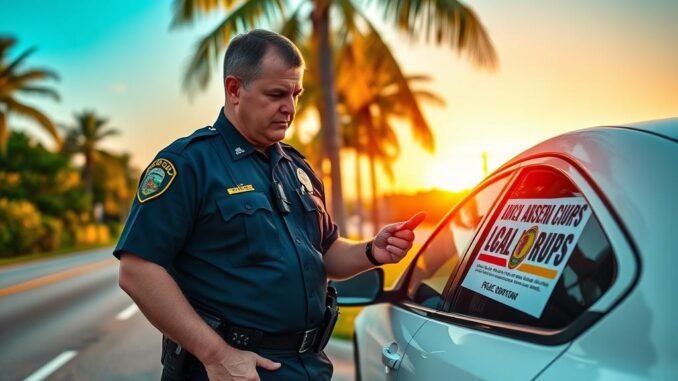

One in five Americans shows a message on their car. But, few think they’ll get arrested for it. Dillon Shane Webb, a Lake City driver, learned this the hard way with his “I Eat Ass” sticker.
His arrest was a clash of words on glass and the First Amendment. The charges were eventually dropped. Prosecutors said it was a free speech issue.
A federal judge later agreed, saying the stop and arrest were justified. This ruling helped the deputy and supervisor in a civil case. It also highlighted the fine line between speech and enforcement.
Section 1 sets the stage for Dillon Webb’s story. It shows how his arrest was seen as a win for free speech. The legal battle is important, even after the criminal charges were dropped.
In Webb v. English, Judge Marcia Morales Howard looked at the law, the sticker, and what makes something obscene. The public debate centered on free speech and police discretion.
For more background, see this report from Reason. It details the stop, booking, and dismissal. This case shows how a few words can spark a big debate over what the Constitution protects.
Overview of the Florida Window Sticker Arrest and Dropped Charges
A routine stop in Lake City caught national attention. It was because of a driver’s crude window decal. This led to an inquiry about obscenity. The case sparked debates over speech on cars, with a Florida man arrested for a sticker having charges dropped.
How a bumper sticker traffic stop escalated into an arrest
In May 2019, a Columbia County deputy stopped a car. The reason was a sexually explicit sticker on the rear window. The driver was told to change it, but refused, citing free speech.
The driver was then arrested, the car searched, and it was towed.
Why prosecutors declined to pursue the case
Days later, the State Attorney’s Office decided not to pursue the case. They considered the First Amendment and found the evidence lacking. This meant the charges against the Florida man were dropped.
This shows how Florida’s obscenity laws on bumper stickers often clash with free speech.
The timeline from stop to dismissal of charges
The stop and arrest happened in May 2019. The driver was given a notice to appear and then refused to change the sticker. He was booked and had to pay a $2,500 bond.
Soon after, prosecutors dropped the case. Months later, a civil lawsuit over the arrest and search went to federal court. This added more to the understanding of Florida’s laws on bumper stickers.
Key Facts From the 2019 Lake City Traffic Stop
In May 2019, a traffic stop in Lake City, Florida, caught everyone’s attention. It was about a sticker that read “I Eat Ass.” This led to a man being arrested, making headlines across the state. We’ll look at the deputy’s actions and the booking that later led to the case being dropped.
Deputy’s initial stop and notice to appear
A deputy from the Columbia County Sheriff’s Office stopped the vehicle. He cited Florida’s obscenity law, looking at the sticker. The deputy then made a notice to appear for alleged obscenity, starting a controversy.
Refusal to alter the “I Eat Ass” sticker and the resulting arrest
The deputy asked the driver to change the sticker. But the driver refused, saying it was free speech. The deputy called a supervisor and arrested the driver, who had his vehicle searched and towed.
Charges booked: obscene writing on vehicles and resisting without violence
The driver was charged with two misdemeanors: obscene writing and resisting an officer. The resisting charge came from not changing the sticker. He was released on a $2,500 bond, a detail often mentioned in the story.
Florida Obscenity Laws and Vehicle Stickers
Drivers see bold decals every day, but the rules behind them are not always clear. Florida obscenity laws bumper stickers are at the heart of a big debate. This debate is about what the state can police on a moving car and what the First Amendment protects. The high-profile Florida man I eat a bumper sticker lawsuit made this debate national news.
What Fla. Stat. § 847.011(2) prohibits
Florida’s law bans “any sticker, decal, emblem or other device attached to a motor vehicle containing obscene descriptions, photographs, or depictions.” This means officers can cite or arrest drivers for messages that are sexual or graphic. This part of the law has sparked disputes in cases involving Florida obscenity laws bumper stickers and the Florida man I eat a bumper sticker lawsuit.
Why legal scholars argue the statute is overbroad
Constitutional scholars, like UCLA professor Eugene Volokh, say the law is too broad. They argue it can punish people for just having a message in public. This is without the strict limits that Supreme Court cases place on obscenity rules. This critique became key as the Florida man I eat a bumper sticker lawsuit clashed with Florida obscenity laws bumper stickers and their impact on public roads.
How obscenity differs from vulgarity under the law
Obscenity is a narrow legal category, often described as hard‑core pornography that lacks serious value. Vulgarity, on the other hand, may be crude but is usually protected speech. A short, bawdy phrase on a tailgate tends to fall in the vulgarity bucket. This is why Florida obscenity laws bumper stickers get tested when phrases like the one at issue in the Florida man I eat a bumper sticker lawsuit appear in traffic.
First Amendment vs. Obscenity in the “I Eat Ass” Sticker Case
The debate centered on what the Constitution protects and what it doesn’t. Dillon Webb’s free speech claims were at the heart of the matter. Courts had to decide if the sticker was vulgar or truly obscene.
Protected speech standards and the SLAPS test
Supreme Court rules say speech is not protected as obscenity if it meets certain criteria. It must depict sexual conduct, appeal to prurient interests, be very offensive, and have no serious value. This is known as the SLAPS test.
Judges, including those in Florida, focus on the value part of this test. The sticker’s message is not seen as having artistic or political value. Yet, it’s not a full depiction of sexual conduct.
The lawsuit between Dillon Webb and the officer centered on where to draw the line. This happened during a roadside confrontation.
Why short vulgar phrases rarely meet the obscenity threshold
Courts have always seen brief, vulgar words as crude but not obscene. Obscenity usually refers to hardcore pornography, not a few words on a truck. This distinction is key in the case of a Florida man arrested for a bumper sticker.
A short, shocking phrase lacks the detail needed to be considered obscene. This is why similar cases are often seen as protected speech, not banned obscenity.
How prosecutors weighed free speech in dropping charges
State attorneys quickly reviewed the case, balancing constitutional limits with Florida’s obscenity law. They considered Dillon Webb’s free speech concerns. They decided a prosecution was not possible under Supreme Court standards.
The decision was based on the realities of trial evidence and the SLAPS framework. These factors also influenced public understanding of the case. They explained why charges were not pursued against a Florida man for his bumper sticker.
Qualified Immunity and the Federal Court’s Ruling
In the case of the Florida man arrested for a sticker, the court looked at qualified immunity. This ruling is key for the Dillon Shane Webb lawsuit. It also guides how similar speech cases are handled in court.
Why the judge granted qualified immunity to the deputy and supervisor
U.S. District Judge Marcia Morales Howard gave qualified immunity to Deputy Travis English and Corporal Chad Kirby. She said reasonable officers could think the sticker was against Florida’s obscenity law, even if it’s now seen as protected speech. This made the Dillon Webb lawsuit narrower and set limits on claims related to the arrest.
The decision didn’t mean the message or arrest were right. It was about what a typical officer might think in the moment. This legal view affected the Dillon Shane Webb lawsuit as it went through federal court.
“Arguably justified” arrests under Florida obscenity law
The court said the arrest was “arguably justified” under Florida’s obscenity law because of the sticker’s wording. This made it harder for First and Fourth Amendment claims from the arrest. For a Florida man arrested for a sticker, this was important. It showed respect for the officers’ quick decisions in unclear situations.
By saying the stop was arguably lawful, the court left room for debate. But it also protected the officers. This balance was key in how the Dillon Webb lawsuit moved forward.
What qualified immunity means for civil lawsuits
Qualified immunity protects officials unless a right was clearly established by earlier cases. If the law is unclear, courts often side with the officer’s mistake. This can stop a case from going to a jury, as seen in parts of the Dillon Shane Webb lawsuit, even if the speech is later seen as protected.
Beating qualified immunity lets a claim go to a jury, but it doesn’t mean damages are guaranteed. In cases like the Florida man arrested for a sticker, this standard often decides where the case goes and the strength of claims.
Nieves v. Bartlett and Timing That Shaped the Outcome
The arrest on Florida man May 9 tested timing as much as the law. Weeks later, the Supreme Court set a new standard. This standard intersected with Dillon Shane Webb’s case, shaping the lawsuit’s path in federal court.
The Supreme Court’s rule on retaliatory arrest claims
In Nieves v. Bartlett, the Court narrowed the path for First Amendment retaliation suits. Even with probable cause, plaintiffs can sue if officers usually wouldn’t arrest for the same reason. They must prove officers acted differently in their case.
Why a decision three weeks later didn’t help this plaintiff
Nieves came three weeks after Dillon Shane Webb’s stop. The rule didn’t exist yet, so the federal court saw it as new guidance. This timing hurt the plaintiff’s arguments in the lawsuit.
How “clearly established” rights control qualified immunity
Qualified immunity hinges on whether a right was clear on the day of the arrest. If not, officers are protected. With Nieves decided after the stop, the court found no clear rights for Dillon Shane Webb. This shaped the analysis tied to Florida man May 9 and the lawsuit’s direction.
Fourth Amendment Issues: Search and Impound Questions
The stop in Dillon Webb Florida didn’t just end with handcuffs. The car was next in line for scrutiny. This is where the Fourth Amendment came into play, sparking a detailed legal review tied to the Dillon Shane Webb settlement.
Vehicle search after arrest and legal scrutiny
After the arrest, a deputy searched the vehicle with a supervisor’s approval. There was no warrant, leading to questions about the legality of the search. In Dillon Webb Florida, these questions are critical and have shaped discussions about the Dillon Shane Webb settlement.
Courts examine if the search was within legal bounds. They look at if any inventory protocol was followed. This scrutiny has influenced the Dillon Shane Webb settlement discussions.
Impoundment and possible overreach
The car was towed after the arrest on a misdemeanor charge. The need for towing was questioned, leading judges to review policies. In Dillon Webb Florida, towing must follow neutral and documented procedures.
If towing wasn’t necessary, it could be seen as an overstep. This possibility has added to the debate around the Dillon Shane Webb settlement and its amount.
Which claim survived in federal court
Qualified immunity protected the deputies on some counts, but the Fourth Amendment challenge moved forward. This decision highlighted the ongoing debate about the search and towing in Dillon Webb Florida.
The focus remains on how the vehicle was handled and inventory practices. This keeps the public interested in the Dillon Shane Webb settlement and its amount.
Media Coverage and Public Reaction
National attention soared after Dillon Webb Florida’s 2019 traffic stop. The headlines called it a Florida man arrested for sticker. The story followed the dropped charges and federal rulings, blending legal details with public interest in dylan webb florida.
Reporting by national outlets on the arrest and rulings
News outlets like the Associated Press and CBS Miami covered the arrest and mugshot. They also shared the initial bond details. As the case progressed, ABA Journal’s Debra Cassens Weiss explained the federal decision and the role of qualified immunity.
Reason and The Volokh Conspiracy provided more context on free speech. Their analysis linked the legal outcome to wider debates. This kept Dillon Webb Florida in the national spotlight long after the trial.
Public free speech concerns and “Florida man” narratives
Social media quickly picked up the “Florida man arrested for sticker” tag. It became a meme fast. This fit a pattern where odd arrests in Florida quickly go viral.
People reacted with both humor and serious concerns about civil liberties. Many wondered: when does crude speech become illegal in public?
The role of legal commentary in shaping perception
Legal bloggers highlighted that short, crude phrases rarely qualify as obscene. This perspective shaped public opinion, even with the officer’s immunity.
By the time the rulings came in, analysis had set the stage. It framed the case as a test of speech rights. This focus on the sticker’s message and enforcement limits kept Dillon Webb Florida in the public eye.
Names, Misspellings, and SEO Variations Surrounding the Case
How people search for news about dillon shane webb is key. They might type in exact names, but often misspellings and shortcuts lead them to the right stories. This affects what news about free speech, policing, and outcomes gets shared.
How “dillon webb florida” and “dylan/dillion webb” appear in searches
Users often search for dylan webb florida or dillion webb when looking for the Lake City stop. Even with typos, search engines usually find the right stories about dillon shane webb. This helps keep the news alive and easily found.
Editors also notice searches that mix location and name, like “Dillon Webb Florida.” This mirrors how headlines are written. And, naming references guide how readers try different spellings.
Why “florida man arrested for bumper sticker” trends
The phrase florida man arrested for bumper sticker is catchy. It fits the pattern of quick, shareable news. When the story came up again, it was in push alerts.
This cycle makes simple searches stick. They lead back to the same event and updates on dillon shane webb.
Related search phrases: settlement rumors, lawsuit framing, and free speech
After charges were dropped, people searched for what happened next. They looked for dillon shane webb settlement and dillon shane webb settlement amount. They also searched for lawsuit details and free speech issues.
Searches often combine names with topics like “obscenity law,” “qualified immunity,” or “Fourth Amendment.” As users refine their searches, they find the same records about the stop, arrest, and later legal actions.
Conclusion
Dillon Shane Webb’s arrest over a crude sticker tested free speech and police actions. Prosecutors dropped the charges soon after, citing the First Amendment. They said the sticker wasn’t legally obscene.
Experts like Eugene Volokh agree. He says a brief, vulgar phrase isn’t the same as hardcore porn. So, the sticker’s message was protected, even if it was offensive to some.
Later, a ruling made things more complex. U.S. District Judge Marcia Morales Howard ruled that the officers had qualified immunity. She said the arrest was justified under Florida’s law at the time.
But, Nieves v. Bartlett came out later, changing the rules. This meant the officers’ actions weren’t clearly wrong. So, Webb’s free speech case won in state court, but lost in federal court due to immunity.
Webb’s case didn’t end there. He won a claim about the search and impoundment of his vehicle. This shows the importance of following procedure and being fair in police actions.
The case got a lot of attention nationwide. It became known as the “Florida man” incident. It highlights the balance between laws and free speech.
It also shows the need for clear laws and careful enforcement. This protects both our rights and the trust in law enforcement. Dillon Shane Webb’s case is at the heart of this important debate.
Be the first to comment