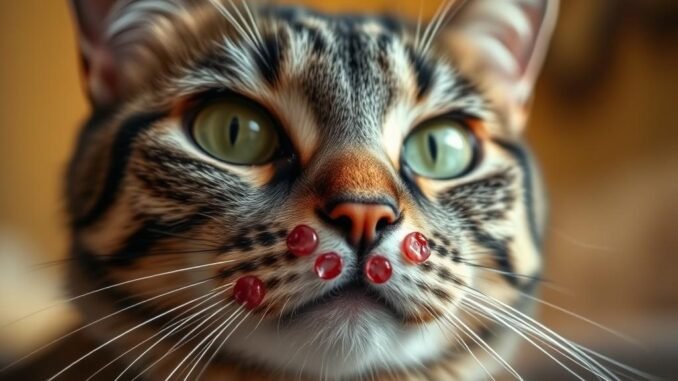

Here’s a surprise: despite the name, 0% of these sores come from rodent bites. When pet owners ask what is a rodent ulcer, veterinarians point out it’s a historical label for an indolent or eosinophilic ulcer—an allergic skin reaction, not a bite wound.
These lesions often sit on the upper lip, look angry and raised, and may bleed, yet most cats act normal and feel little pain. That mismatch fuels worry and confusion. Learning why rodent ulcers in cats are misnamed helps families act fast without panic.
Today, experts group these sores within Eosinophilic Granuloma Complex, a pattern of inflammation linked to allergies, ectoparasites, and sometimes infection. Clear diagnosis relies on the classic look, with cytology or biopsy used when needed. For a plain‑English overview, see this concise guide on rodent ulcers in cats.
Care focuses on calming inflammation, treating any infection, and controlling triggers like fleas or food allergens. A cat rodent ulcer will not heal on its own, but with timely vet care and follow‑ups, most cases improve. If you’ve wondered what a rodent ulcer cat looks like—or why the term persists—this explainer breaks it down so you can spot signs early and help your pet heal.
What Is a Rodent Ulcer in Cats? Understanding the Misnomer
Many pet owners wonder about rodent ulcers in cats when they see a sore on the lip. But these sores aren’t from mice or rats. Vets say they’re a skin and oral reaction, often due to allergies and inflammation.
Why the term has nothing to do with rodents
The name “rodent ulcer” comes from a time when causes were unknown. Now, research shows no link to rodents. This name can confuse families who think pests are the cause, when it’s really an immune reaction.
Correct names: indolent ulcer and eosinophilic ulcer
Vets call these sores indolent ulcers and eosinophilic ulcers. They describe a slow-healing, inflamed sore. When you ask about a rodent ulcer in cats, these names help guide treatment.
Where lesions appear and how they look
Lesions often appear on the upper lip, at the midline. But they can also be on one or both sides. A rodent ulcer on a cat’s lip is firm, with raised edges and a raw center. It can appear quickly and sometimes bleeds, even if the cat seems fine.
How rodent ulcers fit within Eosinophilic Granuloma Complex (EGC)
Indolent ulcers are part of Eosinophilic Granuloma Complex, along with plaques and granulomas. The immune system reacts to allergens or parasites, causing damage. Knowing about EGC helps understand why rodent ulcers behave as they do and why their location is important.
Key takeaway for families wondering what is a rodent ulcer in cats: the name is a misnomer, the process is immune-driven, and the look and location guide the vet’s next steps.
Indolent Ulcer vs. Other EGC Lesions
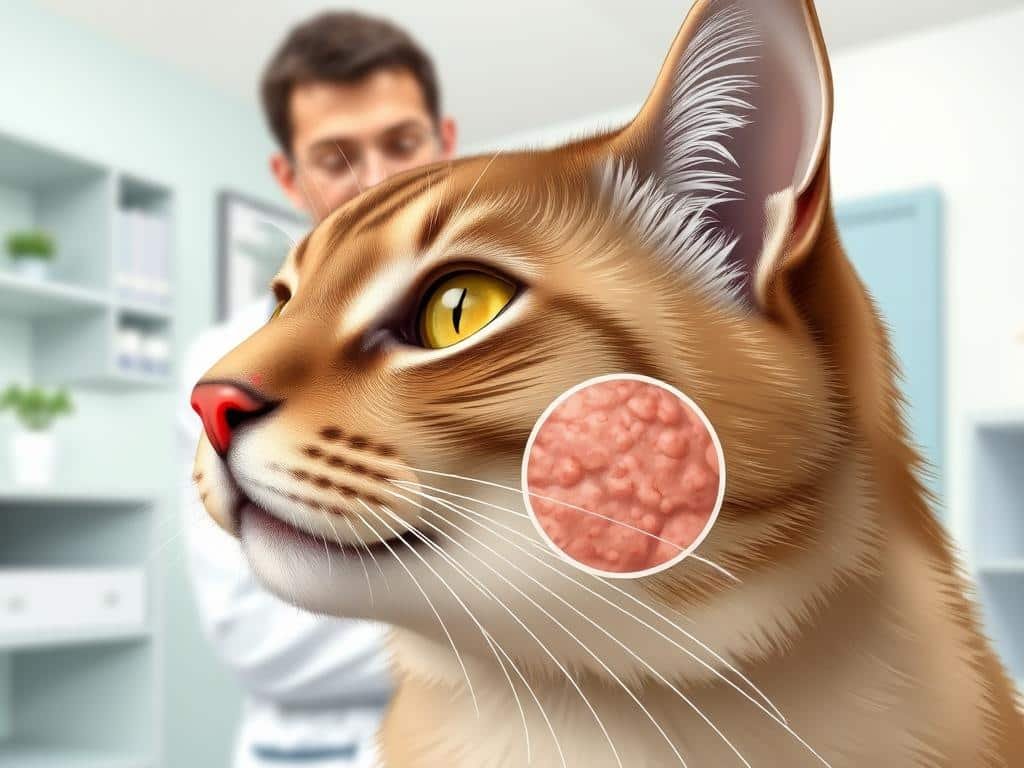
Vets compare each lesion type to guide care. A cat rodent ulcer can look very different from other EGC changes. Clear distinctions help families spot patterns and share precise details during visits.
Indolent ulcer on the upper lip
An indolent ulcer tracks the margin of the upper lip. It often appears eroded and red, with thickened edges that seem severe. Some cats also develop rough areas on the tongue, so oral checks matter when evaluating a rodent ulcer in cats.
These ulcers may not hurt much, even when they look angry. Owners may notice drooling, lip licking, or a flat, moth-eaten edge where hair stops abruptly.
Eosinophilic plaque on belly, thighs, throat, or perianal area
Eosinophilic plaques are raised, raw, and very itchy. They favor the belly, inner thighs, throat, and the perianal region. Scratching and overgrooming can spread bacteria, which compounds the irritation seen with rodent ulcers in cats.
Cytology often shows many eosinophils with mixed microbes. The surface may weep and crust, then thicken into a tender patch.
Eosinophilic granuloma on chin, lower lip, thigh, or footpads
Eosinophilic granulomas may swell the lower lip or chin. On the thigh, they can form a long, narrow band that looks linear. When footpads are involved, growths may ulcerate and bother the cat while walking, and they can be confused with a cat rodent ulcer at first glance.
The texture can feel firm or rubbery. Color ranges from yellow-pink to red, with variable hair loss along the lesion.
Why EGC is a pattern of disease, not a single diagnosis
EGC reflects an eosinophil-driven reaction pattern, not one uniform illness. Allergic triggers and surface infections can push different lesions to erupt at once, which is why a rodent ulcer in cats might appear alongside plaques or granulomas.
Because multiple forms can coexist, teams focus on triggers and control plans. This approach supports lasting relief when rodent ulcers in cats keep returning.
| Lesion Type | Typical Locations | Look and Feel | Common Clues | How It Differs |
|---|---|---|---|---|
| Indolent Ulcer | Upper lip margin; sometimes tongue | Eroded, red, thick rim; flat, hairless edge | Minimal pain; drool or lip licking | Often mistaken for a cat rodent ulcer alone, but may occur with plaques |
| Eosinophilic Plaque | Belly, inner thighs, throat, perianal area | Raised, raw, moist, very itchy | Overgrooming; secondary bacteria on cytology | Pruritic patch, unlike the firmer bands of granuloma or the ulcerated lip |
| Eosinophilic Granuloma | Chin, lower lip, thigh (linear), footpads | Firm, pink-yellow, linear or nodular; may ulcerate | Chin swelling; lameness if pads are involved | Linear thigh lesions and pad involvement set it apart from a rodent ulcer in cats |
Signs and Symptoms Cat Parents Notice
Many owners first spot a sudden change on the upper lip. A rodent ulcer cat lip often shows up fast, looks dramatic, and can worry even calm caretakers. While these lesions sit under the umbrella of rodent ulcers, the cat may eat, groom, and act normal.
Raised, well-defined ulcers with thickened edges on the lip
They tend to be raised and sharply outlined, with firm, thickened borders on one or both sides of the upper lip. A rodent ulcer cat lip may look raw, shiny, or yellow-pink. Some cats show a slight drool stain where the lesion touches the tooth line.
Lesions that look severe yet are often not painful
Despite the bold look, many cats do not act sore. With rodent ulcers, the cat may crunch kibble, accept chin scratches, and play. Owners often note normal appetite and behavior even when the spot appears intense.
Sudden appearance and possible bleeding without distress
These areas can seem to appear overnight. A rodent ulcer cat may have mild oozing or brief bleeding after grooming or eating. The sight can be alarming, but the cat often stays calm and comfortable.
When lip damage can become destructive if untreated
Left alone, the lesion can widen and erode the upper lip. Tissue loss may leave a lasting change in the lip’s shape. Early attention helps limit damage and reduces the chance of repeat flare-ups linked to rodent ulcers.
| What Owners See | Typical Location | Cat Behavior | Why It Matters |
|---|---|---|---|
| Raised, well-defined ulcer with thick edge | Upper lip, one or both sides | Eats and grooms normally | Classic look of a rodent ulcer cat lip |
| Raw or shiny surface, mild oozing | Margin near incisors or canine tooth | Little to no apparent pain | Rodent ulcers can bleed but cause minimal distress |
| Rapid onset, “overnight” change | Focal spot that may expand | Active, playful, normal appetite | Signals a rodent ulcer cat flare that needs timely care |
| Thickening and erosion if ignored | Upper lip contour | May stay calm despite damage | Risk of permanent cosmetic change without intervention |
Root Causes and Triggers Behind Rodent Ulcers in Cats
They often start with the body’s own defenses misfiring. When people ask what is a rodent ulcer, vets point to immune overreaction that targets the lip. In many cases, rodent ulcer in cats reflects a hypersensitivity cycle that inflames tissue and draws in eosinophils.
Allergic drivers: food, environmental allergens
Food proteins, pollen, dust, and mold can push the immune system into overdrive. This response releases chemicals that damage the lip surface and keep swelling active. For some cats, rodent ulcers in cats calm only after strict diet trials and careful control of indoor allergens.
Ectoparasites: flea, tick, mosquito hypersensitivity
Even a few bites can set off a flare. Flea saliva is a classic spark, but ticks and mosquitoes can play a role too. Year-round prevention reduces triggers and gives the skin a chance to recover from a rodent ulcer in cats without repeat insults.
Infections: bacterial, fungal, and viral contributors
Bacteria and yeast can pile on once the surface is broken. This adds odor, crusting, and delays healing. Calicivirus and feline herpesvirus may complicate oral disease; they can intensify inflammation while the team manages comfort and hygiene around what is a rodent ulcer.
Immune dysregulation and rare systemic diseases (FeLV, autoimmune)
Some cases track back to immune imbalance that amplifies minor skin injury. On rare occasions, FeLV or autoimmune conditions appear alongside rodent ulcers in cats, prompting targeted testing. Genetics and self-proteins released by scratching may also keep the reaction going.
How Vets Diagnose Indolent Ulcers and EGC
Vets start by listening to the cat’s story and examining the lips and mouth closely. They look at allergy risks, flea exposure, and past flare-ups. Pet parents often wonder about rodent ulcers in cats. The exam helps answer this while differentiating them from other oral diseases.
Clinical exam and classic lesion appearance
The key lesion is on the upper lip: a raised, ulcerated patch with thick edges. Vets check if the surface is dry and calm or raw and painful. They use pattern, location, and symmetry to classify the ulcer.
Cytology: tape prep or fine-needle aspiration
A tape prep or fine-needle aspiration gets cells for the microscope. They often find many eosinophils, and sometimes bacteria or yeast. These tests support the diagnosis of rodent ulcers and guide the initial treatment plan.
When to biopsy to rule out cancer or mimics
Biopsy is needed for unusual, destructive, or slow-to-heal lesions. It helps rule out cancer and other conditions like severe infections or immune issues. It also finds hidden causes like Demodex mites or dermatophytes.
Supplemental testing: blood work, viral tests as indicated
Complete blood counts can show an elevated eosinophil count during allergies or parasites. For mouth ulcers beyond the lip, viral tests for calicivirus or FHV-1 might be done. An anesthetized exam with dental radiographs or CBCT checks for periodontal disease or stomatitis linked to rodent ulcers.
| Diagnostic Step | What It Checks | Typical Findings | How It Guides Care |
|---|---|---|---|
| Clinical Exam | Lip location, margin texture, overall pattern | Indolent, raised, thick-edged upper lip lesion | Supports identification of rodent ulcers and EGC pattern |
| Cytology (Tape Prep/FNA) | Cell types, microbes | Eosinophils; occasional bacteria or yeast | Backs diagnosis and informs antimicrobial choices |
| Biopsy | Tissue architecture and tumor screening | Rules out squamous cell carcinoma; detects mimics | Refines diagnosis when cases are atypical or refractory |
| Blood Work | Eosinophil count, systemic clues | Possible eosinophilia with allergy or parasites | Signals allergic or parasitic drivers in a rodent ulcer cat |
| Viral Testing | Calicivirus, FHV-1 in oral disease | Positive results in broader oral ulceration | Shapes antiviral or supportive strategies |
| Dental Imaging | Teeth, roots, and surrounding bone | Periodontal disease or stomatitis present | Addresses concurrent pain sources linked to what is a rodent ulcer in cats |
Treatment Options: From Acute Care to Long-Term Control
Effective treatment for rodent ulcers in cats starts with reducing inflammation and stopping infection. This allows the tissue to heal. Many ulcers are caused by allergies, so treatment includes both short-term relief and long-term prevention.
Early treatment is key to avoid lasting damage to the lip. It also helps the cat eat and groom comfortably.
Reducing inflammation: steroids and anti-inflammatory strategies
Vets often start with corticosteroids like prednisone or prednisolone. These drugs reduce swelling and stop the immune system from overreacting. If needed for a long time, the dose is slowly reduced while watching for side effects.
Omega-3 fatty acids, stress reduction, and soft food can help during healing. An Elizabethan collar prevents licking or rubbing that can make the ulcer worse.
Addressing infections: antibiotics or antifungals
Secondary infections can slow healing. If tests show bacteria, antibiotics are prescribed. For yeast or fungi, antifungals are used. Cleaning the ulcer with a gentle rinse helps the medication work better.
Allergy-focused plans: diet trials, flea control, and immunotherapy
Many rodent ulcers are caused by allergies. Controlling allergens is key. Flea prevention is important, even for indoor cats, as a single flea bite can cause a flare-up.
For food allergies, a strict diet trial is done. If environmental allergies are suspected, blood or skin tests guide immunotherapy. This can reduce future episodes.
Advanced therapies: cyclosporine, doxycycline, laser/cryotherapy
For tough cases, cyclosporine can be used. It lowers inflammation without steroids. Doxycycline is also an option for its effects against bacteria and inflammation.
For resistant lesions, laser ablation or cryotherapy may be used. These methods remove diseased tissue and promote healing. In some cases, interferon-alpha is tried. Other health issues are also treated to support recovery.
Prevention, Recurrence, and At-Home Management
Keeping a routine helps manage rodent ulcers between vet visits. A cat with a rodent ulcer benefits from simple steps at home. These steps prevent new bites, reduce allergens, and track patterns. Early action helps limit damage when a rodent ulcer starts.
Year-round flea and tick prevention to reduce flare-ups
Use vet-recommended preventives every month, even in winter. Brands like Bravecto, Revolution Plus, or Seresto block bites that can cause rodent ulcers. Skipping doses lets fleas or ticks bite, which can trigger a flare-up.
Apply products on schedule, set reminders, and treat all pets. Wash bedding in hot water and vacuum often to lower the risk of repeat exposure.
Limited-ingredient or prescription diets for suspected food allergy
When food is a driver, a structured elimination diet offers clarity. Vets often choose hydrolyzed or novel-protein recipes. During the trial, no treats or table scraps.
If signs ease, reintroduce ingredients one by one with guidance. This method can reduce how often rodent ulcers recur. It helps match a long-term diet to the cat’s needs.
Environmental allergy strategies and monitoring
Reduce dust, pollen, and mold where possible. Use HEPA filtration, rinse paws after outdoor time, and wipe the face after meals. For confirmed allergies, vets may suggest allergen-specific immunotherapy based on testing.
Track seasonality and note when a cat rodent ulcer worsens. A simple log of weather, diet, and cleaning routines can reveal triggers. This guides adjustments.
Why ulcers won’t heal on their own and the importance of rechecks
Indolent lesions need medical care. Rodent ulcers respond to anti-inflammatory and antimicrobial plans set by a veterinarian. Waiting leads to deeper, more stubborn lip changes. Follow dosing directions closely and do not stop early.
Regular rechecks confirm healing and fine-tune therapy. Vets monitor for effects from steroids or cyclosporine and adapt allergy control to prevent relapse. Owners should watch for new lesions and contact the clinic promptly.
Cost Considerations and When It’s an Emergency
Many cat owners wonder about the cost of treating rodent ulcers in cats. Most treatments are done on an outpatient basis. But, if the condition is severe, the cost can go up. Knowing what to expect helps families plan their budget.
rodent ulcer cat treatment cost factors: exams, cytology, meds, diet trials
The cost starts with the first exam and follow-up visits. Tests like cytology and blood work add to the bill. If cancer is a possibility, a biopsy might be needed. This is based on the dermatology overview.
Medication costs vary. Steroids and anti-inflammatories are common. Antibiotics, antifungals, and other medications might be added. Treatments like laser therapy can also be part of the cost. Ongoing expenses include flea and tick prevention and special diets.
Typical course length and need for follow-ups
Initial treatment aims to control inflammation and infection. Follow-ups are key to track progress and adjust treatment. Cats may see improvement in weeks, but long-term care is often needed.
Regular check-ups are important to adjust the treatment plan as needed. Blood tests may be required for cats on certain medications. This approach helps manage the condition effectively.
When urgent care is warranted vs. routine vet visits
Most rodent ulcers are not emergencies. A cat that is eating well and comfortable can usually wait for a routine visit. But, if a cat shows signs of pain, refuses to eat, or has severe swelling, urgent care is needed.
Seek immediate help if ulcers spread or if there are signs of oral cancer. Anesthesia may be required for a thorough exam. Quick action is essential for the cat’s comfort and effective treatment.
Conclusion
The term “rodent ulcer cat” is misleading. It refers to a type of ulcer on a cat’s upper lip. This ulcer is part of the Eosinophilic Granuloma Complex and is usually not painful.
The cause is often allergies or bites from fleas or mosquitoes. Sometimes, infections or rare diseases can also play a part. Vets diagnose it by examining the cat, checking cells and bacteria, and sometimes doing a biopsy.
Treatment aims to reduce inflammation and stop the cause. It may include steroids and antibiotics. Long-term, it involves preventing fleas and ticks, special diets, and allergy treatments.
For cats with this condition, getting help from a vet is key. Regular check-ups help the ulcer heal and prevent scarring. With the right care, most cats can live comfortably and relapse less often.
Be the first to comment