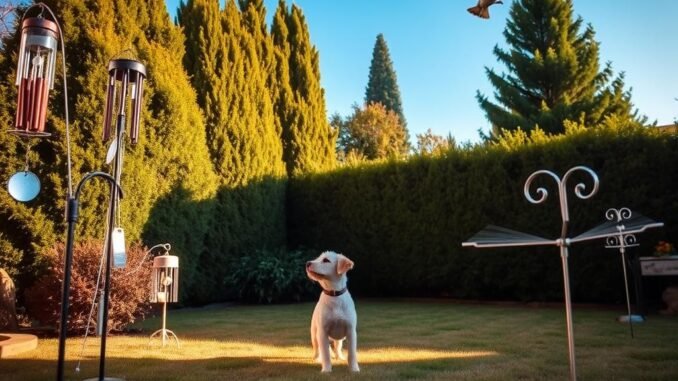
The United States is home to about 25 hawk species. Red-tailed hawks nest in every state except Hawaii. Attacks on dogs are rare, but cases like the 2019 story of a 2-pound Yorkie in Las Vegas are a reminder of the danger.
In suburbs, parks, and trails, hawks and small dogs often meet. Hawks might see a small dog as prey, thinking it’s a rabbit or squirrel. So, owners must take steps to protect their pets without harming wildlife.
This guide offers simple, effective ways to keep hawks away from small dogs. It covers using covered play areas, watching them closely, and using humane deterrents. It also talks about what to do if a hawk attack happens and how to choose safer routes and remove attractants at home.
The main aim is to protect small dogs from hawks while following the law. With the right routines and tools, pets can enjoy the outdoors more safely and with less worry.
Understanding the risk: hawks, owls, and raptors around U.S. homes
Raptors like hawks and owls are getting more common in suburbs and rural areas. They like lawns, greenbelts, and school fields. As homes and buildings grow, so do the chances of seeing these birds. Families want to keep their small dogs safe without hurting the wildlife.
Why raptors target small pets and when attacks are most likely
Raptors hunt what they can carry. Small dogs that move like rabbits might get attacked. This is why it’s important to watch them in open places.
Hawks hunt during the day, mostly in the morning and late afternoon. In winter, they hunt more because days are shorter. Keeping small dogs close during these times can help avoid attacks.
Species commonly implicated near neighborhoods and trails
Red-tailed hawks are everywhere, even in parking lots and parks. Northern goshawks, red-shouldered hawks, and Harris’s hawks also like areas where dogs and people walk. Great horned owls hunt at night, near creeks and woodlots.
These birds are a problem on neighborhood walks and trails. They like tall trees and open fields. Walking in shaded areas can help keep small dogs safe.
Daytime vs. nighttime threats: hawks versus great horned owls
By day, hawks fly around, looking for prey. At night, great horned owls sneak up on their victims. In cold weather, owls might hunt during the day too.
Changing when you go for walks can help. In the day, watch the sky and keep dogs on a leash. At night, turn on lights, walk with someone, and make noise. These steps can protect dogs from hawks and owls.
| Raptor | Primary Active Time | Common Urban/Suburban Perches | Risk Signal to Watch | Practical Owner Response |
|---|---|---|---|---|
| Red-tailed Hawk | Daytime | Utility poles, stadium lights, tall trees | Circling above open fields; repeated perching near yards | Use covered play zones and keep dogs close in open areas |
| Northern Goshawk | Daytime | Forest edges, dense conifers near trails | Fast, low flight through trees | Favor routes with overhead cover; maintain visual contact |
| Red-shouldered Hawk | Daytime | Riparian trees, neighborhood groves | Loud calls from wooded backyards | Supervise yard time; employ visual deterrents |
| Harris’s Hawk | Daytime | Cacti, poles, and rooftops in the Southwest | Group hunting near open lots | Avoid open lots; choose covered paths |
| Great Horned Owl | Nighttime (occasional winter daytime) | Large trees, barn eaves, park woodlots | Deep hoots at dusk; silent low passes | Escort dogs after dark; add lights and noise on exit |
Key takeaway for families: steady supervision, smart timing, and layered yard cover are the most reliable ways to protect small dogs from hawks while respecting protected raptors.
Do hawks attack dogs and can they carry them away
Reports from across the United States show that raptors do strike small pets. Owners often wonder if hawks can lift off with small dogs. Yes, they can, and even failed lifts can cause serious wounds. Understanding size, grip strength, and fall risks is key to keeping hawks away from small dogs.
Documented incidents and weight ranges at risk
News has covered many cases. A 2-pound Yorkie was attacked in Las Vegas in 2019. A 7-pound dog was injured in New Jersey in 2018. A 10-pound Pomeranian was killed in South Carolina by a large hawk. A New Jersey veterinary clinic warned about dogs under 12 pounds being at high risk.
Wildlife experts say red-tailed hawks can take prey up to 6 pounds. Dogs under 20 pounds are in serious danger. There are rare reports of attacks on dogs up to 60 pounds. These facts help us understand how to keep hawks away from small dogs.
How a mid-flight drop can cause fatal injuries
Raptors can’t judge the exact weight of their prey before grabbing. They might lift a dog and then drop it. The fall, not just the talons, can be deadly.
This risk is critical when talking about hawk predators and small dogs. Even a brief lift over pavement or rocky ground can be fatal.
Media examples highlighting sub-12 lb vulnerability
Local TV and national outlets have shown attacks on toy breeds. Dogs under 12 pounds are often in the headlines. An 8-pound Pomeranian was killed after an owl strike and drop, showing how vulnerable light dogs are.
For families trying to keep hawks away from small dogs, these cases are a reminder to be vigilant. Simple habits, guided by hawk prevention tips, can help reduce encounters in backyards and parks.
Which hawk species and raptors pose the greatest threat to small dogs
In U.S. neighborhoods and parks, some raptors are more dangerous to small dogs. They hunt in open yards, trails, and fields. Knowing their hunting habits helps keep small dogs safe without harming wildlife.
Red-tailed hawks: range, size, and hunting behavior
Red-tailed hawks are big, weighing about 3 pounds. They live from Alaska to Florida. They like deserts, tundra edges, grasslands, forests, marshes, and suburbs.
They hunt by day, perching high and scanning for prey. They can strike fast at rabbit-sized animals. Living near people, they often threaten small dogs in open areas.
Shaded spots, close watch, and visible humans can scare them off. This is most effective during their peak hunting hours.
Northern goshawks, red-shouldered, and Harris’s hawks
Northern Goshawks live in the northern U.S., Canada, and Alaska. They nest in mature woods near water and clearings. They are powerful and agile hunters.
Red-shouldered and Harris’s hawks also hunt near towns. They target small pets in edge zones and greenbelts. Keeping small dogs close and limiting open space helps keep them safe.
Great horned owls and golden eagles as additional predators
Great Horned Owls are common in cities and suburbs. They hunt mostly at night but can attack small dogs if they have a clear path. In winter, they hunt in daylight when prey is scarce.
Golden Eagles patrol open country and foothills. Though rare in suburbs, they are powerful predators. Evening vigilance and leashes help deter hawks and other raptors after dark.
Stay with pets outdoors and remain visible
Being with pets outdoors sends a strong signal to hawks. Walking in pairs, wearing bright clothes, and keeping dogs together makes you more visible. This reduces the risk of attacks.
Choose spots with cover and avoid long stays in open lawns. Always scan for hawks and other raptors. These habits help keep small dogs safe while respecting wildlife laws and their natural behavior.
Small dog hawk safety measures for yards and outdoor spaces
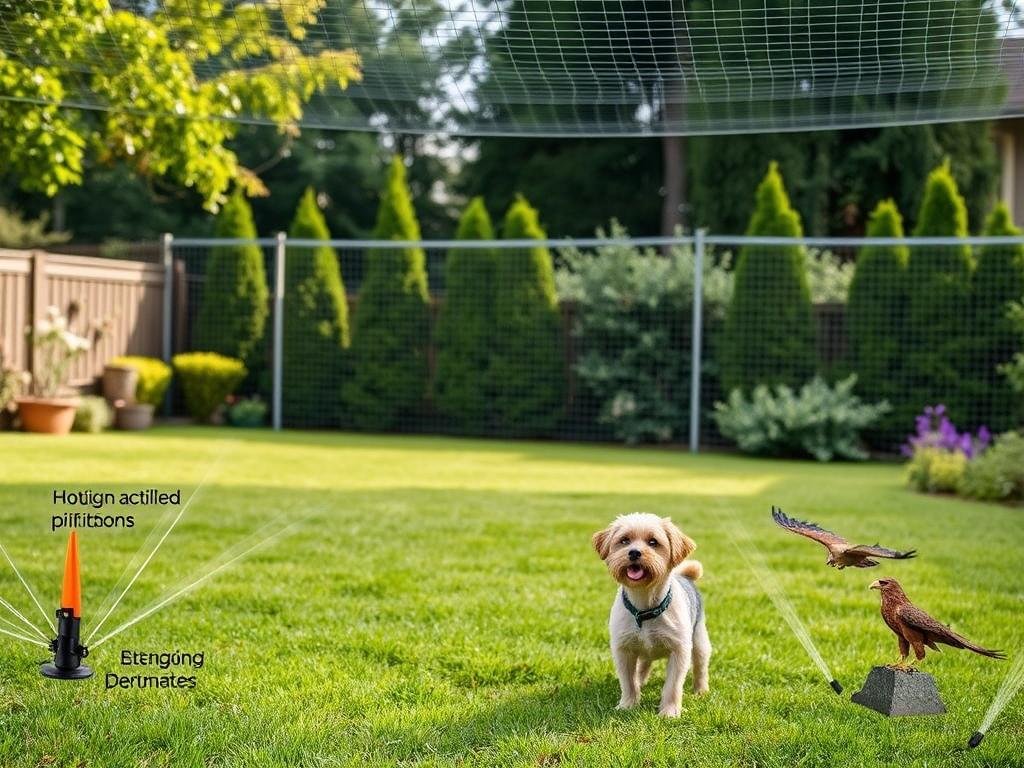
They can turn a yard into a safe haven with a few focused upgrades. These upgrades reduce open airspace and cut sightlines from above. They also limit prey that draws raptors near. The result is simple: more shade, fewer temptations, and stronger barriers.
Build a roofed run or “catio”-style enclosure
A covered run keeps dogs in and hawks out. Use powder-coated steel frames with 14-gauge welded wire mesh or poly mesh rated for wildlife. A solid or translucent roof panel adds shade and rain cover while blocking dive paths.
For durability, anchor posts in concrete and add a skirt of hardware cloth along the base to stop digging. Many pet owners adapt catio plans from brands like Habitat Haven or install modular kennel panels from Lucky Dog to speed setup.
Add tree cover, pergolas, or shade sails to block swoops
Raptors prefer a clean vertical drop. Breaking that line of attack is one of the most effective ways to protect small dogs from hawks. Layer canopy elements: mature trees, a cedar pergola, and UV-stable shade sails from companies such as Coolaroo.
Place seating and play zones under these structures. Include tall shrubs near the run so dogs have visual cover without creating blind spots for people supervising.
Secure feeding areas and remove leftover food
Store kibble indoors and serve meals inside or under a roofed space. Sweep crumbs and pick up bowls after each feeding. This simple routine supports hawk-proofing small dog area plans by reducing rodents and small birds that attract predators.
They should also bin yard waste in sealed containers and skip open compost. When the prey leaves, the raptors lose interest.
| Measure | Primary Benefit | Materials/Specs | Pro Tip |
|---|---|---|---|
| Roofed run or catio | Blocks aerial attacks and weather | 14–16 gauge wire mesh, poly roof panels, concrete anchors | Include a double-gate entry for safer leashing and exit |
| Pergola or shade sails | Interrupts vertical swoops | Cedar or aluminum pergola; UV-resistant sails with heavy-duty hardware | Cross-hatch two sails for better overhead coverage |
| Tree and shrub canopy | Reduces visibility from above | Non-toxic species; spaced to maintain sightlines | Prune lower limbs to keep clear supervision |
| Clean feeding protocols | Limits prey and raptor visits | Indoor feeding, sealed storage, daily sanitation | Remove bird feeders near play areas to curb rodent traffic |
| Ground barrier upgrades | Stops dig-ins and escapes | Hardware cloth apron 12–18 inches out and 6 inches deep | Pair with a self-closing, self-latching gate |
Used together, these ways to protect small dogs from hawks offer layered defense. The mix of structure, cover, and clean habits supports long-term hawk-proofing small dog area goals without losing fresh air or daily playtime.
Hawks deterrent for small dogs: humane repellents that work
Protecting small dogs starts with motion, light, and sound. These things distract hawks. A good plan uses a hawk deterrent for small dogs with visual and audio cues. Each tool is humane and easy to use.
Reflective scare tape and shiny streamers
Reflective “scare tape” and shiny streamers scare hawks away. Old CDs can also be used to add glare. Together, they make yards look busy and hawks uncomfortable.
Put strips near open areas and fence tops. Change their length and angle often. Replace faded tape each season to keep it effective.
Owl decoys and how to reposition them for effectiveness
Owl decoys scare hawks away. Place them where hawks can see them, like on roofs. Move the decoy every few days to keep hawks guessing.
Balloon designs with bold “eye” markings add to the scare. Using them with reflective tape makes the area even more unappealing to hawks.
Ultrasonic bird repellents and placement tips
Ultrasonic units make high-frequency sounds that hawks don’t like. Point them at perches and where hawks often fly. Make sure the coverage overlaps and adjust after windy days.
Using an ultrasonic device with shiny streamers creates a scary zone. This mix keeps hawks away without harming them.
| Method | Primary Effect | Best Placement | Maintenance | Works Well With |
|---|---|---|---|---|
| Reflective scare tape/streamers | Flashes of light disrupt hunting focus | Fence lines, runs, garden arches, open approaches | Replace faded tape; vary lengths and angles monthly | Ultrasonic units, mylar pinwheels |
| Owl decoys | Signals territorial presence to raptors | Roof peaks, tall posts, pergola tops | Reposition every 3–5 days; change height and orientation | Eye-marked balloons, reflective tape |
| Ultrasonic bird repellents | High-frequency sound deters perching and approaches | Facing perches, treelines, and flight corridors | Test coverage weekly; adjust angles after storms | Shiny streamers, a hawk repellent for small dogs strategy |
| Combined approach | Visual and audio stimuli create uncertainty | Layered across yard zones | Rotate elements to prevent habituation | Any hawks deterrent for small dogs and hawk deterrent for small dogs |
Hawk-proofing small dog area with gear and barriers
Creating a safe zone in your yard is possible with the right gear and barriers. Using personal items, smart fencing, and overhead covers can protect your small dogs from hawks. This way, you can keep an eye on them while they play outside.
Start with proximity. Keeping pets close to you helps you react faster. Then, add barriers and protective wear to lower the risk of hawk attacks. These steps help keep your small dogs safe at home or on the go.
Talon-resistant vests with spikes and reinforced panels
Protective vests offer a tough layer against raptor attacks. The CoyoteVest line, including the HawkShield panel, is made from Kevlar. It helps prevent punctures and keeps your dog’s back and neck safe.
For walks, wear a vest with a bright collar and leash. This makes your dog visible and keeps them safe from hawks in open spaces.
Fencing plus overhead netting for supervised play zones
A strong fence sets the boundary. Adding overhead netting or mesh makes your yard safer. It blocks dive paths while keeping the air flowing and views clear.
Secure the mesh to posts or a cable to prevent gaps. This method strengthens your yard’s defenses without making it dark.
Portable pop-up covers for campsites and patios
Shade canopies and pop-up screens offer quick protection when traveling. A tight-weave roof or bird net under the canopy blocks entry points from above. This is useful at parks, beaches, or patios.
These light, foldable structures are great for walks and outdoor time. They provide flexible protection for your small dogs in open areas.
| Solution | Primary Purpose | Key Materials | Best Use Case | Setup Tips |
|---|---|---|---|---|
| CoyoteVest with HawkShield | Personal impact and grip resistance | Triple-laminated Kevlar, optional spikes | Walks, yard time under supervision | Fit snug at chest and neck; attach spikes over high-risk zones |
| Fence + Overhead Netting | Block aerial access to play areas | UV-rated polyethylene or nylon mesh, steel posts | Backyards, side yards, kennel runs | Tension the net; close perimeter gaps; maintain 2–3 in. clearance from branches |
| Portable Pop-up Canopy | Temporary overhead barrier | Aluminum frame, polyester roof, add-on bird net | Campsites, patios, parks | Stake legs; clip netting under roof; keep dogs leashed inside shade footprint |
| Layered Barrier Plan | Comprehensive coverage and visibility | Vest + fence + netting + canopy | Homes with frequent outdoor time | Combine vertical and overhead protection; supervise within arm’s reach |
Together, these tools offer effective ways to protect small dogs from hawks at home and on the road. With the right supervision and design, keeping your dogs safe can be comfortable and easy.
Scare tactics for hawks and small dogs used by pet parents
Pet parents use quick, visible actions to scare off hawks. They aim to keep hawks away from small dogs without harming wildlife. The best methods combine human presence, motion, and sound to protect dogs in yards and on walks.
Noise, motion, and human presence as primary deterrents
When a hawk circles, pet owners step forward, raise their arms, and shout. They use sharp claps, a whistle, or a can with coins to add impact. These tactics work because they break the hawk’s focus with bold human actions.
They stay visible to show the hawk a person and a dog together, not alone. Regular time in the yard with the pet reinforces this message. It keeps hawks away during play breaks.
Leashes, long lines, and group walks as visual intimidation
On trails, a short leash or 15–30 ft long line keeps the dog close. This larger profile can scare hawks away, even in open spaces. Under trees, the leash also helps avoid clear attack lanes.
Walking with friends or multiple dogs adds mass and movement. More bodies mean more eyes and noise. This boosts scare tactics in busy parks and neighborhoods.
| Deterrent | How It Works | Best Setting | Pro Tip |
|---|---|---|---|
| Loud voice and hand claps | Sudden sound disrupts hunting focus | Yards, sidewalks, trailheads | Repeat in short bursts to keep the hawk moving |
| Arm-waving and brisk approach | Big motion signals active human presence | Open lawns and fields | Close distance safely; stop if the bird is already leaving |
| Leash or long line | Dog stays within human profile | Trails and parks with perches | Pair with tree cover to reduce glide paths |
| Group walks | Larger group appears riskier to approach | Neighborhood routes and greenways | Stagger people and dogs to look wide and active |
| Consistent supervision | Visible owners discourage scouting passes | Daily yard play | Rotate between sunny and shaded spots to stay noticeable |
Prevention methods for hawks attacking small dogs on walks

Choosing smart routes and simple habits can keep small dogs safe from hawks. The best ways to prevent hawk attacks involve planning, being visible, and staying near cover. These tips help reduce risks without taking away the fun from walks.
Choose wooded routes and treelines over open fields
Opt for paths under trees, along hedges, or near buildings. A canopy blocks sightlines and dive paths. In open fields, keep dogs close and stick to the edge where there’s shelter.
When trails open up, shorten the leash and avoid wide, bright clearings. Cover makes it harder for raptors to spot and target pets, helping keep small dogs safe.
Time-of-day adjustments to avoid peak raptor activity
Hawks hunt by sight and are most active in bright daylight. Midday in clear areas invites attention. Move walks to late morning or late afternoon when it’s shaded, and choose covered routes when the sun is high.
In areas with great horned owls, avoid dawn and dusk. During winter, owls may hunt in daylight, so use shaded paths and a short leash. These are practical tips for keeping small dogs safe from hawks.
Spotting perches and scanning the sky before letting dogs off-leash
Before letting dogs off-leash, scan the sky and check tall trees, utility poles, and roof peaks. Look for a broad silhouette, fan-shaped tail, or steady glide. If a raptor is seen, stay leashed and move under cover.
Walk with a friend and stay alert. A small group appears larger, helping keep small dogs safe. Keep a short lead in exposed areas to prevent separation, a key part of preventing hawk attacks.
Yard management: deter hawks from small dogs by removing attractants
Smart yard habits make a big difference. Simple changes reduce prey traffic, shrink perch options, and keep daily routines visible. These are practical hawk prevention tips for small dogs that fit busy lives.
Eliminate bird feeders and ground seed that draw prey
Don’t use seed mixes and remove hanging feeders near play zones. Spilled seed pulls in songbirds, squirrels, and mice, which attracts raptors. Clean patios after meals and move pet feeding indoors to deter hawks from small dogs.
For a quick checklist on removing attractants, see this guide on how to protect a small dog from. It stresses cleanup and seed control as core steps for keeping hawks at bay from small dogs.
Control rodents and small wildlife that invite raptors
Seal garbage bins, store birdseed in metal containers, and fix leaky hoses that create water sources. Trim ground cover where rodents hide, and close gaps under sheds. Fewer prey visits mean fewer raptor flyovers and better odds to deter hawks from small dogs.
Use traps approved by local regulations and avoid poisons that can harm pets or scavengers. Active yards with people present add another layer of hawk prevention tips for small dogs.
Maintain trees and clear tall perches near play areas
Keep canopy for shade, but prune high, dead branches above dog runs. Remove lone poles or tall snag points that create perfect lookout posts. This balance helps in keeping hawks at bay from small dogs while providing cover from direct swoops.
Shift play to areas under pergolas or shade sails when possible. Schedule outside time when someone can supervise, which can further deter hawks from small dogs.
| Attractant | Why It Draws Raptors | Action to Reduce Risk | Benefit for Small Dogs |
|---|---|---|---|
| Ground seed and spilled feed | Boosts rodent and songbird activity | Remove feeders, sweep patios, feed pets indoors | Fewer prey sightings, less hawk interest |
| Open trash and stored grain | Provides steady food for mice and rats | Seal bins, use metal containers, fix leaks | Cuts prey density near play areas |
| Tall dead limbs above yards | Creates ideal perches for scanning | Prune branches, relocate play to covered spots | Reduces ambush angles and swoops |
| Quiet, unsupervised yard time | Encourages raptors to linger | Schedule supervised sessions, add human presence | Enhances visual deterrence for hawks |
What to do if a hawk attacks and possible treatment costs
When seconds matter, having a plan is key. Quick action helps protect small dogs from hawks. Being close to the dog can scare the hawk away.
Immediate response: rush, make noise, and avoid harming protected birds
Run towards the dog, shout, and wave your arms. Most hawks will leave when people get close fast. Keep the dog on a leash or pick them up and go inside.
Don’t throw things or hit the bird. It’s illegal and can make things worse. Instead, scare the hawk away by being there, not by fighting.
Injury types from talons and falls and why a vet visit is essential
Talon wounds often hurt the back, neck, or sides. They can be deep and dirty. Even small holes might hide serious damage.
If a dog is dropped, they could have head injuries, broken bones, or bleeding inside. Hidden injuries need a vet check the same day.
Estimated medical costs from stitches to trauma care
Simple care and stitches might cost $100 to $300. But, if you need imaging, fluids, or pain meds, it will cost more.
Broken bones or internal injuries can cost $1,500 to $3,000 or more. Pet insurance from Nationwide, Trupanion, or ASPCA Pet Health Insurance can help pay for it. Quick vet care helps your dog recover.
Legal protections under the Migratory Bird Treaty Act
Raptors, like red-tailed hawks, are protected by law. Hurting, killing, or capturing them can lead to big fines and jail. The first offense for harming a red-tailed hawk can cost up to $15,000 and six months in jail.
In emergencies, the best thing to do is make noise, move fast, and get the pet away. This way, you protect your dog and follow the law.
| Action Step | Why It Works | Timeframe | Cost Impact |
|---|---|---|---|
| Rush and shout while closing distance | Human presence disrupts raptor focus and prompts release | Immediate | Free; key for protecting small dogs from hawks |
| Secure dog and check for wounds | Find punctures, swelling, or shock early | Within minutes | May reduce later complications and costs |
| Visit a veterinarian the same day | Detect internal injuries and infection risk | Hours | $100–$300 for stitches; $1,500–$3,000 for trauma |
| Avoid harming the bird | Complies with federal law protecting raptors | Always | Prevents fines and legal exposure |
| Document incident for insurance | Supports claims with Nationwide, Trupanion, or ASPCA | Same day | Potential reimbursement of medical bills |
Conclusion
Small dogs face danger from raptors, though it’s rare. Dogs under 12–20 pounds are most at risk. Injuries often come from talons or being dropped.
Red-tailed Hawks and Great Horned Owls are common threats. Northern Goshawks, Red-shouldered Hawks, and Harris’s hawks also pose a risk. A good plan can keep small dogs safe without harming wildlife.
Layered prevention is key. Stay outside with pets and be visible. Use roofed runs or enclosures to block hawks.
Remove bird seed and leftover food to avoid attracting hawks. Choose walks with trees over open fields. Use reflective tape, owl decoys, and ultrasonic devices for extra protection.
If attacked, rush toward the bird and make loud noise. Do not try to trap it. Seek vet care for injuries and follow the Migratory Bird Treaty Act.
With constant supervision and smart habitat changes, families can keep small dogs safe. A mix of visibility, barriers, and deterrents is effective. Start this plan today to protect your pets.
FAQ
How can someone keep their pets safe from hawks without harming wildlife?
Supervise your pets outside and keep them under a canopy. Use covered enclosures and add humane hawk deterrents. Reflective tape, owl decoys, and ultrasonic devices work well for small dogs. Talon-resistant vests also help.
Remove bird seed and leftover food to avoid attracting hawks. These methods are legal and effective under the Migratory Bird Treaty Act.
Why do raptors target small pets and when are attacks most likely?
Hawks, owls, and other raptors hunt by sight. They take prey they can lift, often rabbit-sized. They don’t see a tiny dog as different from a wild animal.
Hawks hunt by day, while Great Horned Owls hunt at night. They may be active on winter days. Open yards and fields raise the risk, while treed cover lowers it.
Which species are most often implicated near neighborhoods and trails?
Red-tailed Hawks are common near suburbs. Red-shouldered and Harris’s hawks appear in developed areas. Northern Goshawks are territorial in northern forests.
Great Horned Owls are powerful nighttime predators in cities and suburbs.
What’s the difference between daytime and nighttime threats from raptors?
Hawks are diurnal and rely on sharp vision. The danger peaks in daylight, in open spaces. Great Horned Owls hunt mostly at night but can hunt during winter days.
Adjust your routines: more caution at midday for hawks and near dusk, night, and dawn for owls.
Do hawks attack dogs and can they carry them away?
Yes, attacks are uncommon but documented. Red-tailed Hawks often take prey up to about six pounds. They may try for heavier pets.
Even if they can’t carry a dog, they can grip, drag, or lift briefly. This can cause dangerous drops.
What incidents and weight ranges show the highest risk?
Reports include a 2-pound Yorkie in Las Vegas and a 7-pound dog in New Jersey. A large hawk fatally injured a 10-pound Pomeranian in South Carolina.
A Great Horned Owl lifted an 8-pound Pomeranian. Dogs under 12 pounds face the highest danger; under 20 pounds remain at serious risk.
How can a mid-flight drop cause fatal injuries?
Raptors often misjudge weight. If a bird lifts a dog and drops it, the fall can cause head trauma, internal injuries, or fractures.
Some fatalities come from the drop, not talon wounds.
What media examples highlight sub-12 lb vulnerability?
A 2-pound Yorkie in Las Vegas was attacked. A New Jersey clinic warned about dogs under 12 pounds after a 7-pound dog was targeted. These cases underscore the added risk for toy breeds.
Which hawk species and raptors pose the greatest threat to small dogs?
Red-tailed Hawks top the list due to size, range, and adaptability. Northern Goshawks can be aggressive near nests. Red-shouldered and Harris’s hawks hunt around human development.
Great Horned Owls and, in some regions, Golden Eagles are powerful threats as well.
What should people know about Red-tailed Hawks’ range, size, and behavior?
They occur across most of North America and thrive in deserts, grasslands, forests, marshes, and suburbs. Weighing around three pounds, they hunt by day from perches and take rabbit-sized prey, which overlaps with small dog sizes.
How do Northern Goshawks, Red-shouldered, and Harris’s hawks behave around people?
Northern Goshawks defend territories in northern forests near clearings and water. Red-shouldered and Harris’s hawks adapt to developed areas. All may target small pets when prey is available and the setting is open enough for a swoop.
Are Great Horned Owls and Golden Eagles significant predators of small dogs?
Yes. Great Horned Owls are common in cities and suburbs and are responsible for many dog attacks at night. Golden Eagles, with larger wingspans, can also take small dogs in suitable habitats.
Why does staying with pets outdoors help deter attacks?
Human presence is a strong deterrent. Staying visible, moving, and speaking keeps hawks at bay from small dogs. Group outings and multiple dogs make a larger visual unit that raptors avoid.
What small dog hawk safety measures work best in yards?
Combine a roofed run or catio-style enclosure, overhead canopy, and clean feeding practices. Add humane hawk repellent for small dogs and keep dogs within arm’s reach when outside.
How do you build a roofed run or catio-style enclosure?
Use sturdy wire mesh for sides and top. Provide shade and rain cover, plus fence panels to deter ground predators. This covered space allows sun and airflow while blocking aerial access.
Why add trees, pergolas, or shade sails over dog areas?
Overhead cover breaks the straight-down attack path and reduces visibility from above. Canopies, pergolas, and shade sails make it harder for hawks to spot and swoop a dog.
How should feeding areas be secured to avoid attracting raptors?
Feed indoors, clean bowls after meals, and remove leftover food. Don’t leave bird seed or ground seed that pulls in rodents and small birds, which then attract hawks.
Which humane hawks deterrent for small dogs actually helps?
Reflective scare tape, shiny streamers, owl decoys, and ultrasonic bird repellents can all reduce visits. Rotate and combine tools for better results and to prevent habituation.
How do reflective scare tape and shiny streamers work?
They flash and flutter, disrupting a hawk’s visual hunting. Hang them where sun and wind catch them—along fence lines, trees, and near open approaches.
What’s the best way to use owl decoys?
Place decoys in obvious, elevated spots like roof peaks. Reposition them every few days so birds don’t get used to them. Pair with other deterrents for more impact.
Do ultrasonic bird repellents help, and where should they go?
They can help when layered with other methods. Aim units toward approach paths, perches, and open yard areas. Adjust coverage to match the space.
What gear and barriers help hawk-proof a small dog area?
Talon-resistant vests, fencing with overhead netting, and portable pop-up covers add layers of protection. These small dog hawk safety measures work best with supervision.
Are talon-resistant vests with spikes worth it?
Yes, for high-risk areas. Products like Coyote Vest’s HawkShield use Kevlar and optional spikes to reduce grip and protect the back and neck, common strike zones.
How does fencing with overhead netting protect supervised play zones?
A fenced area stops ground threats, while netting or mesh overhead blocks aerial access. It preserves light and air but denies a raptor a clear swoop lane.
When are portable pop-up covers useful?
At campsites, patios, or parks. They create temporary overhead barriers that deter hawks while you relax or train outdoors.
What scare tactics for hawks and small dogs do pet parents use?
Noise, motion, and human presence. If a hawk approaches, rush toward it, shout, and wave your arms. Most hawks flee quickly when people close in.
How do leashes, long lines, and group walks help deter hawks?
They keep dogs close and create a larger, more intimidating profile. Groups of people and dogs are less likely to be targeted than a single small pet.
How can someone prevent hawk attacks during walks?
Choose wooded routes and treelines, avoid open fields, and keep the dog leashed. Stay under canopy when possible and remain in full view.
Why choose wooded routes and treelines over open areas?
Trees and shrubs interrupt attack paths and make dogs harder to see from above. Open grass and wide fields are prime hunting zones for hawks.
How should time of day be adjusted to avoid peak raptor activity?
Be cautious during bright daylight for hawks. In owl-heavy areas, avoid late evening, night, and dawn. Winter may bring some daytime owl activity.
What should owners scan for before letting a dog off-leash?
Look up for silhouettes on utility poles, roof peaks, and tall trees. If you spot a raptor, keep the dog leashed and move under canopy or indoors.
How does yard management deter hawks from small dogs?
Remove attractants, control rodents, and manage perches. Keeping food sources down reduces prey density and the chance a hawk will patrol your yard.
Why eliminate bird feeders and ground seed?
They draw small birds and rodents, which attract hawks. Feeding birds elsewhere and keeping seed off the ground lowers raptor visits.
How can someone control rodents and small wildlife humanely?
Secure trash, compost properly, and clean up fallen fruit and spilled seed. Fix gaps under sheds and decks. Fewer mice and squirrels mean fewer hawks.
Should tall perches near play areas be maintained or removed?
Maintain canopy for cover but remove or relocate ideal perches directly over dog zones. Keep protective shade without giving hawks easy lookout posts.
What should someone do if a hawk attacks, and what might treatment cost?
Rush toward the bird, shout, and wave your arms to break contact. Do not harm the raptor. Get immediate veterinary care—even if wounds aren’t obvious—to check for internal injuries.
What injuries occur from talons and falls, and why is a vet visit essential?
Talons cause punctures on the back and neck that often need stitches. Lifts and drops can cause fractures or internal trauma. A prompt exam can be life-saving.
What are typical medical costs after an attack?
Stitches may run about 0–0. Fractures or internal injuries can cost
FAQ
How can someone keep their pets safe from hawks without harming wildlife?
Supervise your pets outside and keep them under a canopy. Use covered enclosures and add humane hawk deterrents. Reflective tape, owl decoys, and ultrasonic devices work well for small dogs. Talon-resistant vests also help.
Remove bird seed and leftover food to avoid attracting hawks. These methods are legal and effective under the Migratory Bird Treaty Act.
Why do raptors target small pets and when are attacks most likely?
Hawks, owls, and other raptors hunt by sight. They take prey they can lift, often rabbit-sized. They don’t see a tiny dog as different from a wild animal.
Hawks hunt by day, while Great Horned Owls hunt at night. They may be active on winter days. Open yards and fields raise the risk, while treed cover lowers it.
Which species are most often implicated near neighborhoods and trails?
Red-tailed Hawks are common near suburbs. Red-shouldered and Harris’s hawks appear in developed areas. Northern Goshawks are territorial in northern forests.
Great Horned Owls are powerful nighttime predators in cities and suburbs.
What’s the difference between daytime and nighttime threats from raptors?
Hawks are diurnal and rely on sharp vision. The danger peaks in daylight, in open spaces. Great Horned Owls hunt mostly at night but can hunt during winter days.
Adjust your routines: more caution at midday for hawks and near dusk, night, and dawn for owls.
Do hawks attack dogs and can they carry them away?
Yes, attacks are uncommon but documented. Red-tailed Hawks often take prey up to about six pounds. They may try for heavier pets.
Even if they can’t carry a dog, they can grip, drag, or lift briefly. This can cause dangerous drops.
What incidents and weight ranges show the highest risk?
Reports include a 2-pound Yorkie in Las Vegas and a 7-pound dog in New Jersey. A large hawk fatally injured a 10-pound Pomeranian in South Carolina.
A Great Horned Owl lifted an 8-pound Pomeranian. Dogs under 12 pounds face the highest danger; under 20 pounds remain at serious risk.
How can a mid-flight drop cause fatal injuries?
Raptors often misjudge weight. If a bird lifts a dog and drops it, the fall can cause head trauma, internal injuries, or fractures.
Some fatalities come from the drop, not talon wounds.
What media examples highlight sub-12 lb vulnerability?
A 2-pound Yorkie in Las Vegas was attacked. A New Jersey clinic warned about dogs under 12 pounds after a 7-pound dog was targeted. These cases underscore the added risk for toy breeds.
Which hawk species and raptors pose the greatest threat to small dogs?
Red-tailed Hawks top the list due to size, range, and adaptability. Northern Goshawks can be aggressive near nests. Red-shouldered and Harris’s hawks hunt around human development.
Great Horned Owls and, in some regions, Golden Eagles are powerful threats as well.
What should people know about Red-tailed Hawks’ range, size, and behavior?
They occur across most of North America and thrive in deserts, grasslands, forests, marshes, and suburbs. Weighing around three pounds, they hunt by day from perches and take rabbit-sized prey, which overlaps with small dog sizes.
How do Northern Goshawks, Red-shouldered, and Harris’s hawks behave around people?
Northern Goshawks defend territories in northern forests near clearings and water. Red-shouldered and Harris’s hawks adapt to developed areas. All may target small pets when prey is available and the setting is open enough for a swoop.
Are Great Horned Owls and Golden Eagles significant predators of small dogs?
Yes. Great Horned Owls are common in cities and suburbs and are responsible for many dog attacks at night. Golden Eagles, with larger wingspans, can also take small dogs in suitable habitats.
Why does staying with pets outdoors help deter attacks?
Human presence is a strong deterrent. Staying visible, moving, and speaking keeps hawks at bay from small dogs. Group outings and multiple dogs make a larger visual unit that raptors avoid.
What small dog hawk safety measures work best in yards?
Combine a roofed run or catio-style enclosure, overhead canopy, and clean feeding practices. Add humane hawk repellent for small dogs and keep dogs within arm’s reach when outside.
How do you build a roofed run or catio-style enclosure?
Use sturdy wire mesh for sides and top. Provide shade and rain cover, plus fence panels to deter ground predators. This covered space allows sun and airflow while blocking aerial access.
Why add trees, pergolas, or shade sails over dog areas?
Overhead cover breaks the straight-down attack path and reduces visibility from above. Canopies, pergolas, and shade sails make it harder for hawks to spot and swoop a dog.
How should feeding areas be secured to avoid attracting raptors?
Feed indoors, clean bowls after meals, and remove leftover food. Don’t leave bird seed or ground seed that pulls in rodents and small birds, which then attract hawks.
Which humane hawks deterrent for small dogs actually helps?
Reflective scare tape, shiny streamers, owl decoys, and ultrasonic bird repellents can all reduce visits. Rotate and combine tools for better results and to prevent habituation.
How do reflective scare tape and shiny streamers work?
They flash and flutter, disrupting a hawk’s visual hunting. Hang them where sun and wind catch them—along fence lines, trees, and near open approaches.
What’s the best way to use owl decoys?
Place decoys in obvious, elevated spots like roof peaks. Reposition them every few days so birds don’t get used to them. Pair with other deterrents for more impact.
Do ultrasonic bird repellents help, and where should they go?
They can help when layered with other methods. Aim units toward approach paths, perches, and open yard areas. Adjust coverage to match the space.
What gear and barriers help hawk-proof a small dog area?
Talon-resistant vests, fencing with overhead netting, and portable pop-up covers add layers of protection. These small dog hawk safety measures work best with supervision.
Are talon-resistant vests with spikes worth it?
Yes, for high-risk areas. Products like Coyote Vest’s HawkShield use Kevlar and optional spikes to reduce grip and protect the back and neck, common strike zones.
How does fencing with overhead netting protect supervised play zones?
A fenced area stops ground threats, while netting or mesh overhead blocks aerial access. It preserves light and air but denies a raptor a clear swoop lane.
When are portable pop-up covers useful?
At campsites, patios, or parks. They create temporary overhead barriers that deter hawks while you relax or train outdoors.
What scare tactics for hawks and small dogs do pet parents use?
Noise, motion, and human presence. If a hawk approaches, rush toward it, shout, and wave your arms. Most hawks flee quickly when people close in.
How do leashes, long lines, and group walks help deter hawks?
They keep dogs close and create a larger, more intimidating profile. Groups of people and dogs are less likely to be targeted than a single small pet.
How can someone prevent hawk attacks during walks?
Choose wooded routes and treelines, avoid open fields, and keep the dog leashed. Stay under canopy when possible and remain in full view.
Why choose wooded routes and treelines over open areas?
Trees and shrubs interrupt attack paths and make dogs harder to see from above. Open grass and wide fields are prime hunting zones for hawks.
How should time of day be adjusted to avoid peak raptor activity?
Be cautious during bright daylight for hawks. In owl-heavy areas, avoid late evening, night, and dawn. Winter may bring some daytime owl activity.
What should owners scan for before letting a dog off-leash?
Look up for silhouettes on utility poles, roof peaks, and tall trees. If you spot a raptor, keep the dog leashed and move under canopy or indoors.
How does yard management deter hawks from small dogs?
Remove attractants, control rodents, and manage perches. Keeping food sources down reduces prey density and the chance a hawk will patrol your yard.
Why eliminate bird feeders and ground seed?
They draw small birds and rodents, which attract hawks. Feeding birds elsewhere and keeping seed off the ground lowers raptor visits.
How can someone control rodents and small wildlife humanely?
Secure trash, compost properly, and clean up fallen fruit and spilled seed. Fix gaps under sheds and decks. Fewer mice and squirrels mean fewer hawks.
Should tall perches near play areas be maintained or removed?
Maintain canopy for cover but remove or relocate ideal perches directly over dog zones. Keep protective shade without giving hawks easy lookout posts.
What should someone do if a hawk attacks, and what might treatment cost?
Rush toward the bird, shout, and wave your arms to break contact. Do not harm the raptor. Get immediate veterinary care—even if wounds aren’t obvious—to check for internal injuries.
What injuries occur from talons and falls, and why is a vet visit essential?
Talons cause punctures on the back and neck that often need stitches. Lifts and drops can cause fractures or internal trauma. A prompt exam can be life-saving.
What are typical medical costs after an attack?
Stitches may run about $100–$300. Fractures or internal injuries can cost $1,500–$3,000. Pet insurance can help with reimbursement.
What legal protections apply under the Migratory Bird Treaty Act?
Raptors are federally protected. It’s illegal to injure, kill, capture, or disturb them or their nests. Penalties can include fines and jail time. Use humane hawk prevention tips for small dogs to stay safe and compliant.
,500–,000. Pet insurance can help with reimbursement.
What legal protections apply under the Migratory Bird Treaty Act?
Raptors are federally protected. It’s illegal to injure, kill, capture, or disturb them or their nests. Penalties can include fines and jail time. Use humane hawk prevention tips for small dogs to stay safe and compliant.
Be the first to comment