
In 2024, 56% of Florida voters supported adult-use cannabis, just shy of the 60% needed. This close vote is now leading to a new challenge: a push to the Florida Supreme Court.
Smart & Safe Florida is trying again in 2026. After legal battles, state officials recognized the petition’s support. The proposal was sent to Attorney General James Uthmeier, starting the Supreme Court review. On Nov. 17, Secretary of State Cord Byrd declared the lawsuit unnecessary, as the state had finished its tasks.
This moment is more than just amendment news. It marks a key point in Florida’s ongoing marijuana debate. The Court’s review will check if the ballot language fits the constitution before any vote. With 56% support in 2024, the future of recreational marijuana in Florida depends on clear rules and support.
Supporters believe this process will give voters a clear view of what recreational marijuana means in Florida. Opponents see it as a check on the process. Either way, the review shows Florida is moving forward on marijuana, with high stakes.
Florida Supreme Court review: what triggered it and why it matters
The review started when petition counts hit legal marks and state officials said they were good to go. This green light kicked off the process, moving the proposal through the Attorney General and to the florida supreme court. For those following amendment news on marijuana, this step is key to what they’ll see on the ballot.
This review does not decide policy; it polices the rules. The Court checks if the amendment’s description fits Florida’s legal standards. It makes sure voters understand what they’re voting for.
Submission to the Attorney General and Supreme Court review process
After signatures are checked, the Secretary of State says the proposal meets the needed counts. The Attorney General then sends it to the florida supreme court. This step is important and ties to current news on marijuana reforms.
- Verified petitions prompt the state’s formal acknowledgment.
- The Attorney General submits the constitutional ammendment to the Court.
- The Court opens a case to review title and summary under Florida law.
How review of amendment language works under Florida law
Florida wants ballot language to be clear and focused on one main topic. The florida supreme court checks if the amendment clearly states its main purpose without hiding important details.
For changes to marijuana policy, the Court looks for language that’s easy to understand. If they find unclear or multiple topics, they might block the amendment, even with strong support.
| Review Focus | What the Court Evaluates | Why It Matters to Voters |
|---|---|---|
| Single-Subject Rule | Whether the proposal stays on one clear topic | Prevents bundling unrelated amndments into one vote |
| Ballot Title and Summary | Clarity, accuracy, and no hidden effects | Ensures voters grasp the core change on marijuana |
| Scope and Impact | Consistency with the state constitution | Protects against misleading or overbroad language |
Why Supreme Court review is required before a ballot placement
Florida requires the Court to check amendments before they go to voters. The florida supreme court makes sure amendments follow the law.
This rule keeps ballot text clear and fair. It also makes sure amendment news reflects proposals that follow the state’s rules, including those on marijuana.
Smart & Safe Florida’s path: from failed 2024 bid to a renewed 2026 push
Smart & Safe Florida learned from its 2024 setback. They now aim for a 2026 ballot spot. They want to make sure voters understand the rules for recreational marijuana in Florida.
Background on the 2024 initiative and the 60% threshold miss at 56%
In 2024, Floridians voted for adult marijuana use with 56% support. But they fell short of the 60% needed. This showed a lot of people are interested in recreational marijuana, but need more information.
Opponents, backed by Gov. Ron DeSantis, raised concerns about legal issues. Supporters realized many voters wanted to know how the law would work in real life.
Collecting hundreds of thousands of petitions for 2026
After 2024, the campaign worked hard to gather signatures. By August, they had over 660,000 verified signatures. This was more than expected and showed they were on track to reach around 880,000.
They focused on clear messages about marijuana and how to follow the rules. The group also went to court to ensure their efforts were recognized and reviewed on time.
Strategic shifts after the 2024 cycle and lessons learned
They made changes to explain the law clearly and reach more voters. They also started fact-checking quickly to address any false claims. This way, people could understand the rules better.
They improved training for petition teams and planned media campaigns. This was to reach voters who supported marijuana but were unsure about the details.
| Focus Area | 2024 Approach | 2026 Shift | Why It Matters |
|---|---|---|---|
| Voter Education | Issue briefs heavy on policy terms | Plain-language guides on marijuana florida and election steps | Improves understanding of the 60% rule and florida amendment 4 |
| Petition Strategy | County-by-county drives with uneven pacing | Data-led surges to hit verification milestones early | Reduces risk from rule changes and verification delays |
| Legal Readiness | Reactive filings after bottlenecks | Proactive litigation to keep state processes moving | Protects timelines for review and ballot placement |
| Message Testing | Broad appeals to personal freedom | Targeted arguments tied to florida marijauna laws and safety | Addresses undecided voters’ specific concerns |
| Coalition Building | Limited cross-sector validators | Adding medical, business, and civic voices | Builds trust across diverse voter blocs |
Timeline of key legal moves driving the current review
The latest news on amendments shows a tight legal deadline pushed the florida supreme court to act. Supporters of marijuana florida pushed for action, fearing delays would harm the constitutional amendment for recreational marijuana. Here’s how the review progressed.
Oct. 31 lawsuit seeking to compel state action
On Oct. 31, Smart & Safe Florida filed a lawsuit in the florida supreme court. They wanted the state to acknowledge the amendment. The group argued the state was too slow, aiming to keep the amendment on track for marijuana florida.
State’s formal acknowledgment letter and mootness claim
After weeks of pressure, the Division of Elections Director Maria Matthews issued the acknowledgment letter. The state then sent the initiative to the Attorney General. On Nov. 17, Secretary of State Cord Byrd declared the dispute moot, as all required actions were completed.
Attorney General’s filing to dismiss after compliance
Attorney General James Uthmeier filed to dismiss the case, saying the state had complied. His filing noted the acknowledgment and submission were done. This put the constitutional amendment before the florida supreme court for a language review, affecting marijuana florida policy.
| Date | Actor | Action | Impact on Review | Relevance to Keywords |
|---|---|---|---|---|
| Oct. 31 | Smart & Safe Florida | Lawsuit to compel acknowledgment letter | Seeks to trigger Attorney General submission | amendment news; constitutional ammendment; recreational marjuana |
| Early Nov. | Maria Matthews, Division of Elections | Issuance of formal acknowledgment letter | Enables transmission to Attorney General | amendment news; marijuana florida |
| Nov. 17 | Secretary of State Cord Byrd | Mootness claim after compliance | Seeks dismissal of the case | florida supreme court; amendment news |
| Mid–Late Nov. | Attorney General James Uthmeier | Motion to dismiss | Places measure into language review channel | constitutional ammendment; marijuana florida |
Political backdrop: governor’s opposition and new barriers to amndments
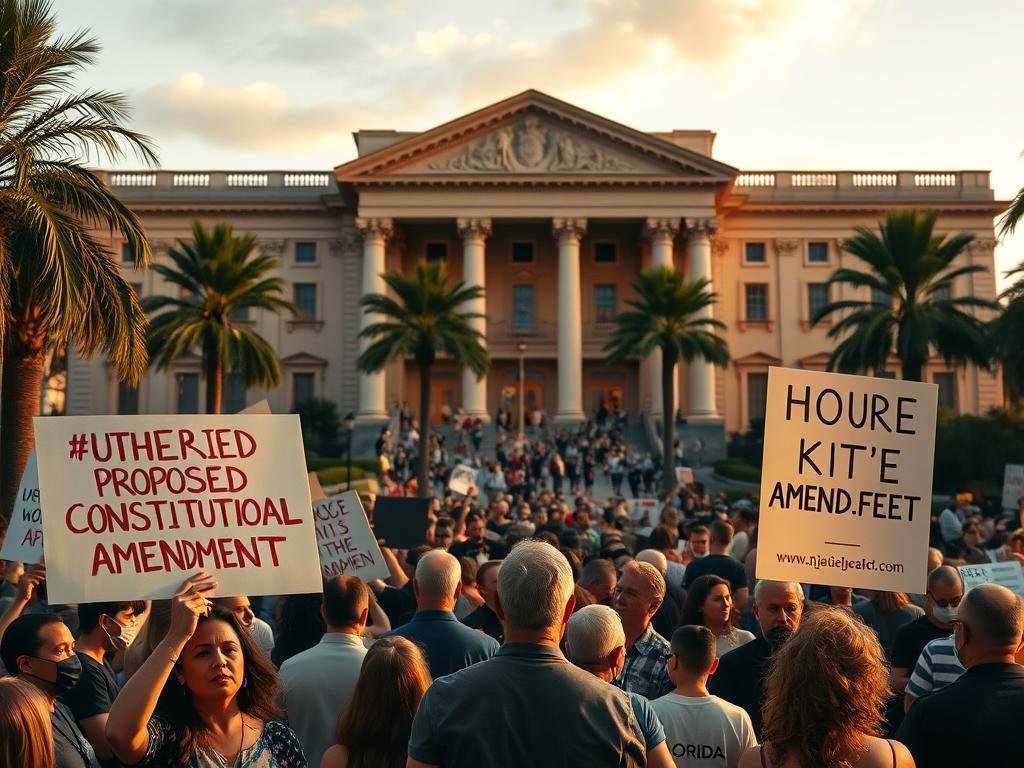
Florida’s politics around marijuana are tense and well-organized. After a close defeat in 2024, the focus is on new rules and messaging. These changes affect citizen-led amndments and the future of weed laws in Florida.
DeSantis administration’s 2024 campaign against adult-use legalization
Gov. Ron DeSantis and his wife, Casey, led a big push against recreational marijuana. They said it was a public safety risk. They used state events and famous people to argue it would harm families and tourism.
This effort slowed down the momentum. It also made national groups and the florida action committee network rethink their strategies for future drives.
New law adding hurdles for citizen-driven constitutional ammendment efforts
In May, DeSantis signed a law that makes it harder for initiative sponsors. Now, signature gathering needs stricter tracking, more audits, and higher financial disclosures. This makes it tough for small groups.
Some say this law makes it hard for grassroots organizers, even with good poll numbers. Others argue it prevents confusion and protects the constitution from too many amndments.
Impact on other campaigns, including Medicaid expansion timing
The effects go beyond marijuana laws in Florida. A Medicaid expansion campaign has paused until 2028. They say the new rules and higher standards need more time to meet.
Also, there are questions about 2024 outreach tied to Hope Florida and spending. This shows how groups are thinking about risk, messaging, and funding for future marijuana drives.
| Factor | What Changed | Who Is Affected | Practical Effect on Campaigns |
|---|---|---|---|
| State Messaging | Coordinated opposition to adult-use marijuana led by the governor and allies | Reform groups; business stakeholders; voters | Raises persuasion costs and complicates framing on weed laws florida |
| Initiative Rules | Added verification, audits, and higher financial disclosures | Citizen sponsors and petition firms | Increases budgets and timelines for any constitutional ammendment |
| Resource Allocation | Heightened legal and compliance demands | Grassroots coalitions | Shifts funds from outreach to compliance, slowing marijuana efforts |
| Scheduling Strategy | Campaigns delaying to later cycles (e.g., 2028) | Healthcare and justice initiatives | Longer planning horizon, fewer overlapping amndments on ballots |
| Oversight Scrutiny | Inquiries into 2024 operations and philanthropy channels | Advocacy groups and the florida action committee ecosystem | More due diligence and transparency to sustain voter trust |
Petition verification and signature disputes
Verification fights shaped the pace and tone of the marijuana florida campaign. As counts grew, amendment news focused on how the state tallied signatures. This was important for understanding the timeline for recreational marijuana florida.
Organizers argued the rules were clear. They said voters deserved a clean count under florida marijauna laws guiding citizen initiatives for fl legal weed.
Thresholds, county supervisor roles, and verification mechanics
Under Florida’s process, county supervisors of elections review each petition. They confirm voter status and log valid entries. When the state reaches a certain total, it must acknowledge sufficiency and move the measure forward.
Smart & Safe Florida said it crossed a key mark by August. They reported more than 660,000 verified signatures on the way to roughly 880,000 needed. This pace put marijuana florida organizers in line with the statute for timing.
Directive to discard up to 200,000 signatures and resulting litigation
On October 3, Secretary of State Cord Byrd instructed counties to discard up to 200,000 signatures. This was due to alleged mailing issues tied to delivery of the full text. Smart & Safe Florida filed suit in circuit court on October 19, calling the move an improper barrier.
The dispute became central amendment news. Both sides cited florida marijauna laws and petition rules. While the fight continued, counties paused or re-checked batches. This affected the rhythm of verification for recreational marijuana florida supporters.
How verified counts triggered Supreme Court review steps
After an October 31 filing to compel state action, Division of Elections Director Maria Matthews sent the formal acknowledgment letter. The state then submitted the initiative to the Attorney General. This set off the required Supreme Court review of the ballot language.
Those statutory steps rely on verified counts crossing key thresholds. As totals mounted, the pathway for marijuana florida advanced into the court phase. This kept fl legal weed front and center in amendment news under florida marijauna laws.
What the amendment would change for recreational marijuana florida
The proposal would change Florida from a medical-only system to a broader adult-use model. It aims to allow regulated sales and possession while keeping public safety rules in place. Voters would see how this plan fits with weed laws florida and how it aligns with existing medical rules.
Adult personal use: scope compared to current medical program
Today, access is limited to patients in the state’s medical program. Under the amendment, adults 21 and older could buy and possess marijuana from licensed retailers. Home growing is not promised in current medical rules, and any change would depend on final language and later regulations.
Medical standards, such as product testing and seed-to-sale tracking, would remain a baseline. Adult-use sales would follow similar safeguards, with added ID checks and limits on serving sizes and potency to mirror public health goals.
Implications for weed laws florida and florida marijauna laws
Harmonizing policies would be key. The initiative would require updates to florida marijauna laws on possession, impaired driving, and packaging. Lawmakers and agencies would need to align advertising limits, workplace rules, and youth protections with the new adult-use framework.
Enforcement priorities could shift toward unlicensed sales and product safety. Clear guidance would help courts, employers, and consumers navigate weed laws florida during the transition.
Business, licensing, and market considerations for fl legal weed
Existing medical marijuana treatment centers could take the lead in early sales if authorized. New licenses for retail, cultivation, and processing may follow, subject to caps, fees, and equity measures. Compliance would cover lab testing, labeling, diversion prevention, and tax collection.
Regulators would set timelines for launch, including temporary rules. A phased rollout could stabilize supply, protect patients, and inform tax planning for fl legal weed retailers and cultivators.
| Policy Area | Current Medical Program | Proposed Adult-Use Shift | Practical Impact |
|---|---|---|---|
| Eligibility | Qualified patients with physician certification | Adults 21+ for recreational marijuana florida | Broader access beyond medical patients |
| Possession | Set by medical rules and dosing limits | Statutory limits for adult-use possession | Clear caps guide consumers and policing |
| Sales Channels | Licensed medical dispensaries | Licensed adult-use retailers, possibly expanded | Scaled retail network for fl legal weed |
| Product Safety | Lab-tested, tracked inventory | Same or stricter testing and tracking | Continuity in safety standards |
| Tax and Revenue | Sales tax exemptions vary by product | Potential excise or sales taxes on marijuana | New revenue streams and oversight needs |
| Advertising | Restricted medical marketing | Tighter limits to protect minors | Updated rules under weed laws florida |
| Workplace | Employer policies control | Employer rights maintained with updates | Guidance for safety-sensitive roles |
| Local Control | Local zoning for dispensaries | Local siting and time-place-manner rules | Community input on retail density |
| Criminal Enforcement | Penalties for non-medical possession | Refocus on unlicensed activity | Alignment with florida marijauna laws |
Is florida a recreational state? Understanding where things stand now
Many people wonder: is florida a recreational state? The answer is no. Florida allows medical marijuana but doesn’t sell it for fun. A 2024 ballot to make it legal got 56% support, but it needed 60%.
The new plan is going to the Florida Supreme Court. If it passes, voters might see it in 2026. For now, marijuana in Florida is only for medical use.
The takeaway for patients and businesses is simple: the current rules stay in place. The Court will decide on the ballot language. Political issues, money, and voter turnout will influence the future of marijuana in Florida.
| Topic | Current Status in Florida | What Could Change | Why It Matters |
|---|---|---|---|
| Legal status | Not a recreational market; medical marijuana allowed | Adult-use only if Supreme Court approves language and voters pass 60% | Clarifies is florida a recreational state and guides consumer behavior |
| Ballot path | Under Florida Supreme Court review after state acknowledgment | Potential 2026 ballot if legal and signature thresholds are met | Sets timing for a statewide decision on marijuana florida |
| Voter history | 2024 vote reached 56%, short of the supermajority | Renewed campaign aims to improve support | Shows momentum and gaps for recreational marjuana approval |
| Market impact | Medical-only licenses and patient access | Adult-use could expand retail, tax revenues, and product ranges | Shapes business planning and consumer access to marijuana |
Stakeholders, spending, and oversight

Money, procedure, and politics meet as oversight moves from counting signatures to legal review. Amendment news spreads fast across marijuana florida networks. The focus is now on how the constitutional ammendment process moves from paperwork to the florida supreme court.
Roles of Florida Secretary of State and Division of Elections
Secretary of State Cord Byrd and Division of Elections Director Maria Matthews lead the way. They track signatures, issue acknowledgment of sufficiency, and send measures for review by the florida supreme court.
After Smart & Safe Florida filed suit on Oct. 31, Matthews sent the acknowledgment letter. The state then forwarded the initiative to the Attorney General. This followed rules for a constitutional ammendment before judicial scrutiny.
Attorney General James Uthmeier’s filings and political ties
Attorney General James Uthmeier moved to dismiss the case. He said the requested relief was satisfied once the measure was submitted. Uthmeier, formerly chief of staff to Governor Ron DeSantis, has drawn attention for political links that shadow the marijuana florida debate.
Reports describe large donations to a committee opposing legalization and probe activity around state power and nonprofit fundraising. These threads shape how voters read amendment news during a charged review cycle.
Allegations, investigations, and the Florida action committee landscape
Florida has a dense web of political committees, industry groups, and advocates. The florida action committee scene channels spending into media, field work, and legal briefs on every constitutional ammendment targeting drug policy.
Amid oversight questions, comparisons to other jurisdictions underline why monitoring, packaging rules, and ad limits matter. Research from Canada’s national health body highlights governance lessons in a concise policy brief on cannabis oversight, a useful benchmark as florida supreme court review proceeds.
- Key takeaway: Clear roles for verification and referral reduce disputes and keep amendment news focused on the merits.
- Spending watch: Public filings help track who funds messaging around marijuana florida campaigns.
- Oversight lens: Cross-border guidance informs how a constitutional ammendment can address health and safety while respecting voter intent.
Voter impact and ballot outlook
Floridians are keeping an eye on the next draft of adult-use language. This is because amendment news keeps changing how people think about recreational marijuana. The past efforts have set the stage for a closer look at what voters will see on the ballot.
Ballot language clarity and constitutional compliance tests
The Florida Supreme Court will check if the language is clear and follows the rules. They want to make sure voters understand what they’re voting for. This includes rules on how much you can have and where you can buy it.
Looking at Colorado and California can teach us a lot. They show how the words on the ballot can affect how people vote. For more on this, check out this analysis on cannabis on the ballot. The goal is to make the language simple and clear.
Turnout dynamics and the 60% supermajority requirement
In Florida, you need 60% of the vote to pass a law. This means campaigns have to win over a wide range of people. The 56% vote in 2024 shows there’s interest, but it’s a tough goal to reach.
Getting people to vote early and using trusted voices is key. If debates about amendment 20 are everywhere, both sides will focus on certain groups. These groups can decide the outcome under the supermajority rule.
How amendment news shapes voter education ahead of 2026
News about amendments keeps voters informed. It tells them about the progress and any legal issues. This news can affect if recreational marijuana is on the ballot in a big election.
Reporting that explains legal steps in simple terms helps build trust. As campaigns get their messages ready, voters will think about safety, taxes, and local control. They’ll also consider if they want to allow adults to use marijuana.
Conclusion
Florida is moving closer to allowing adults to use marijuana after a big step. The state has acknowledged the petition and sent it to the Attorney General. This move will be reviewed by the Florida Supreme Court.
This is after a long battle. There was a lawsuit to get things moving, a claim to throw out signatures, and a claim that the issue was moot. This shows how important small steps can be in big debates about marijuana.
The journey to this point is filled with history. In 2024, voters supported adult use but fell short of the needed majority. Governor Ron DeSantis and others opposed it. Lawmakers also made it harder for citizens to start new initiatives.
Now, Smart & Safe Florida is trying again in 2026. They want to put recreational marijuana on the ballot. The outcome depends on the Florida Supreme Court’s review and signature verification.
If the Court approves the ballot language and the signatures are verified, it could go to voters. This would give them a say in marijuana laws beyond medical use. But, if the Court says no, the sponsors will have to start over with less time.
The push for recreational marijuana is real but delicate. Every step, from filings to rulings, matters. The Florida Supreme Court is key to whether voters will get to decide in 2026.
FAQ
What does it mean that the recreational marijuana amendment moved to the Florida Supreme Court for review?
The state confirmed enough signatures and sent it to the Attorney General. He then sent it to the Florida Supreme Court. This is a required step before it can be on the ballot.
What triggered the Florida Supreme Court review and why does it matter?
After verifying signatures, the state sent a confirmation letter. The Attorney General then sent it to the Court. This is important because the Court checks if the language is clear and follows the single-subject rule.
How does submission to the Attorney General lead to Supreme Court review?
Florida law requires verified petitions, a confirmation letter, and then the Attorney General’s submission. The Attorney General sends it to the Court for review before it can be on the ballot.
How does the Court review amendment language under Florida law?
The Court checks if the language is clear and doesn’t mislead voters. It also ensures it only addresses one subject. If it passes, the initiative can move forward to the ballot.
Why is Supreme Court review required before a ballot placement?
The Florida Constitution requires the Court to check the language. This ensures clarity and that amendments only address one subject. It protects voters from confusion.
What happened with Smart & Safe Florida’s 2024 bid that got 56%?
Voters supported adult-use legalization at 56%, but it needed 60% to pass. Despite majority support, it didn’t become law.
How many petitions has Smart & Safe Florida collected for 2026?
They have collected over 660,000 verified signatures. They aim for about 880,000 to meet the requirements for the ballot.
What strategic shifts did the campaign make after 2024?
They relaunched for 2026, improved messaging, and focused on voter education. They also adapted to new rules and used litigation to keep the process moving.
Why did Smart & Safe Florida file a lawsuit on Oct. 31?
They alleged the state was slow in acknowledging the petition. They wanted to compel the state to issue the letter.
What was the state’s formal acknowledgment letter and mootness claim?
After pressure, the state issued the acknowledgment letter. The initiative was then submitted to the Attorney General. On Nov. 17, the Secretary of State argued the case was moot because the required steps had been completed.
Why did the Attorney General ask to dismiss the case?
The Attorney General said the requested relief had been granted. The letter was issued and the submission made. He argued the lawsuit should be dismissed.
How did the DeSantis administration oppose adult-use in 2024?
Gov. Ron DeSantis and his allies ran a campaign against legalization. They argued it would harm the state. Their efforts helped keep support at 56%, below the 60% needed.
What new law makes citizen-driven constitutional amendment efforts harder?
A law signed in May raised hurdles for initiatives. It includes stricter compliance and higher costs. Critics say it disadvantages grassroots drives, including marijuana campaigns.
How has this law affected other campaigns like Medicaid expansion?
A Medicaid expansion drive delayed to 2028 due to the new requirements. The change has reshaped timelines across Florida’s amendment landscape.
How does petition verification work in Florida?
County supervisors verify signatures and report totals. When thresholds are met, the state acknowledges sufficiency and submits the initiative to the Attorney General. Verified counts, not raw signatures, control the process.
Why were up to 200,000 signatures targeted for discard?
On Oct. 3, the Secretary of State told counties to discard signatures that didn’t meet mailing rules. Smart & Safe Florida challenged this in court.
How did verified counts trigger Supreme Court review steps?
Once verified petitions surpassed a key threshold, the Division of Elections issued an acknowledgment. The Attorney General then submitted the measure, triggering Florida Supreme Court review.
What would this amendment change for recreational marijuana Florida?
It would legalize adult personal use under a regulated framework. This would move beyond the current medical-only system. Implementation details would be set by lawmakers and regulators.
How would adult-use compare to Florida’s medical marijuana program?
Today, only qualified patients can buy cannabis. Adult-use would open access to all adults of legal age. It would have separate rules for possession, sales, and compliance.
What are the implications for weed laws Florida and florida marijuana laws?
Legalization would require harmonizing current statutes with new adult-use permissions. It could shift enforcement priorities and clarify possession limits, retail rules, and penalties.
What would business and licensing look like for fl legal weed?
The Legislature and regulators would determine licensing, retail, and cultivation rules. Existing medical operators could play a major role, with new entrants as adult-use regulations roll out.
Is Florida a recreational state right now?
No. Florida allows medical marijuana only. The adult-use measure failed in 2024 with 56% and now sits before the Florida Supreme Court for language review as part of a 2026 push.
Who are the key officials overseeing the petition process?
Secretary of State Cord Byrd and Division of Elections Director Maria Matthews manage verification and acknowledgment steps. They lead to Attorney General submission and Court review.
What has Attorney General James Uthmeier done in this case?
After receiving the initiative, he asked the Court to dismiss the lawsuit as moot. He then forwarded the measure for Supreme Court scrutiny. His political ties have drawn media attention amid the broader debate.
What investigations touch the Florida action committee landscape?
Reports indicate a grand jury is reviewing the administration’s role in opposing legalization in 2024 and finances connected to Hope Florida. These inquiries intersect with political committees active around amendment 20 and Florida amendment 4 discourse.
What does the Court test for ballot language clarity and compliance?
The Justices check that the summary is clear, accurate, and limited to one subject. Passing this test is required before any marijuana initiative can move toward ballot placement.
Why is turnout and the 60% supermajority so important?
Florida requires 60% approval to amend the Constitution. With 56% in 2024, the margin is narrow. Turnout and persuasion in 2026 will decide whether adult-use crosses the threshold.
How does ongoing amendment news affect voter education?
Coverage of the Supreme Court review, petition milestones, and legal disputes shapes how voters understand the proposal. Clear, accurate information will be key as Smart & Safe Florida advances toward 2026.
Be the first to comment