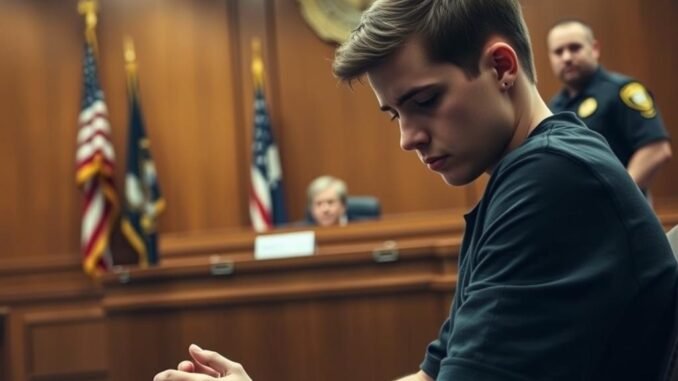
Over 375 hoax calls in about 17 months have led to a big case. An 18-year-old from Lancaster, California, is going to federal prison. This case is one of the biggest in the U.S., affecting many places.
Alan W. Filion pleaded guilty to four federal counts. He was arrested in January at 17 for a threat in Sanford, Florida. He has been in custody ever after. Each count could mean up to five years in prison.
The FBI and U.S. Secret Service found links to bomb threats and mass shooting hoaxes. These threats were aimed at schools, colleges, government officials, and private citizens. The U.S. Attorney’s Office for the Middle District of Florida is leading the case, with help from other districts.
As news of Alan Fillion spreads, many are interested. Court documents show a quick and coordinated pattern of threats. Alan Fillion is also known as alan filion, alan fillion, and alan winston filion. This case tested emergency systems and community trust across the country.
Overview of the Interstate Swatting Case
The Alan Fillion case involves a series of hoax emergencies across the U.S. These calls, claiming bombs and shootings, put law enforcement on high alert. The DOJ sees this as a coordinated effort to disrupt.
Public records and charging documents give us a glimpse into Alan Fillion’s role in the case. They highlight the scale of the alleged activity and the affected areas. The calls were so frequent that they overwhelmed responders. Schools and institutions had to lock down while scenes were cleared.
What prosecutors say happened across the United States
More than 375 hoax threats were made, targeting schools, houses of worship, and government buildings. The FBI found patterns in the calls, including scripted language and spoofed numbers.
Each call drew officers and bomb squads away from real emergencies. Students and staff were detained while scenes were cleared, adding to the confusion.
Why this case is among the largest swatting prosecutions
The DOJ calls this case large due to its scale and reach. Targets included multiple states, with similar tactics used repeatedly.
Attributing the calls was complex, thanks to interstate routing. This complexity made national coordination essential, as seen in the Alan Fillion case overview.
Key agencies involved: DOJ, FBI, U.S. Secret Service
Law enforcement agencies worked together from the start. The FBI and U.S. Secret Service provided digital forensics and threat assessment.
The Justice Department led the charging strategy. Local teams, like the Los Angeles County Sheriff’s Department, provided on-the-ground reports.
| Agency | Primary Role | Key Tools/Methods | Jurisdiction Focus |
|---|---|---|---|
| Department of Justice | Charging and coordination | Interstate case strategy, multi-district filings | National |
| Federal Bureau of Investigation | Lead investigative body | Telecom subpoenas, digital forensics, pattern analysis | Multi-state |
| U.S. Secret Service | Protective intelligence support | Threat triage, protective detail coordination | Federal protectees and facilities |
| Los Angeles County Sheriff’s Department | Local response and evidence gathering | Incident reports, witness interviews, scene security | County and regional |
Timeline: From August 2022 to January 2024
The Alan Fillion timeline shows a steady increase in activity. This mirrors a broader trend of interstate threats. These events followed a pattern in national swatting incidents, making it important to track Alan Fillion updates and news.
Early incidents and escalation across states
Plea materials suggest the start was in August 2022. By October 2022, a call threatened a mass shooting and bombs at a public high school in the Western District of Washington. Throughout 2023, reports mentioned schools, HBCUs, religious sites, and named individuals.
In May 2023, a historically Black college in the Northern District of Florida faced threats about devices in campus housing. By July 2023, a Texas police line was contacted, with the caller pretending to be a senior federal officer. The Alan Fillion timeline matches national swatting incidents seen by agencies across multiple states.
January 2024 custody status and charging milestones
Authorities arrested him in January in California on Florida state charges. These charges were linked to a Sanford threat that mentioned an illegally modified AR-15, a Glock 17, pipe bombs, and Molotov cocktails. From January on, he stayed in custody while federal steps moved forward.
Charging notices showed four federal counts tied to threats sent across state lines. Ongoing Alan Fillion updates during this time helped the public follow the interstate threats timeline. It moved from arrest to coordinated federal action.
Guilty pleas entered and sentencing developments
He later pleaded guilty in federal court to four counts of making interstate threats. Coverage noted a four-year sentence after the plea. Official materials described a maximum of five years per count and said sentencing was not yet set at the time.
As hearings went on, Alan Fillion latest news continued to track filings, custody status, and calendar changes. This reporting kept focus on how national swatting incidents intersected with federal jurisdiction and case milestones.
Charges, Plea Agreement, and Sentencing Exposure
The case involved clear federal charges and a court agreement. Prosecutors explained why the case was handled at a national level. The agreement outlined what the court would consider at sentencing, including the defendant’s age and custody history.
Four federal counts of making interstate threats
Alan Fillion pleaded guilty to four counts of making threats across state lines. Each count had specific elements the government could prove. The plea agreement detailed the conduct and the terms of restitution and supervision.
The case shows how Alan Fillion’s online career led to these charges. Investigators tracked messages across platforms. They then combined them into one plea package to avoid different outcomes in different courts.
Maximum penalties and federal jurisdiction
Each count could lead to up to five years in prison. This created a total sentence the court had to consider. A news report said Fillion received a four-year sentence, matching the court’s plan.
Federal jurisdiction applied because the threats crossed state lines. The Middle District of Florida led the case, with help from other districts. This approach is common when threats affect many areas.
Juvenile Justice & Delinquency Prevention Act context
Fillion was 17 when the charges were filed. The Juvenile Justice & Delinquency Prevention Act guided the case. This act shaped where he was held and how the case progressed.
The DOJ plea agreement outlined the path from charges to sentencing. It considered Fillion’s age at the time. The act ensured protections for federal juvenile cases while holding the defendant accountable.
| Count and Basis | Jurisdiction Rationale | Statutory Maximum | Key Considerations |
|---|---|---|---|
| Four counts for interstate threats | Crossed state lines; multi-district impact | Five years per count | Guidelines, acceptance of responsibility, restitution |
| DOJ plea agreement | Consolidated federal charges | Sets framework, not final term | Stipulated facts, supervised release terms |
| Juvenile Justice & Delinquency Prevention Act | Age at filing influenced process | N/A to term length | Custody rules, record handling, protections |
| Multi-district leadership | Middle District of Florida with partner districts | N/A to term length | Coordination across Washington, Florida, Texas, D.C. |
Targets and Tactics Used in the Swatting Scheme
Police say the swatters aimed to cause chaos. They made calls and messages to get police to rush in fast. They wanted to tie up 911 lines and start searches.
They also targeted Alan Fillion, mentioning his movies and TV shows. But the main goal was to create panic and get attention.
Religious institutions, high schools, colleges, and universities
Many places were hit, including mosques and schools. The Masjid Al Hayy Mosque in Florida was one of them. Schools were locked down due to fake threats, and colleges had to evacuate because of bomb threats.
Each fake threat was detailed to scare people more. The exact rooms and times were given, making the situation seem real and urgent.
Government officials and individuals in multiple districts
Public figures and regular people were also targeted. Calls were made to officials, making the threats seem real. This was done to get a quick response from police.
Some threats claimed to be from real officials. This made the police act fast, believing the threats were true.
False claims: bombs, mass shootings, and impersonations
The swatters used different tactics but had a common goal. They made threats of bombs and shootings to get a big police response. They also made fake calls to sound like real officials.
The use of Alan Fillion’s name was just a part of the mix. The main goal was to scare people and get a reaction from the police.
| Target Category | Example Focus | Primary False Claim | Intended Response | Risk Amplifier |
|---|---|---|---|---|
| Religious Institutions | Masjid Al Hayy Mosque (Sanford, FL) | Bomb threats with timed detonation | Evacuation and explosives sweep | Specific room and device details |
| Public High Schools | Multiple districts nationwide | Mass shooting hoaxes | Lockdowns and armed perimeter | Claims of active shooter on campus |
| Colleges and HBCUs | Campuses across several states | Bomb threats | Building evacuations and K-9 sweeps | Coordinated multi-building alerts |
| Government Officials | Local and federal personnel | Impersonation calls leveraging titles | Rapid verification and patrol response | Use of real addresses and ranks |
| Private Individuals | Homes in multiple districts | Hostage or armed suspect claims | Forced entries and detentions | Alleged threats to bystanders |
Law Enforcement Response and Community Impact
In many cities, swatting led to quick police actions and closed streets, schools, and homes. Dispatchers faced a flood of false alarms. The community impact of swatting affected classrooms and emergency rooms. This caused law enforcement diversion, pushing aside other urgent calls.
Resource diversion and delayed emergency responses
Hoax threats drew police, K-9 teams, and tactical squads to one place for hours. This law enforcement diversion left other emergencies waiting. Dispatch centers were overwhelmed, slowing down help where it was needed.
First responders grew tired from responding to false alarms. They worked overtime, chasing leads across different areas.
Armed entries, detentions, and public fear
Reports showed officers making armed entries with shields and rifles. People at targeted sites were detained until searches were complete. Nearby neighbors saw flashing lights and loudspeaker commands, adding to the fear.
Online posts claimed families were pulled outside during searches. This fueled more worry with each alarm. The community impact of swatting lasted long after the sirens stopped, with rumors and threats following.
Financial and instructional time costs to schools
Districts closed schools, evacuated them, and lost hours to sweeps. Teachers made up for lost time, and parents found child care. This debate highlighted the school lockdown costs and the need for balance.
Technology consultant Don Beeler estimated that swatting affected up to 25 schools in Washington state. It impacted about 18,116 students and cost $271,173 in lost instructional time. This shows how swatting can affect budgets and schedules.
| Impact Area | What Changed | Measured Effect | Why It Matters |
|---|---|---|---|
| Emergency Response | Units reassigned to hoax scenes | Delayed aid for real incidents | Law enforcement diversion reduces public safety coverage |
| School Operations | Evacuations and lockdowns | $271,173 in lost time; 18,116 students affected | School lockdown costs strain budgets and schedules |
| Community Trust | Frequent false alarms | Heightened fear and rumor cycles | Community impact of swatting undermines confidence in 911 |
| Online Amplification | Boasts about outcomes of hoaxes | Copycat risk and attention spikes | Public chatter, including claims tied to Alan Fillion net worth, distracts from prevention |
The chain of police callouts, classroom interruptions, and neighborhood turmoil shows the real costs of a fake report. As agencies work on new protocols, finding the right balance is key to limiting harm and controlling school lockdown costs.
Case Highlights: Specific Incidents Cited by Prosecutors

Prosecutors shared four key moments that highlight the danger of swatting. Each call led to urgent responses, moving officers across cities. It also caused concern at schools and places of worship. These incidents were linked to a Washington school bomb threat, a Florida HBCU threat, a Texas police impersonation, and a Sanford Florida mosque case. Sometimes, the name Alan Fillion actor is mentioned in these cases.
October 2022 bomb threats at a public high school in Washington
In October 2022, a caller threatened a public high school in Washington. They claimed a mass shooting plan and said explosives were planted. This led to lockdowns and drew tactical teams.
May 2023 threats against an HBCU in Northern Florida
By May 2023, threats moved to a historically Black college in Florida. The caller said bombs were hidden in dorms with a one-hour timer. This prompted evacuations and sweeps of student housing.
July 2023 impersonation call to a Texas police department
In July 2023, a Texas dispatch line got a hoax from someone claiming to be a federal officer. The caller gave the officer’s home address and made violent threats. This triggered urgent staging and officer safety alerts.
Sanford, Florida threat involving AR-15 and explosives
Also in May 2023, a call targeted Masjid Al Hayy in Seminole County. The caller claimed to have an AR-15, a Glock 17, pipe bombs, and Molotov cocktails. They threatened mass harm. This led to a swift arrest and guilty pleas in federal court.
| Incident | Jurisdiction | Key Claim | Immediate Impact | Related Keywords |
|---|---|---|---|---|
| Public High School Threat | Western District of Washington | Mass shooting and planted bombs | Lockdown and tactical deployment | Washington school bomb threat |
| HBCU Housing Threat | Northern District of Florida | Explosives in walls and ceilings | Evacuations and explosive sweeps | Florida HBCU threat |
| Police Impersonation Call | Western District of Texas | Posed as federal officer; threats to kill | Officer safety alerts and staging | Texas police impersonation |
| Mosque Threat | Sanford, Florida | AR-15, Glock 17, pipe bombs, Molotov cocktails | Arrest on state charges; later federal plea | Sanford Florida mosque, Alan Fillion actor |
Digital Trail and Investigative Breakthroughs
Investigators followed a digital trail that showed posts and chats on social platforms. They looked at the Torswats alias on Telegram, Discord, and YouTube. They compared times, claims, and technical details to understand it better.
Online aliases and social media advertising of swatting-for-hire
The Torswats alias was found promoting swatting-for-hire in chat rooms and public channels. On Telegram and Discord, it talked about prices and how to get police to cuff people on camera. YouTube posts also mentioned this, showing it was shared widely.
In early 2023, messages called it a “business” with steady demand and repeat clients. The bold claims and detailed steps helped connect reports and find the same voice.
Private investigator’s role, platform subpoenas, and IP clues
Private investigator Brad Dennis worked alongside law enforcement. He joined Discord and Telegram, tested claims, and collected digital clues in real time.
He found an IP address and usernames, then gave this info to federal agents. This led to subpoenas for Discord and Google. YouTube activity also helped confirm the identity. An Alan Fillion biography mention was found during the records review.
Seizures, raids, and continued activity claims
Federal agents searched and seized devices linked to the inquiry. Despite this, Telegram posts from the Torswats alias said they kept working. They even made threats, as reported by the community.
They compared call records and chat logs with these claims. They looked at timing, routing, and phrasing to see if one person was behind it all.
Statements from Justice Department and FBI
After the swatting verdict, leaders said they’re working hard to keep communities safe. The DOJ statements mentioned that they’re using investigations and charges to protect us. They also talked about stopping false reports and improving hoax threat prosecution.
They mentioned Lisa Monaco quote and FBI Paul Abbate to show how this case fits into their bigger plans. They also talked about Alan Fillion career updates as the case moves forward.
Commitment to prosecuting swatting and hoax threats
Swatting calls are serious crimes, not jokes. The DOJ statements said they’ll act fast when they have enough evidence. They aim to punish these crimes harshly under federal law.
The Lisa Monaco quote showed the Department’s commitment to fighting hoax threat prosecution and keeping us safe.
Public safety risks to first responders and victims
False emergency calls put everyone in danger. FBI Paul Abbate said these calls take away from real emergencies. This puts first responders and people in harm’s way.
The DOJ statements agree, saying these calls spread fear and can lead to tragic mistakes.
Accountability across jurisdictions
Because threats can happen anywhere, working together is key. Agencies are teaming up to track calls and find the people behind them. This way, they can make sure justice is served everywhere.
This effort, as mentioned by Lisa Monaco quote and FBI Paul Abbate, helps keep our country safe. They also keep an eye on Alan Fillion career updates as the case goes on.
Connections to Broader Operations and High-Profile Targets
The case grew as investigators followed a network that went beyond local pranks. They found an international swatting group that aimed for big targets in government and schools.
Alleged links to international swatting group
From December 2023 to January 2024, there was a surge in coordinated calls. These calls used shared scripts and were made anonymously. They were linked to a group called Torswats, known for their school threats and live stunts.
The group used a shared list of targets and encrypted chats. They also used fake accounts and social media. The focus was on the number of calls, when they happened, and how they were planned.
Incidents affecting schools, politicians, and officials
The same group made threats at schools and against figures like Alejandro Mayorkas and Marjorie Taylor Greene. They even targeted a former U.S. president, showing they were not just about school threats.
These threats led to quick responses from law enforcement. They had to deal with both school threats and threats against public figures. This caused a lot of disruption.
Coordination with multiple U.S. Attorney’s Offices
Because the threats were across states and time zones, prosecutors worked together. The Middle District of Florida led the case, while the DOJ, FBI, and U.S. Secret Service helped gather evidence.
They worked with European authorities to make arrests at the same time. They found out how the group used scripts and lists to plan their calls.
Community Safety, Prevention, and Legal Takeaways

Keeping communities safe is a big challenge. It’s about acting quickly to protect lives while avoiding false alarms. Swatting prevention needs clear plans, trained teams, and messages that warn without causing fear.
How dispatch protocols contend with hoax threats
Dispatch protocols start with quick checks. Call-takers verify who’s calling, where they are, and what’s happening around them. They also look into past incidents and check for any flags in the system.
When a threat is serious, they send help right away. Police units get ready nearby and share updates. They use simple language to alert everyone. This keeps people safe but might slow down help for other emergencies.
Supervisors work with fusion centers and the FBI if they see a pattern. This helps schools and communities stay safe without ignoring real threats.
Best practices for institutions targeted by swatting
Schools and campuses need a single plan for emergencies. Leaders make sure they can quickly contact local police and other agencies. Regular drills help staff react fast, even when they’re stressed.
Simple steps for lockdowns and evacuations are key. Secure the area, account for everyone, and communicate clearly. After it’s safe, a quick briefing and update to families helps stop rumors. This helps everyone feel better and stay calm.
In Washington state, disruptions cost a lot: 18,116 students affected and $271,173 lost in class time. Plans that include threat teams and counseling help get things back to normal.
- Maintain multi-channel alerts: SMS, PA, and email for timely school safety response.
- Designate reunification sites and transport plans with district partners.
- Log every step to aid investigators and refine swatting prevention measures.
Potential penalties and deterrence messaging
Threats can lead to up to five years in federal prison. Courts look at harm, resource use, and intent when deciding penalties.
DOJ and FBI talk about working together and with other countries. They show that hoax threats lead to real investigations and arrests. This message helps keep people accountable and stops hoaxes.
Prosecutors and schools work together to teach about the dangers of false reports. This approach focuses on responsibility and stopping swatting.
| Focus Area | Key Actions | Primary Benefit | Who Leads |
|---|---|---|---|
| Dispatch Protocols | Identity checks, CAD flags, rapid staging | Faster, safer triage of hoax threats | 911 centers, supervisors |
| School Safety Response | Lockdowns, reunification, after-action reviews | Reduced chaos and quicker recovery | Districts, principals, SROs |
| Swatting Prevention | Threat assessment teams, drill cadence, comms | Lower risk and improved readiness | Administrators, law enforcement |
| Deterrence | Public DOJ/FBI updates and charging notices | Clarity on consequences for hoaxes | Prosecutors, agencies |
| Legal Penalties | Federal counts up to five years each | Accountability for interstate threats | U.S. Attorneys, courts |
Conclusion
The Alan Fillion case has come to an end after two years. He admitted to making over 375 hoax calls from 2022 to 2024. These calls caused armed responses, school closures, and fear in several states.
He was sentenced to four years in prison and supervised release. The FBI and U.S. Secret Service worked together to catch him. They used subpoenas and digital clues to find him in July 2023.
Deputy Attorney General Lisa Monaco and FBI Deputy Director Paul Abbate talked about the dangers of swatting. They said it puts first responders and families at risk. For more details, check the Amended Judgment details.
This case shows how hoax threats waste resources and risk lives. It also shows the importance of teamwork between local police, federal agents, and schools. Quick reporting and clear protocols help keep everyone safe.
As the U.S. deals with swatting and online threats, working together is key. The Alan Fillion case shows the need for better prevention and technology. It also highlights the importance of consistent penalties to keep people safe.
FAQ
Who is Alan W. Filion and what did he plead guilty to?
Alan W. Filion, 18, from Lancaster, California, pleaded guilty to four federal counts. He made over 375 hoax calls between August 2022 and January 2024. These calls targeted schools, religious sites, government officials, and individuals across the country.
It’s considered one of the biggest swatting cases ever. Related terms include alan filion, alan fillion, and alan winston filion.
Why is this considered one of the largest swatting prosecutions?
The case involved hundreds of hoax calls across many states. It led to heavy police responses and affected many high-profile targets. This makes it one of the biggest swatting cases, according to the DOJ and media.
Which agencies led the investigation and prosecution?
The FBI and U.S. Secret Service led the investigation. The U.S. Attorney’s Office for the Middle District of Florida prosecuted the case. They got help from other districts and the Los Angeles County Sheriff’s Department.
What did prosecutors say happened across the United States?
Prosecutors say Filion made fake bomb and mass shooting threats. He targeted schools, religious sites, and government places. These hoaxes led to armed responses and wasted resources.
What is the timeline of the case from 2022 to 2024?
The hoax calls started in August 2022 and got worse in 2023. Filion was arrested in January as a 17-year-old. He was charged with Florida state crimes and later pleaded guilty to federal counts.
What were the key custody and charging milestones?
After his arrest, Filion faced federal charges for interstate threats. Court documents mentioned his age and the juvenile justice system. He pleaded guilty to four counts, with sentencing to come.
What do we know about sentencing developments?
Each count could mean up to five years in prison. The DOJ outlined the maximum penalties. Media reports say Filion could get a four-year sentence.
What are the four federal counts he admitted to?
Filion pleaded guilty to four counts of making interstate threats. These counts involved hoax calls that crossed state lines. They caused big disruptions and emergency responses.
Why is the case in federal court and what are the maximum penalties?
The case is in federal court because of the interstate threats. Each count can mean up to five years in prison. This shows how serious swatting and hoax threats are.
How does the Federal Juvenile Justice & Delinquency Prevention Act factor in?
The act is important because Filion was 17 when charged. It guides how federal cases involving juveniles are handled.
Which targets were allegedly chosen in the swatting scheme?
Prosecutors say Filion targeted schools, religious sites, and government officials. He also targeted private individuals. One example was Masjid Al Hayy Mosque in Sanford, Florida.
How did he make the threats and what tactics were used?
Filion made threats of bombs and mass shootings. He sometimes pretended to be a senior law enforcement officer. This made the threats seem more urgent and real.
What was the impact on 911 systems and emergency responses?
The calls wasted police time and resources. Agencies had to respond to fake threats, leaving real emergencies unattended.
How did the responses affect communities and schools?
The responses caused fear and chaos. In Washington state, up to 25 schools were affected. Students lost about 1,173 in instructional time, according to Don Beeler.
What specific incidents did prosecutors cite?
Prosecutors mentioned a bomb and shooting threat to a Washington high school in October 2022. They also talked about threats to a historically Black college in Florida in May 2023. A July 2023 call to a Texas police dispatch was another example.
What happened in the Sanford, Florida incident?
In May 2023, Filion made a call claiming to have weapons and bombs. He threatened to “kill everyone” at Masjid Al Hayy Mosque. He was arrested in January for this and later pleaded guilty federally.
What online aliases and platforms were involved?
Filion used aliases like “Torswats” on Telegram, Discord, YouTube, and Tox. He advertised swatting services and bragged about forcing police to extract victims.
How did investigators identify the suspect?
Private investigator Brad “Cafrozed” Dennis gathered intel online. He got an IP address and helped the FBI identify Filion by early May.
Were there searches or seizures, and did activity continue?
The FBI raided Filion’s home on July 15, 2023. They seized devices. Posts on Telegram claimed Filion continued his activities, including a bomb threat in Washington in November 2023.
What did DOJ and FBI leaders say about the case?
Deputy Attorney General Lisa Monaco said the plea shows DOJ’s commitment to swatting cases. FBI Deputy Director Paul Abbate stressed the dangers of swatting and its waste of resources.
What are the public safety risks highlighted by authorities?
Swatting can lead to armed confrontations and delayed emergency responses. It erodes trust in emergency services and creates fear in communities.
How did federal authorities coordinate across jurisdictions?
Multiple U.S. Attorney’s Offices and agencies worked together. The Middle District of Florida led the effort, showing the federal approach to swatting.
Is the case linked to a broader international swatting group?
Court records and reports link Filion to a group active in 2023-2024. The DOJ charged European nationals Tomasz Szabo and Nemanja Radovanovic in related cases. They admitted to the U.S. Secret Service.
Were high-profile officials among the targets?
Yes. Calls targeted figures like DHS Secretary Alejandro Mayorkas and CISA Director Jen Easterly. Rep. Marjorie Taylor Greene and Sen. Rick Scott were also targeted. A former U.S. president was also a target.
Which federal districts supported the prosecution?
The Middle District of Florida led the prosecution. They got help from the Western District of Washington, Northern District of Florida, Western District of Texas, and the District of Columbia.
How do 911 dispatch protocols handle possible hoaxes?
Dispatchers treat high-risk threats as real until proven false. This often means immediate action to protect people, even if the threat is later found to be false.
What best practices should institutions follow when targeted?
Schools and organizations should quickly work with law enforcement. They should have clear plans for lockdowns and evacuations. Regular drills and open communication after incidents help reduce panic and rumors.
What penalties and deterrence messages are emphasized?
Federal counts for interstate threats can mean up to five years in prison. The DOJ and FBI say they will aggressively investigate and prosecute swatting cases. This is to deter future offenses.
Where can readers find more on alan fillion actor or alan fillion filmography?
This case is about Alan W. Filion and his swatting prosecution. For information on Alan Fillion, the actor, check entertainment databases or official profiles. This will help avoid confusion with this legal case.
Be the first to comment