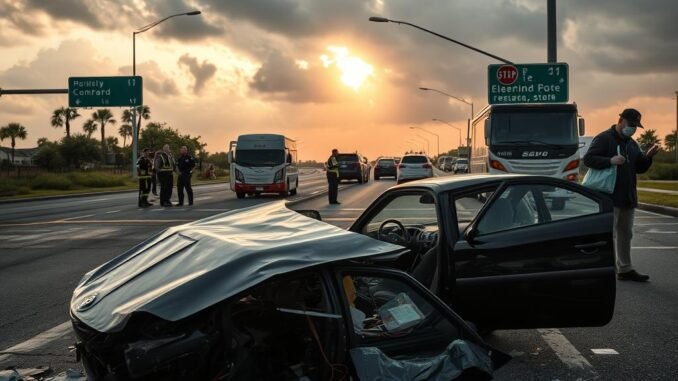

Did you know over 1,000 crashes happen daily in Florida? The Florida Department of Highway Safety and Motor Vehicles reports this. Knowing what to do after a crash is key. This guide will help you with clear steps from the accident scene to protecting your claim.
It explains Florida’s no-fault system and Personal Injury Protection rules. You’ll learn about Section 316.065 reporting thresholds and how to use the Driver Report of Traffic Crash. It also covers requesting the other party’s policy and when to seek legal help.
The aim is to reduce stress and avoid costly mistakes. This guide provides practical steps based on Florida law. It helps document evidence, meet the 14-day PIP rule, and start claims correctly. Follow these steps to act quickly and protect yourself after a car accident in Florida.
Understanding Florida’s no-fault and financial responsibility laws
Florida’s no-fault rules start every claim. Medical bills and lost income go through the driver’s policy first. This shows the state’s focus on quick care and clear financial rules.
The rules tie benefits, penalties, and proof of coverage to Chapter 324 Florida Statutes. This guides drivers after a crash and during the settlement process.
Knowing what each coverage pays helps them decide how to claim insurance after car accident costs without delay.
What PIP and PDL cover in Florida
PIP and PDL are key in Florida. Personal Injury Protection pays up to $10,000 for medical care and lost wages, no matter who’s at fault. Property Damage Liability covers at least $10,000 for the other party’s car or property damage.
These benefits are quick, helping with treatment and repairs while the settlement process goes on. For many families, this means less waiting and better care when claiming insurance after an accident.
Minimum required coverages and SR-22 implications after a crash
Chapter 324 Florida Statutes sets minimums most drivers know—$10,000 PIP and $10,000 PDL. After a crash with injuries, the state may require more Bodily Injury Liability. If coverage was missing, an SR-22 filing may be needed for three years.
Uninsured at-fault owners may need releases or a security deposit before reinstatement, plus fees. Meeting these requirements shows financial responsibility and keeps licenses and tags active while the settlement process goes on.
How no-fault affects claims regardless of who caused the collision
Under Florida no-fault, drivers use PIP first for medical benefits, even if someone else caused the crash. Liability claims can follow if injuries meet legal standards. PDL covers damage to others’ property, affecting negotiations and timing.
This structure guides how to claim insurance after car accident injuries and repairs. It sets expectations for pursuing more recovery later. By aligning PIP and PDL with Chapter 324 Florida Statutes, drivers meet financial responsibility and move their claim forward with fewer delays.
Immediate actions at the scene to protect safety and rights
In the first minutes, Florida crash scene safety guides every step. Those wondering what to do after a car accident in Florida should think: protect people, reduce risk, and preserve facts. Small choices here can shape claims and access to legal help for car accident victims.
Making the scene safe and when Florida law requires moving vehicles
They should switch on hazard lights, set cones or flares if available, and steer everyone out of traffic. If there are no injuries and cars only block the lane, Florida law allows moving vehicles to a safe shoulder. Before moving anything in a property-damage crash, they should take quick photos to lock in positions, skid marks, and debris.
If anyone feels pain, dizziness, or numbness, they should avoid moving and wait for first responders. Shock can hide symptoms, so they should keep quite and warm while others manage the scene. These steps support Florida crash scene safety and protect later claims.
When to dial 911 and what to tell the operator
They should call 911 after crash events that involve injury, airbag deployment, blocked lanes, or suspected impairment. The caller should give the exact location, mile markers, landmarks, number of vehicles, and injuries seen. A brief scene description helps dispatch send the right units fast.
They should avoid debating who caused the collision during the call. Stick to facts like vehicle types, hazards, and whether fuel is leaking. Clear details now aid responders and align with what to do after a car accident in Florida.
Avoiding admissions and limiting conversations at the scene
They should exchange basics and wait for law enforcement, while avoiding admissions like “I’m sorry” or guesses about speed. Statements to other drivers can be used against them; instead, they can give facts to officers and request a report number. This approach respects 911 after crash guidance and supports legal help for car accident victims later.
Short, calm conversations keep emotions down and protect rights. They should not post about the crash on social media or agree to recorded statements at the roadside. By avoiding admissions and staying factual, they preserve the record and their options.
How and when to report the crash to law enforcement
Quick and accurate reporting is key to protect health, rights, and the accident record. In Florida, drivers should remain calm and call the police or Florida Highway Patrol when needed. It’s also important to keep detailed notes that match what the officers document. This makes it easier to report the accident later and avoid any disputes.
Florida Statute 316.065 reporting threshold and options
Florida Statute 316.065 requires drivers to contact law enforcement immediately if there’s injury, death, or over $500 in damage. If someone is hurt or a vehicle can’t move safely, call 911. Officers also respond for suspected DUI, hit-and-run, or road hazards.
If the crash is minor and doesn’t meet the threshold, drivers can notify authorities. They can also file a self-report through the state’s portal. This keeps a record of the accident details, which insurers often ask for when reviewing claims.
Driver Report of Traffic Crash (Self Report) and Driver Exchange of Information
For crashes not requiring a police report, drivers can file a Driver Report of Traffic Crash (Self Report). This is useful for minor damage but is needed for repairs or future questions.
After an officer investigates, they give a Driver Exchange of Information to each party. This document lists driver names, owners, VINs, and insurers. If someone is taken to the hospital, the agency will provide the Driver Exchange of Information later. Keeping these documents organized helps with insurance claims.
Why a police report supports your insurance claim and legal case
A police report confirms who was involved, vehicle positions, visible injuries, and any violations. Insurers use this information to process claims, and lawyers use it to evaluate negligence and hit-and-run cases. Accurate details also support requests for the other party’s coverage under Section 324.242(2).
Detailed reporting follows the steps for claiming insurance after a car accident. It also preserves evidence for any future disputes. If questions arise, seeking legal help can prevent errors and ensure the record accurately reflects the accident.
Documenting evidence the right way
In the first minutes after a crash, small details are very important. Knowing what to do after a car accident in Florida helps create a clear record. By calmly gathering proof, they support insurance reviews and the car accident settlement process.
Photos, videos, and capturing road, weather, and vehicle details
Start by documenting evidence after crash from multiple angles. Take wide and close Florida car accident photos of all vehicles, damage, debris, skid marks, and air-bag deployment. Include street names, traffic signals, stop signs, lane markings, and any obstructions.
Record short videos. Pan slowly and add clear audio; slurred speech, admissions, or the sound of a blaring horn can matter. Before cars are moved in a property-damage-only event, photograph positions to preserve how the impact occurred and the path of travel.
Note the weather, lighting, and road surface. Capture puddles, glare, fresh oil, or gravel. Photograph nearby construction zones and any dash-cam displays. This set of Florida car accident photos can later anchor the car accident settlement process.
Witness statements and contact information
Politely ask bystanders for witness statements. Gather names, mobile numbers, and emails. If they agree, record a brief voice or video recount of what they saw, including directions of travel, speeds, and traffic light status.
Exchange full details with the other driver: make, model, year, VIN, license plate, driver’s full name, address, date of birth, phone, and license number. If the driver is not the owner, also record the registered owner’s information. This is part of what to do after a car accident in Florida to keep records complete.
Creating a timeline and notes to preserve memory
Write a timeline the same day. Log the moment of impact, lane positions, speed estimates, and any observed phone use, swerving, or failure to yield. In a hit-and-run, note the other vehicle’s make, model, color, partial plate, bumper damage, stickers, or roof racks.
Keep a daily symptom diary with pain levels, sleep changes, and missed work. Save prescriptions, copay receipts, and medical records. These notes, paired with witness statements and Florida car accident photos, create a sturdy file for the car accident settlement process and guide what to do after a car accident in Florida.
Medical care and the 14-day PIP rule
After a crash, time is critical. Florida’s 14-day PIP rule starts counting down right away. Getting medical help within this time frame keeps your Florida PIP benefits intact. It also opens doors for support with wages and treatments.
Why timely evaluation matters even if symptoms are delayed
Adrenaline can mask pain. Symptoms like stiffness, headaches, or numbness might show up a day or two later. A quick check-up links your injuries to the crash. This makes it easier to claim insurance without disputes.
To meet the 14-day PIP rule, try to see a doctor within 24–72 hours. If your symptoms get worse, go back for more visits. Early treatment is also key if you need legal help later.
Choosing ER vs. urgent care or physician without exhausting PIP
Go to the emergency room for serious issues like trouble breathing or suspected fractures. For less severe cases, urgent care or your primary doctor can help without using up all your PIP benefits.
Florida PIP benefits cover some medical costs and lost wages, but they have limits. Choosing the right place to get care saves money for more important treatments. For more on the 14-day rule, check out this overview.
Tracking treatment, prescriptions, and functional limitations
Keeping good records is important. Save all medical reports, prescriptions, and bills. Also, note any missed workdays or chores you can’t do. Take photos of injuries to show progress and any setbacks.
Open your PIP claim fast to get benefits flowing. This helps in billing and claiming insurance without interruptions. If there are disputes or if care is denied, having timely records makes it easier to get legal help.
| Step | When | Why it Matters | Tips to Protect Florida PIP Benefits |
|---|---|---|---|
| Initial evaluation | Within 24–72 hours | Documents injuries before symptoms fade or shift | State clearly that pain began after the crash; keep copies of visit notes |
| Follow-up care | By Day 7 if symptoms persist | Shows continuity of treatment under the 14-day PIP rule | Attend all appointments; reschedule missed visits promptly |
| Specialist referrals | Within first 14 days as directed | Supports diagnoses for soft-tissue, neuro, or ortho issues | Bring imaging and prior records to avoid duplicate testing |
| PIP claim setup | Immediately after first visit | Activates Florida PIP benefits for bills and wage loss | Share claim info with providers; track EOBs and denials |
| Symptom journal | Daily for 30–60 days | Details pain levels and functional limits at home and work | Note tasks you cannot do, missed shifts, and sleep issues |
car accident in Florida
A car accident in Florida means you have to act fast. First, check for dangers, turn on your hazard lights, and call 911. If someone is hurt, there’s a death, or damage is over $500, call the police right away.
If the damage is less than $500, you can file a Driver Report of Traffic Crash. Or, you can use a Driver Exchange of Information from FLHSMV resources.
Knowing what to do after a crash is key to your health and insurance claims. Take photos, record videos, and get witness info. Don’t say you’re sorry or agree to statements without a lawyer.
See a doctor within 14 days to keep your PIP benefits. This is important for your medical costs and lost wages.
Florida is a no-fault state. This means your insurance covers medical bills and lost wages up to $10,000, no matter who was at fault. You also need at least $10,000 for property damage liability. If someone is hurt and a driver is cited, you might need to prove you have insurance.
Organize your documents early: crash reports, medical records, prescriptions, and repair estimates. If you’re unsure or have serious injuries, get legal help. They can guide you and protect your rights.
| Action | Why It Matters | Timeframe | Key Florida Detail |
|---|---|---|---|
| Call 911 | Dispatches police and EMS, creates an official record | Immediately | Required for injury, death, or $500+ damage under 316.065 |
| Document Evidence | Supports what to do after a car accident in Florida and future claims | At the scene and soon after | Photos, videos, and witness contacts preserve facts |
| Seek Medical Care | Protects health and activates PIP benefits | Within 14 days | No-fault PIP may cover up to $10,000 |
| Report or Self-Report | Ensures compliance and provides documentation | As soon as practical | Use FLHSMV forms or police report depending on threshold |
| Start Insurance Claim | Moves repairs and medical payments forward | Promptly after the crash | Know how to claim insurance after car accident with your carrier |
| Consult an Attorney | Clarifies rights and next steps for recovery | Anytime, sooner is better | Legal help for car accident victims if serious injuries or liability issues arise |
Contacting insurance and starting the claims process
After a crash, speed is key. Start by contacting insurance to open a claim and get benefits. In Florida, a quick PIP claim covers medical bills and some lost wages while liability is figured out.
Have the Driver Exchange of Information form ready. It helps verify vehicle and policy details quickly.
How to claim insurance after car accident in Florida with your own carrier
Report the crash as soon as it’s safe. When asked, give facts only: date, time, location, road conditions, vehicle makes and models, and injury details.
Ask to open a PIP claim and a property damage claim if needed. Share where you’ll get treatment and confirm any upcoming visits. Keep all receipts and claim numbers in one place.
What to say and what not to say to adjusters
Be accurate and brief. Don’t guess about speed, distances, or fault. If hurt, don’t say “I’m fine.” Instead, mention symptoms and upcoming evaluations.
Use neutral language. Refer to the police report for any disputes. If unsure, say you’ll update after your next appointment.
Recorded statements and medical authorizations—proceed with caution
Be cautious with recorded statement requests. Wait until after a medical check-up and reviewing the police report. Decline statements to the other driver’s insurer until you get legal help for car accident victims if needed.
Be careful with broad medical releases. Insurers might ask for wide access. Limit releases to treatments related to this crash. Some exceptions apply for Uninsured/Underinsured Motorist claims or when PIP pays bills, but seek advice before signing.
| Step | What to Provide | What to Avoid | Why It Matters |
|---|---|---|---|
| Initial Notice | Policy number, date/time, location, vehicles, injuries | Admitting fault or guessing speed | Starts PIP claim and property damage review |
| Medical Update | Symptoms, providers, appointments, treatment plan | Saying “I’m fine” when injured | Aligns benefits with care and lost wages |
| Recorded Statement | Schedule after evaluation and report review | On-the-spot interviews | Reduces risk of inconsistent statements |
| Authorizations | Narrow release tied to this incident | Broad access to entire medical history | Prevents unrelated records from cutting claim value |
| Outside Insurer Contact | Basic coverage info only | Detailed statements without counsel | Protects rights while exploring legal help for car accident victims |
With steady communication and care, contacting insurance becomes a clear path. Knowing how to claim insurance after a car accident in Florida keeps the process focused on recovery and fair payment.
Whose insurance pays for car accident in Florida and rental coverage
After a car accident in Florida, people want to know who will pay for repairs and a temporary ride. The question of whose insurance pays depends on the coverage and fault. Knowing how PIP and PDL work helps understand medical and property damage costs.
How PIP, PDL, and the at-fault party’s liability may apply
PIP and PDL are two coverages that work together but serve different needs. Personal Injury Protection (PIP) covers medical bills and lost wages for the injured, no matter who caused the accident. Property Damage Liability (PDL) pays for damage to another person’s car or property.
When injuries and clear fault are present, the at-fault party’s liability coverage may cover vehicle repairs and other losses. This is how whose insurance pays for a car accident in Florida is determined when both drivers have the right coverages and fault is proven.
Who pays for rental car after accident in Florida
Who pays for a rental car after an accident in Florida depends on two main paths. If the other driver is at fault and their insurer accepts liability, their PDL or liability claim may cover the rental. If liability is disputed, drivers may use their own rental reimbursement add-on and seek reimbursement later.
When fault is in question, it’s important to keep receipts and repair timelines. This documentation supports claims for loss of use, whether pursuing the at-fault carrier or one’s own policy while the claim is pending after a car accident in Florida.
Requesting the other party’s insurance information under Section 324.242(2)
To confirm coverage, drivers can file a Section 324.242(2) insurance request with the Florida Department of Highway Safety and Motor Vehicles. Only those involved in the crash, their attorney, or an insurer’s representative can get this information. This step can help answer whose insurance pays for a car accident in Florida and clarify who pays for a rental car after an accident in Florida.
- Complete Insurance Request Form HSMV 83392.
- Attach the full crash report or a Driver Report of Traffic Crash (Self Report).
- Mail or fax to the Customer Service Correspondence Center in Tallahassee.
- Allow up to ten business days for processing.
| Coverage/Action | What It Addresses | When It Applies | Who Pays Initially | Key Notes |
|---|---|---|---|---|
| PIP (Personal Injury Protection) | Medical bills and a portion of lost wages | Immediately after a car accident in Florida, regardless of fault | Injured person’s own policy | Subject to policy limits and the 14-day treatment rule |
| PDL (Property Damage Liability) | Damage to another person’s vehicle or property | When the insured is at fault for property damage | At-fault driver’s insurer | PIP and PDL serve different purposes and can run at the same time |
| At-Fault Liability for Loss of Use | Rental car or loss-of-use compensation | After liability is accepted by the at-fault carrier | At-fault driver’s insurer | Keep rental receipts and repair timelines for proof |
| Rental Reimbursement (Own Policy) | Temporary transportation while car is in the shop | When fault is disputed or no acceptance yet | Driver’s own insurer | Optional add-on; may seek reimbursement later |
| Section 324.242(2) Insurance Request | Obtains the other party’s insurance details | When coverage info is needed to open or support claims | N/A | Submit Form HSMV 83392 with the crash report; limited to involved parties |
Bottom line: Use PIP for medical needs right away, look to PDL and at-fault liability for property damage and rental or loss of use, and make a timely Section 324.242(2) insurance request to confirm the other driver’s coverage while claims move forward.
Legal options, liability, and when to get an attorney
Florida’s no-fault rules help pay medical bills quickly. But, they don’t solve every problem. People wonder, can someone sue you for a car accident in Florida? The answer depends on the injuries and evidence.
Severe injuries might need more than just PIP. Families often look for legal help for car accident victims. This helps sort out coverage, bills, and evidence. Knowing when to get an attorney can guide the process and avoid costly mistakes.
Can someone sue you for a car accident in Florida under no-fault exceptions
No-fault rules mean Personal Injury Protection pays first. But, can someone sue you for a car accident in Florida if injuries are permanent or severe? Yes, serious injuries can lead to a negligence claim for pain and suffering.
These cases rely on medical proof, crash data, and timelines. Victims often need legal help to document their injuries and losses. Clear records and quick medical care are important.
When to get an attorney for a car accident in Florida
Get an attorney if fault is disputed, injuries are lasting, or a commercial vehicle is involved. Knowing when to get an attorney is also key if an insurer delays or pushes for a quick release.
An attorney can handle PIP, pursue liability coverage, and get expert opinions. This support helps victims during treatment and negotiations.
Final judgments, suspensions, and how Chapter 324 affects at-fault drivers
Florida Chapter 324 can lead to financial responsibility rules after a serious crash. Drivers without coverage might face SR-22 filings and fees. A civil suit can lead to a final judgment suspension if not settled within a certain time.
Once a final judgment suspension takes effect, licenses and registrations are held until the debt is paid. Parties often seek releases or structured payments to avoid longer consequences.
For judgments and suspensions, filings go to the Bureau of Motorist Compliance in Tallahassee. Accurate documentation is key for enforcement, payment plans, and reinstatement.
Estimating value and the car accident settlement process

In Florida, claims are based on facts, proof, and timing. A detailed car accident settlement process uses records and bills to build value. Adjusters look at clear liability and treatment records to score a file.
How much is my car accident worth in Florida factors
Adjusters consider medical diagnoses and care within 14 days. They also look at follow-up visits, wage loss, pain, and any daily life changes.
Photos, crash reports, and citations are key. They help determine how much is my car accident worth in Florida and future costs.
Negotiations, releases, and subrogation considerations
During talks, insurers compare medical bills and estimates. They may ask for broad medical authorizations. Many people wait for counsel to review these.
Don’t rush to sign releases. Insurers may claim subrogation against the at-fault party. A full release too soon can conflict with your carrier’s rights.
SR-22, security deposits, and reinstatement fees for uninsured at-fault drivers
Drivers without coverage face big consequences. Uninsured at-fault drivers may need an SR-22 for three years and proof of coverage. They also face reinstatement fees.
Some must get releases from others or post a security deposit. Fees vary for injury versus property damage. Timelines affect driving privileges.
- Value drivers: treatment timeline, objective findings, wage data
- Negotiation tips: verify bills, question low offers, confirm scope of any releases
- Recovery rights: coordinate benefits to avoid subrogation issues
- Compliance: meet SR-22 and security deposit demands if listed for uninsured at-fault drivers
For case-specific steps or fee details, drivers can call the Florida Department of Highway Safety and Motor Vehicles at (850) 617-2000.
Conclusion
After a car accident in Florida, the steps are clear. First, secure the scene and call 911. Then, follow Section 316.065 if the crash needs to be reported. They should also exchange information and file a report when needed.
Start with proof for strong claims. Take photos and videos of the crash, road, weather, and injuries. Also, get witness names and phone numbers. Medical care within 14 days is key for PIP benefits and recovery.
It’s important to contact your insurer quickly. This opens PIP and property claims. Avoid making admissions and limit recorded statements to protect yourself.
Knowing about no-fault, PIP, and Chapter 324 is vital when losses are high. Serious injuries might need SR-22 filings or face suspensions. If needed, use Section 324.242(2) to request the other driver’s insurance.
Seek legal help early if injuries are serious or liability is in question. With the right steps, care, and communication, they can manage costs and protect their rights. This leads to a fair recovery after a car accident in Florida.
Be the first to comment