
A single female gnat can lay dozens of eggs in a week. In Florida’s warmth, these eggs turn into biting, buzzing adults in just seven days. This fast cycle is why gnats in Florida seem sudden and relentless. It also shows why simple swats fail.
This guide offers a clear plan for managing gnats in Florida at the source. It explains how year-round heat and humidity turn sinks, houseplants, and trash into breeding hubs. It maps the best solutions for gnats in Florida across five pillars: correct ID, source removal, targeted traps, home hardening, and steady prevention.
Readers will learn to tell fruit flies, drain flies, fungus gnats, and phorid flies apart. They will cut off slime, rot, and damp soil that fuel them. They will see which traps work fast, from vinegar and dish soap to wine or beer lures. They will also learn why airflow and keeping indoor humidity under 55 percent matter.
Backed by UF/IFAS insights on eye gnats and sandy soils, National Pest Management Association guidance on moisture, and product tests from the Good Housekeeping Institute, this Florida-first playbook shows what to do when DIY stalls and when to call a pro. For persistent gnats Florida homeowners can use these steps now—and keep them gone for good.
Understanding What Gnats Are and Why They Swarm Indoors
In Florida, gnats are not just one pest. They are tiny flies that behave differently. Knowing the types of gnats helps us understand why they swarm around sinks, plants, and fruit bowls. This knowledge also helps us prevent gnats in our homes and condos.
Common mislabels: fruit flies, drain flies, fungus gnats, and phorid flies
Fruit flies are small, tan to brown, with red eyes. They gather over ripe produce and trash. Drain flies are fuzzy and moth-like, found in drains with slimy film.
Fungus gnats are slender, dark, and hover over damp potting soil. Phorid flies run more than they fly and can indicate hidden plumbing leaks. Knowing these differences is important when dealing with gnats in kitchens and baths.
Why moisture, organic matter, and humidity fuel infestations
These insects need wet, nutrient-rich spots to lay eggs and for larvae to feed. Think garbage disposals, refrigerator drip pans, soggy houseplant soil, and wet rags or sponges. High indoor humidity keeps these spots damp longer, leading to fast population growth.
Good housekeeping and airflow help prevent gnats in Florida homes.
How Florida’s year-round warmth changes gnat pressure
Without a long freeze, breeding doesn’t pause. Warm months stretch across the calendar, and swarms can spike after rainy spells. Early spring warmth means earlier activity, leading to more indoor swarms.
This cycle explains why gnats in Florida can feel constant, not seasonal.
Why Florida’s humidity and sandy soils favor gnats
Moist air and quick-draining sands create damp zones in lawns, planters, and mulch beds. These pockets support larvae for several small-fly species. As adults emerge outdoors, they move toward kitchens, baths, and windows.
This keeps the common types of gnats in Florida on our radar. It highlights the importance of steady prevention of gnats in Florida.
Common Types of Gnats in Florida Homes and Yards
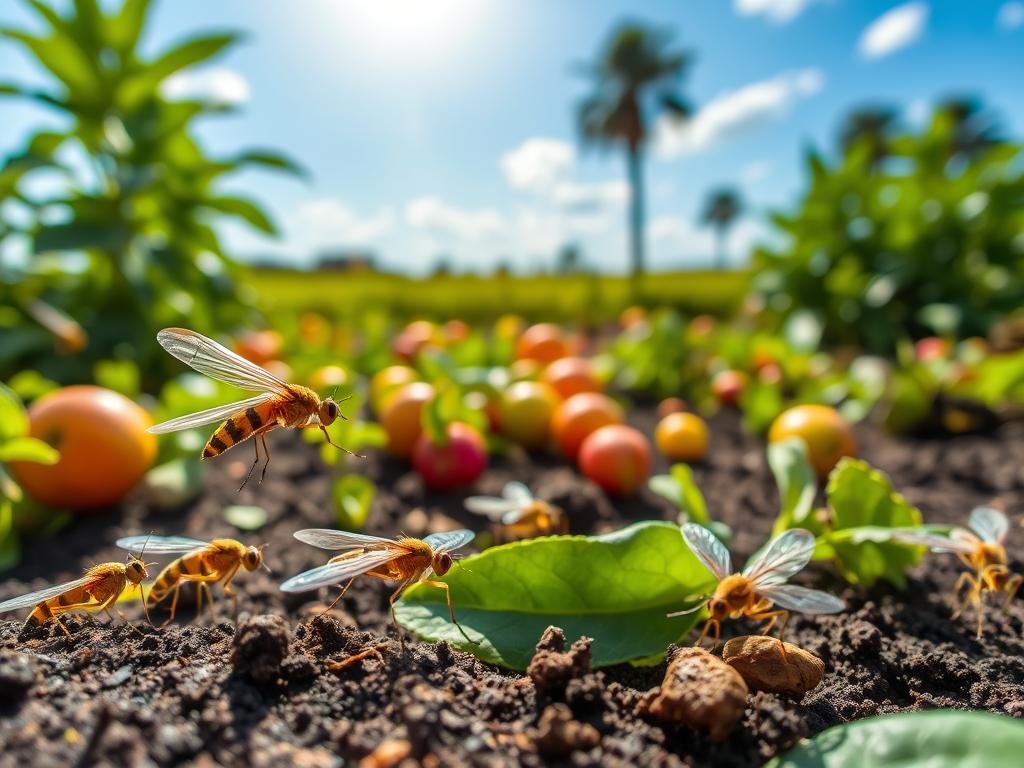
Florida’s warm and moist climate attracts many tiny insects. Knowing the different types of gnats in Florida is key. It helps in controlling gnats and making smart decisions to manage them.
Fungus gnats: signs in damp potting soil and overwatered plants
Fungus gnats are often seen near wet potting soil. They move quickly when disturbed. Sticky yellow cards and a raw potato slice can help find them.
Fruit flies: attraction to overripe produce and trash
Fruit flies are drawn to ripe fruits and trash. Keeping produce fresh and cleaning regularly can help. This reduces their presence indoors.
Drain flies: fuzzy, moth-like fliers tied to slimy drains
Drain flies have fuzzy bodies and look like moths. They live in wet drains and can be found in floor traps. A clear tape test can confirm their presence.
Phorid flies vs. “gnats”: plumbing leak red flags
Phorid flies have humped backs and run before flying. Seeing them near leaks or damp areas is a sign. A plumber should check if they are seen often.
Eye gnats are common outdoors after warm, wet weather. They are found in sandy soils and disturbed areas. Managing them requires a yard-and-home approach.
| Fly Type | Key Look | Main Breeding Site | Top Clue Indoors | Quick Check |
|---|---|---|---|---|
| Fungus Gnats | Slender, dark, long legs | Damp potting soil, overwatered plants | Clouds over houseplants | Sticky yellow cards and raw potato slice test |
| Fruit Flies | Tan body, red or dark eyes | Overripe fruit, fermenting residues | Hovering near bowls, trash, and sinks | Remove and chill produce; clean and seal trash |
| Drain Flies | Fuzzy, moth-like wings | Slime in drains, traps, and gutters | Clusters on bathroom or kitchen walls | Overnight clear tape test at drain openings |
| Phorid Flies | Humped back, runs before flight | Moist organic matter near leaks | Activity along floors and baseboards | Inspect for plumbing leaks and damp voids |
| Eye Gnats (Outdoors) | Tiny, fast, face-seeking | Sandy soils, disturbed ground | Annoyance in lawns and patios | Reduce soil disturbance; manage moisture |
Identify the Source Before You Treat
Before using sprays, they find where gnats breed. This helps in getting rid of gnats in Florida. It also makes prevention and control methods more effective inside homes.
Florida’s warm weather hides moisture spots. They check drains, plants, and hidden areas first. This ensures fixes target larvae, not just adults.
Drain “tape test” to confirm active breeding sites
For drain flies, they use a clear tape test on drains at night. The tape has a small gap for air. In the morning, trapped adults show where biofilm is.
This helps decide how to tackle gnats in Florida kitchens and baths. It saves time by focusing on the right areas.
If gnats keep coming back, they test other sinks, showers, and disposals. Clear results help clean where slime builds up.
Houseplant clues: soil moisture, raw potato slice test, gravel top layer
Fungus gnats mean the soil is too wet. They let the soil dry an inch, then use raw potato slices. Larvae gather under the slices in a day, showing the source.
They remove the slices, water less, and add gravel or sand on top. This stops adults from coming out. It’s a good method for plants in humid spots and sunny windows.
Hidden sources: refrigerator drip pans, damp rags, sponges, window trim
Without plants or fruit, but gnats are there, they look for wet spots. Refrigerator drip pans, damp rags, and sponges can hide moisture. Window trim can trap condensation and soft wood.
Seldom-used toilets and disposals also hide slime. Finding and drying these spots helps prevent gnats. It makes getting rid of gnats in Florida more effective without overusing traps.
| Suspected Source | Confirmation Step | What It Indicates | Next Move |
|---|---|---|---|
| Kitchen or shower drain | Overnight clear tape across drain | Adults stuck = active biofilm breeding | Targeted drain cleaning as part of the best gnat control methods in florida |
| Houseplants | Raw potato slice on soil; check underneath | Larvae present = fungus gnat hotspot | Dry soil between waterings; add gravel layer for prevention of gnats in florida |
| Refrigerator drip pan | Look for pooled water and sludge | Stagnant moisture feeding larvae | Clean and keep dry to aid how to get rid of gnats in florida kitchens |
| Rags, sponges, mops | Check for odor and dampness | Organic film attracting adults | Sanitize and dry items; store off surfaces |
| Window trim and sills | Inspect for condensation or rot | Hidden moisture near light sources | Dry, repair, and improve airflow for prevention of gnats in florida |
| Seldom-used toilets/disposals | Look for slime, residue, or odor | Build-up that supports breeding | Flush and maintain on a schedule; key among the best gnat control methods in florida |
Best Traps and Tools That Actually Work
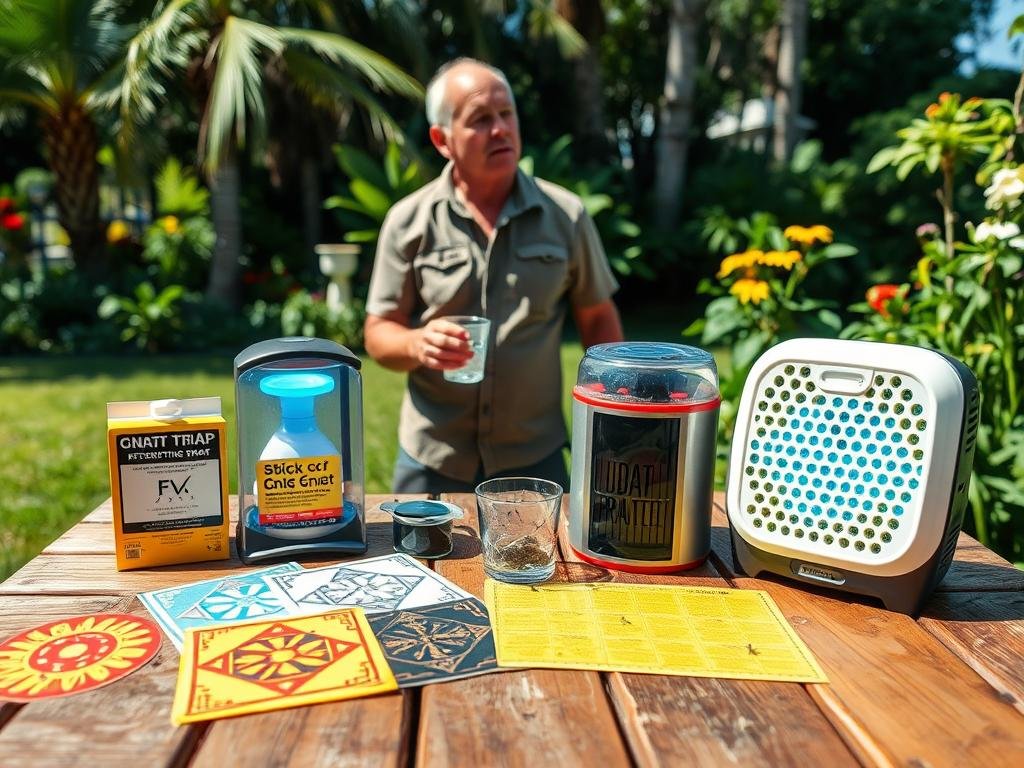
Traps that target adults quickly, while cleaning up the source area, are key. They are part of the best ways to deal with gnats in Florida. They offer fast results and are safe and easy to use. Together, they work well with repellents and other control methods in Florida.
Vinegar and dish soap traps for quick knockdown
Apple cider vinegar attracts adult gnats. A few drops of dish soap make them sink. Use a plastic wrap cover or a paper cone to catch more and let fewer escape.
Place these traps near fruit, sinks, and plants. Change them daily to keep gnats away. This is a key part of fighting gnats in Florida.
Fruit jar and wine/beer traps when vinegar isn’t handy
Wine or beer can be used as a trap when vinegar is not available. Use a nearly empty bottle with a narrow neck to keep them in. For wider jars, add a funnel or cover with pierced wrap.
These traps work well with repellents. They lure gnats away from food areas while other steps dry out breeding spots.
Sticky yellow cards and plug-in light traps for monitoring
Sticky yellow cards show where fungus gnats are near plants and windows. Replace them when they get covered to keep tracking accurate.
Plug-in light traps, like the Zevo Flying Insect Trap, use UV light to attract gnats quietly. They help control gnats indoors without using sprays.
Candle-in-water trap at night for adult fliers
At night, put a lit candle in a bowl of water with soap. Gnats fly to the flame, fall, and drown. Always watch open flames and keep them away from curtains and pets.
Aunt Fannie’s FlyPunch is a safe lure for fruit flies. Used with a repellent routine, it helps keep kitchens and plant areas stable while deeper fixes work.
Florida Gnat Control Indoors: Eliminate Breeding and Lower Humidity
Effective florida gnat control involves daily habits. These habits reduce food, moisture, and entry points. During humid and rainy periods, simple routines help prevent gnats in Florida.
Remove overripe produce, seal trash, and clean spills daily
Keep fruit in the fridge and cover bowls. Toss soft or spotted items. Use lidded trash cans and empty bags before smells spread.
Wipe counters and mop floors to avoid fermenting residues. This stops swarms from forming.
- Store cut fruit in airtight containers.
- Rinse recycling to remove juice films.
- Empty compost pails each night.
These steps help control gnats by blocking food scents. This is key in preventing gnats in Florida.
Flush drains with boiling water and use enzymatic cleaners
Pour boiling water to clear biofilm. Then, use enzymatic cleaners to digest slime. This is where eggs and larvae hide.
Enzymes are safer and work better than bleach. Keep the disposal fresh and brush under splash guards.
Learn the “tape test” and other tips in this guide on proven Florida home gnat control. It’s great for preventing gnats in Florida.
Run dehumidifiers and increase airflow to keep RH below 55%
Use a dehumidifier and fans to lower moisture. Wipe sinks and shower walls dry after use. Open doors to move air through damp rooms.
Keeping humidity under 55 percent breaks the gnat life cycle. This supports florida gnat control.
- Use bathroom and kitchen exhaust fans during and after use.
- Set smart thermostats to circulate air between cooling cycles.
Consistent moisture control is key in preventing gnats in Florida during summer storms.
Seal entry gaps and maintain window/door screens
Patch screens and add door sweeps. Caulk gaps around trim. Close light leaks at sliding doors at night, as gnats follow light.
Weatherstripping reduces infiltration. This helps in the long-term prevention of gnats in Florida.
- Inspect screen frames for tears each month.
- Check thresholds and replace worn sweeps.
- Keep exterior lights dim or shielded in the evening.
These actions keep homes ahead of seasonal influxes. They make preventing gnats in Florida practical and repeatable.
How to Get Rid of Gnats in Florida Yards and Prevent Reinfestation
Yards can spread problems inside homes. To tackle gnats in Florida, start by reducing moisture and cutting down on attractants. Also, keep swarms away from doors and windows. These steps are key to preventing and managing gnats in Florida.
Fix standing water: gutters, yard drains, pots, and low spots
Make sure gutters and downspouts are clear to let water flow after storms. Clean yard drains and refresh birdbaths regularly. Empty planter saucers and fill in low spots with soil to prevent puddles. This routine is essential for managing gnats in Florida.
Adjust irrigation to avoid soggy lawns and mulch beds
Water your lawn early and less often, just until the top inch of soil is moist. Shorten irrigation times after rain. Avoid soaking mulch rings to prevent larvae growth. These changes help prevent gnats in Florida without using chemicals.
Compost and mulch management away from the home perimeter
Turn compost weekly to increase heat and airflow. Place compost piles far from doors. Rake mulch back from the foundation by at least a foot. Choose dry mulch like pine bark or cedar. These steps make it easier to get rid of gnats in Florida.
Switch to yellow/amber “bug lights” outdoors
Replace white bulbs with yellow or amber LEDs labeled “bug lights.” Use motion sensors to avoid constant lighting. Aim lights away from entryways to reduce swarms. This is a practical way to prevent gnats in Florida.
| Yard Action | Primary Benefit | Florida Tip | Helps With |
|---|---|---|---|
| Clear gutters and drains | Removes standing water | Flush after heavy summer storms | Managing gnats in Florida |
| Right-size irrigation | Prevents soggy turf and beds | Water early morning, adjust after rain | Preventing gnats in Florida |
| Turn compost, pull mulch back | Reduces moist decay near the house | Keep piles and stacks away from walls | How to get rid of gnats in Florida |
| Install yellow/amber LEDs | Less night attraction at doors | Pair with motion sensors and shields | Preventing gnats in Florida |
Natural Remedies for Gnats in Florida and Safer Options Around Families
Families seek safe, gentle, and effective solutions. The best way to control gnats in Florida starts with fixing moisture and keeping things clean. Then, add specific tools. These natural remedies work well with simple routines that fit busy homes.
Source control first: why traps alone won’t solve larvae
Traps catch adults but miss eggs and larvae. Fixing moisture and cleaning up algae or mold removes food and shelter. Using boiling water in drains and enzymatic cleaners breaks down breeding slime.
Kitchen resets are also key. They remove fruit sugars and spills that attract gnats. This simple routine makes the space less inviting to gnats.
Carnivorous plants as passive, plant-safe helpers
Cape sundews and Venus flytraps catch small fliers on sticky leaves. They sit near windows or plant shelves and quietly reduce adult gnats. Indoors, they work well with sticky cards for steady capture without harsh residues.
Used with soil-drying and drain care, these living helpers support the best gnat control methods in Florida. They are easy to maintain and safe for most homes with pets and kids.
When to choose bio-insecticidal sprays and what to avoid
When larvae persist in potting mix, beneficial nematodes like Steinernema feltiae target fungus gnat larvae without harming people, pets, or plants. For quick knockdown of adults, Zevo Fly, Gnat & Fruit Fly Spray uses geraniol and lemongrass oil; follow label safety and keep it away from open flames.
Outdoors, UF/IFAS notes that DEET-based formulas and eyewear can deter eye gnats around faces, but broad spraying does little. A thoughtful florida gnat repellent plan leans on dryness, sanitation, and targeted tools.
| Method | Primary Target | Best Use | Safety Notes | Role in Strategy |
|---|---|---|---|---|
| Soil Dry-Back & Debris Removal | Eggs/Larvae | Houseplants, window boxes | Safe for families and pets | Core of natural remedies for gnats in florida |
| Boiling Water + Enzymatic Drain Cleaning | Larvae in drains | Kitchens, baths, laundry rooms | Avoid splashes; follow product labels | Foundation of the best gnat control methods in florida |
| Sticky Cards & Light Traps | Adult fliers | Near plants, sinks, recycling | Keep away from pets’ reach | Monitoring and reduction without chemicals |
| Carnivorous Plants (Cape Sundew) | Adult fungus gnats | Plant-heavy rooms | Non-toxic; supervise curious pets | Passive florida gnat repellent support |
| Beneficial Nematodes (S. feltiae) | Fungus gnat larvae | Damp potting mixes | Safe for people, pets, and plants | Targeted biological control |
| Plant-Based Spray (Zevo) | Adult gnats on contact | Kitchens, living areas | Keep from eyes/skin; flammable | Spot knockdown in a natural program |
| DEET Repellent + Eyewear | Outdoor eye gnats | Yards, parks, trails | Use per label; avoid over-application | Personal protection when swarms peak |
When DIY Isn’t Enough: Florida Gnat Infestation Solutions
A stubborn florida gnat infestation can outlast deep cleaning when the source hides behind walls or under slabs. When swarms return within days, homeowners often need targeted florida gnat infestation solutions that go beyond baits and wipes. Choosing trusted pest control services for gnats in florida keeps the focus on pinpointing why the problem persists.
Clues that point to hidden leaks, wall moisture, or sewer issues
Clusters near baseboards, floor-level outlets, or shower traps suggest larvae breeding in damp voids. Recurring activity in bathrooms, laundry rooms, or kitchens—even after fruit and plants are removed—can flag wall moisture or a slow leak.
Phorid fly sightings near slab cracks or floor drains may indicate a damaged waste line. A plumber’s camera inspection helps confirm a sewer breach so repairs are accurate and limited in scope.
Professional inspection steps: identify, remove, prevent, monitor
Licensed teams start with species ID to separate fruit flies, fungus gnats, drain flies, and phorid flies. They trace moisture with meters, check window trim, toe-kicks, and drip pans, and assess drains for biofilm buildup.
Next comes source removal through targeted cleaning or repair, sealing entry gaps, and adjusting indoor humidity. Follow-up monitoring with sticky cards and light traps verifies that the cycle is broken before it rebounds.
Pest control services for gnats in Florida and ongoing protection plans
In South Florida, Hoffer Pest Solutions offers same-day help when called before noon and more than 40 years of regional expertise. Their Home Shield plans—Classic, Advantage, and Complete—address year-round humidity and structural moisture pressures common to a florida gnat infestation.
These programs pair precise diagnosis with scheduled check-ins, which reduces surprise flare-ups. Clear documentation and service guarantees make florida gnat infestation solutions predictable and cost-smart, when paired with coordinated plumbing repairs.
| Service Element | What Pros Deliver | Why It Matters | Florida Fit |
|---|---|---|---|
| Species Identification | Differentiate fungus gnats, drain flies, fruit flies, and phorid flies | Prevents misdirected treatments and delays | High humidity and mixed sources demand precision |
| Moisture Diagnostics | Meters, visual checks, and targeted probing | Finds leaks, damp trim, and hidden biofilm | Sandy soils and warm air drive persistent damp spots |
| Source Removal | Sanitation, drain remediation, and selective repairs | Breaks the life cycle at the larval stage | Essential for any florida gnat infestation |
| Monitoring & Follow-Ups | Sticky cards, light traps, and scheduled visits | Verifies decline and prevents rebound | Year-round pressure requires routine checks |
| Protection Plans | Home Shield Classic, Advantage, Complete | Predictable coverage and guarantees | Tailored florida gnat infestation solutions |
Conclusion
Florida homes often face gnat problems. The first step is to know what gnats are and keep habits consistent. Clean drains with boiling water and then use enzymatic cleaners. Keep potting soil dry, refrigerate or cover fruits and veggies, and seal trash.
Lowering indoor humidity to under 55% makes your home less appealing to gnats. This helps prevent gnats long-term.
Tools can help manage gnats, but they’re not the only solution. Use vinegar-and-soap traps, fruit jar or wine and beer lures, sticky yellow cards, and plug-in light traps like Zevo. These can reduce adult gnats and help you monitor them.
A candle-in-water setup works at night to catch gnats. But, none of these methods kill larvae. So, finding and fixing the source is key.
Outdoors, fix any standing water and adjust irrigation to avoid wet soil. Move compost and mulch away from your home’s foundation. UF/IFAS says warm, wet seasons and sandy soils make gnats worse.
Start prevention early, before the rains, for the best results. If you have persistent problems or suspect leaks, get a professional check. In South Florida, Hoffer Pest Solutions offers quick service. Palm Beach County residents can find more on fungus gnats and prevention in this guide to Wellington gnat control.
With regular upkeep and timely help, you can make your home a gnat-free zone. Even in humid, gnat-prone areas, a well-maintained home can be comfortable and resilient.
Be the first to comment