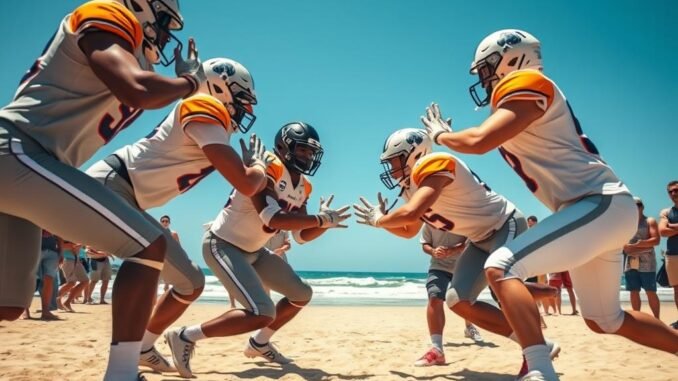

On one night, 600 to 700 teens, the size of a whole high school, spread out in Jacksonville. Later, they gathered on Jacksonville Beach. There, circles formed and phones lit up as they chanted for the Oklahoma drill.
It seemed like a sudden game day without a coach. The oklahoma drills quickly spread through social media. This drew a big crowd that felt both fun and tense. Police warned that these unsanctioned meetups were illegal and moved in early.
So, what is the oklahoma drill, and why did it happen on the beach? For years, the oklahoma drill has meant toughness. It’s about two people racing in a tight space to see who wins. Teens wanted to show their toughness by doing it on the sand.
As videos go viral, people wonder more: what’s an oklahoma drill in real life? How does it differ from safer, coached drills? This series will explore the origins of the Oklahoma drill. It will show how it moved from practice fields to public beaches. It will also explain why authorities see it as a risk to public safety.
Jacksonville Beach crowd draws attention amid teen takeover concerns
Jacksonville Beach saw a big influx of teens, making the beach and boardwalk very lively. Police tried to keep things under control but found it tough. Teens were always on the move, following plans that spread quickly.
They talked about oklahoma drills football and oklahoma drill football, showing a culture of toughness. This culture is common online when big gatherings happen.
Mass gatherings and public safety challenges at popular beachfront areas
Police Chief Gene Paul Smith said beaches are crowded and hard to manage. The area is tight, with sand, streets, and bars. This makes it hard for emergency vehicles to get through.
When things get too loud, fights or fireworks might start. This can lead to dangerous situations on the crowded sand.
Officers worked to stop groups from gathering in one place. They watched for fights and sudden movements towards the pier. People said the noise got louder as groups formed and moved.
How social media promotion fuels rapid, unsanctioned meetups
Instagram Stories, Snapchat maps, and Facebook posts helped teens change plans quickly. A single video could attract dozens in minutes, then move the crowd elsewhere. Phrases like oklohoma drills and oklahoma drill football became popular, mixing sports with party vibes.
Because posts change fast, police found it hard to keep up. The more people, the more attention the event got.
Connections to prior downtown Jacksonville dispersals by police
Earlier, police had to move a big crowd near Friendship Fountain. Soon, teens showed up at the beach, following the same pattern. JBPD noted how moving from downtown to the beach made it harder to control the area.
People said the timing was interesting, with one crowd thinning as another grew. Chatter about oklahoma drills and oklahoma football drill kept popping up, mixing sports with fast-changing plans.
| Factor | Downtown Dispersal | Beach Crowd | Public Safety Impact |
|---|---|---|---|
| Location Dynamics | Wide streets, mixed pedestrian traffic | Narrow boardwalk, sand, pier access | Beach setting limits ambulance and patrol movement |
| Mobilization Trigger | Word-of-mouth plus live clips | Instagram and Snapchat pivots | Rapid clustering and relocation within minutes |
| Behavior Signals | Surges after music and car convoys | Contact-style contests, chants, fireworks | Higher risk of clashes and medical calls |
| Language Trends | “Link up,” “next spot,” “move now” | “oklohoma drills,” “oklahoma drill football,” “what are oklahoma drills” | Sports terms normalize risky physical tests |
| Enforcement Challenge | Block intersections, disperse on foot | Secure beach access, protect pier and lots | Prevents bottlenecks while managing crowd flow |
What unfolded during the beach meetup and why authorities reacted
As the sun set, small groups gathered near the pier. They formed tight circles and shouted when pairs collided. Spectators filmed, and more teens rushed in, turning the strip into a live arena. The buzz echoed a familiar question—what is the oklahoma drill in football—and why it draws crowds so fast.
Witnesses described bursts of contact that resembled oklahoma drills in football. Onlookers used phrases like football drill oklahoma and oklahome drill as they posted clips. The setup mirrored the oklahoma drill in football: two people face up, a narrow lane, and a quick, hard clash that rewards leverage and will.
Precursor activities resembling football-like contests on the sand
Before police stepped in, the beach saw pods of teens staging head-to-head challenges. They formed lanes with teammates. The pattern tracked the playbook of what is the oklahoma drill in football: a confined space, a snap count, and a short collision. Those brief matchups drew ringed crowds that spilled toward walkways.
Chants built, whistles pierced the noise, and phones lit the scene. Organizers moved fast, resetting lanes, while spectators called out oklahoma drills in football by name. Each rep tightened the circle and slowed foot traffic around the boardwalk.
Police awareness of planned “takeover” events and rapid response
Jacksonville Sheriff’s Office anticipated a surge tied to social media flyers. Units staged along beach access points and patrols watched for movement from earlier downtown meetups. Once the football drill oklahoma style contests thickened the crowd, officers issued orders over loudspeakers and steered people off the sand.
The strategy reflected earlier deployments that moved groups before park curfews. With rumors spreading, teams shifted to hot spots and cut off regrouping sites. That tempo made it harder for organizers to reset an oklahome drill circle a few blocks away.
Blocking roads and dispersal tactics to prevent relocation
To stop a rolling crowd, officers blocked feeder streets and bridge routes. Patrol cars formed chokepoints, while bike units funneled foot traffic toward exits. Dispersal orders came in waves, aiming to break the flow that often turns one clash into many.
As clusters thinned, police watched rideshare zones and parking lots where another oklahoma drill in football style ring might form. The layered approach—traffic control, crowd splits, and steady announcements—targeted the pattern of quick relocation after a beachside surge.
| Observed Activity | Why It Drew Attention | Typical Police Action | Effect on Crowd Movement |
|---|---|---|---|
| Sand-lane collisions resembling oklahoma drills in football | Compact hits, rapid buildup of spectators | Loudspeaker orders, unit staging at access points | Initial pause, then scattering to side streets |
| Social media calls for “takeover” after dark | Fast turnout and shifting locations | Pre-positioned patrols and quick response teams | Shorter windows for regrouping |
| Attempts to restart football drill oklahoma circles | Renewed rings that block walkways | Targeted dispersal and citation warnings | Breaks up clusters before momentum returns |
| Route hopping toward bridges and coastal lots | Large groups moving en masse | Roadblocks and bridge access restrictions | Prevents relocation to new high-visibility spots |
From Friendship Fountain to the beach: a pattern of planned gatherings
Moving from downtown to the beach was not random. People talked about organized plans and fast social media posts. Teens also discussed oklahoma drill, wondering if it’s for parks or beaches.
Using oklahoma drill terms was common. They talked about rough contests, even without pads or coaches.
JSO’s account of 600–700 juveniles congregating downtown
Jacksonville Sheriff’s Office said 600–700 teens were near Friendship Fountain. More teens came, slowing traffic and gathering in groups.
As news spread, people compared it to oklahoma drills online. They wondered about football oklahoma drills, adding to the excitement.
Problematic behaviors cited: fighting, pepper spray, and a seized firearm
JSO reported fights and drug use. They also found pepper spray and a gun on a teen.
In the chaos, oklahoma drill talk grew. Without rules, the risks increased fast.
Warnings issued to organizers and parents before events began
JSO warned organizers and parents about permits before the event. They stressed the need for safety and a legal venue. Yet, groups moved and formed.
As downtown emptied, teens headed to the beach. Okahoma drill talk followed, even for those who only knew it from videos.
| Location | Estimated Crowd | Key Behaviors Reported | Pre-Event Actions | Why Terms Trended |
|---|---|---|---|---|
| Friendship Fountain, Southbank | 600–700 juveniles | Fighting, drug use, pepper spray, firearm seizure | JSO warnings to organizers and parents about permits | Viral clips labeled as oklahoma drills and variations like oklahama drill |
| Roadways toward the beach | Growing, mobile clusters | Rapid regrouping, relocation attempts | Route monitoring and access controls | Debates over what is oklahoma drill and what are oklahoma drills |
| Coastal gathering points | New arrivals merging with beach crowds | Physical challenges and crowd surges | Dispersal measures and traffic blocks | Hashtags mixing oklahoma drills with oaklahoma drills misspellings |
Street takeovers explained and why they’re deemed unlawful
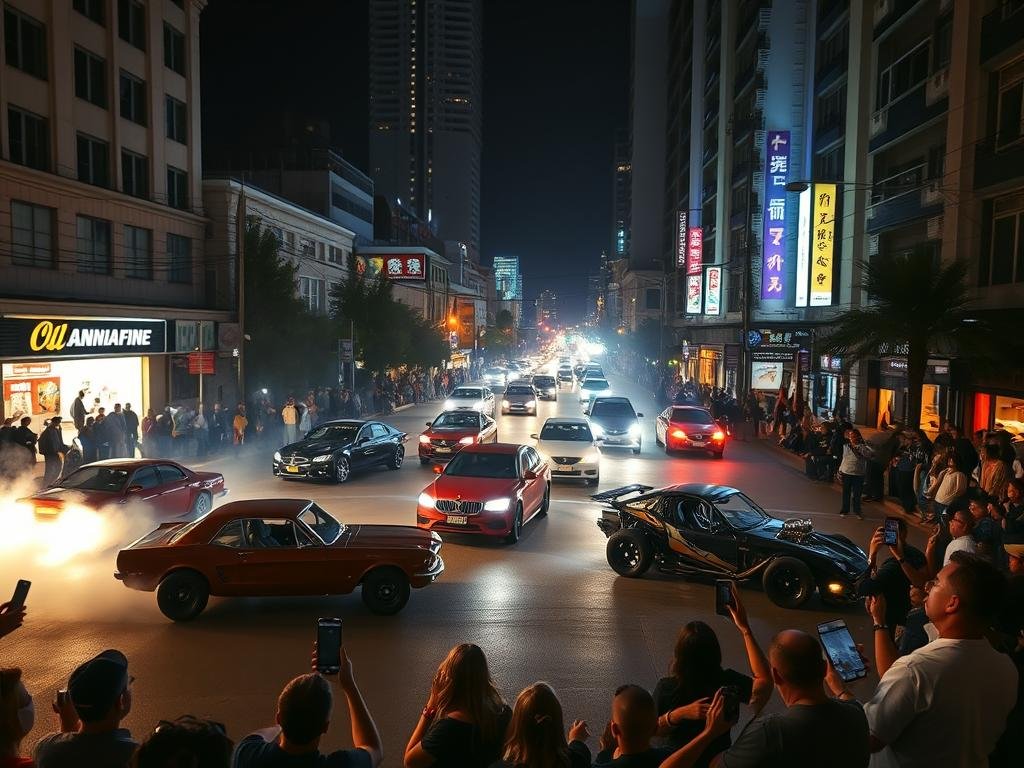
In U.S. cities, police call a street takeover an unsanctioned event. It blocks roads and features risky stunts. Similar events happen in beaches and parks, causing disruptions without permits.
Organizers might say it’s like oklahoma’s football drill. But it’s the crowding and disruption that get them in trouble, not the activity itself.
Definition: unsanctioned gatherings that disrupt safety and order
A street takeover is when people take over intersections for burnouts, races, or other acts. Spectators gather, and it can feel like an oklahoma deill event. But if it blocks public space and lacks permits, it’s a problem.
These events are often planned on social media and happen quickly. The crowd forms, traffic stops, and access is cut off in minutes.
Risks to drivers, spectators, property, and emergency access
Drivers face sudden roadblocks and erratic movement from onlookers. Spectators are at risk from spinning vehicles, even if it’s inspired by oklahoma’s football drill.
Property damage, noise, and debris are common. The biggest risk is blocked lanes that delay ambulances and fire crews when every second counts.
Public nuisance classifications across jurisdictions
Many places see a street takeover as a public nuisance. It harms safety, order, and comfort for locals and businesses. This lets authorities clear crowds, tow cars, and cite participants, even for events like sand scrimmages or oklahoma deill contests.
Local laws vary, but the rule is clear. If a gathering disrupts traffic, threatens bystanders, or blocks emergency routes, it’s a public nuisance.
| Aspect | Typical Indicators | Why It’s Unlawful | Examples in Practice |
|---|---|---|---|
| Control of Space | Blocked lanes, human chains, improvised rings | Obstructs public right-of-way and emergency routes | Intersection takeovers; crowded beach corridors |
| Activity Type | Reckless driving, stunts, or contact contests | Creates foreseeable risk of injury and damage | Donuts, drag races, football-style faceoffs |
| Organization | Social media calls, no permits, mobile locations | Avoids oversight and safety plans required by law | Encrypted group meetups shifting by the hour |
| Harm Profile | Injuries, property damage, noise, crowd crush | Meets criteria for public nuisance and disorder | Struck spectators; vandalized storefronts |
| Enforcement Tools | Citations, towing, dispersal orders, arrests | Authorized by nuisance, traffic, and safety codes | Rapid response units and barricades at hot spots |
Police messaging and zero-tolerance stances in Jacksonville Beach
Jacksonville Beach police gave clear instructions before spring events. They said permits and safety plans are required. They also talked about rough sand contests, where some wonder if Oklahoma drills are illegal.
They explained that these rules are for everyone’s safety, not just a trend. The same goes for wondering if Oklahoma drill football is banned outside of practice.
“Unauthorized and Unpermitted Events are AGAINST THE LAW”
The Jacksonville Beach Police Department warned about illegal gatherings. They said any event without city approval is against the law. This includes events promoted on social media.
They clarified that rules apply to all events, no matter the theme or hashtag.
Criminal and civil liabilities for promoters and attendees
Police said promoters could face criminal charges and lawsuits for unapproved events. Attendees who break the law will be arrested. This policy is different from debates about Oklahoma drills in sports.
The focus here is on permits, crowd control, and liability in public spaces.
“No warnings” approach and curfew enforcement
JBPD has a strict policy: no warnings, no exceptions, and arrests for violations. The Jacksonville Sheriff’s Office also supports curfew and park rules. They remind parents of their duties under the Children’s Curfew ordinance.
While some ask about Oklahoma drill football bans on beaches, police say curfew and permitting laws come first.
Community reactions to teen takeovers and beach disruptions
Local talk quickly turned heated. Over 1,300 comments poured in on the Jacksonville Sheriff’s Office post. People were divided, with some calling for stricter curfews and others wanting more places for teens to hang out.
What is the oklahoma drill and why people associate it with toughness
Many wondered about the oklahoma drill and its connection to toughness. It’s a face-off in a narrow space, showing strength and attitude. Fans love it because it symbolizes grit and competition.
This image can spread beyond sports. The term oklahoma football drill is used to describe raw intensity, even without a game setting.
What are oklahoma drills versus other football contact drills
Oklahoma drills are about two players in a small area, focusing on driving and wrapping. They’re different from other drills that teach safer tackling. These drills are about speed and control, not just raw strength.
When teens do these drills without rules, it’s more like a challenge than a practice. There’s no structure, no safety gear, and no clear goal.
Why is it called the oklahoma drill and the drill’s meaning in culture
People are curious about the oklahoma drill’s origins. It comes from Oklahoma’s football tradition of toughness and hard play. This legacy has shaped the sport’s culture and rituals.
Today, the oklahoma drill is seen as a symbol of toughness. In discussions, it’s debated whether this symbol belongs on the beach or only in sports.
Safety debate: are oklahoma drills banned or illegal in football
The safety of high-impact practice is a big topic now. Parents and coaches are questioning the need for these drills. Fans also wonder if they are banned in all leagues.
Context matters. The NFL stopped using them years ago. Now, teams decide what happens in practice. They focus on technique over old-school drills like the Oklahoma drill.
Is the oklahoma drill banned at various levels of play
At the pro level, rules, not laws, decide on the drill. Colleges and high schools also have their own rules. So, whether the drill is banned depends on the place.
Some programs use pads and space for drills. This change helps explain why some places ban the drill and others control it.
Why are oklahoma drills banned or restricted in many programs
Coaches worry about concussions and poor angles in tight spaces. They say safer drills can teach the same skills. Many now use controlled contact and track head impacts.
The debate isn’t just about banning drills. It’s about making practice safe and intense. Non-contact drills help avoid the risks of old-school methods.
Are oklahoma drills illegal in Florida or California
Policy and law are different. In Florida and California, there’s no law against the drill. Schools and leagues decide what’s allowed on their fields.
In public places, rules focus on events, curfews, and safety. It’s not about a criminal ban. It’s about following rules in specific places.
| Level | Typical Status | Main Rationale | Common Alternatives |
|---|---|---|---|
| NFL | Restricted by team/league policy | Player safety, reduced collision risk | Controlled inside-run, pad-level drills |
| NCAA | Often discouraged or limited | Concussion management, liability | Tempo periods, thud-only contact |
| High School | Mixed; many districts restrict | Safety standards, coaching guidelines | Tackling circuits, non-contact variants |
| Youth | Frequently prohibited | Developing athletes, head-impact limits | Form tackling, bag work |
Comparing organized football practice to unsanctioned public meetups
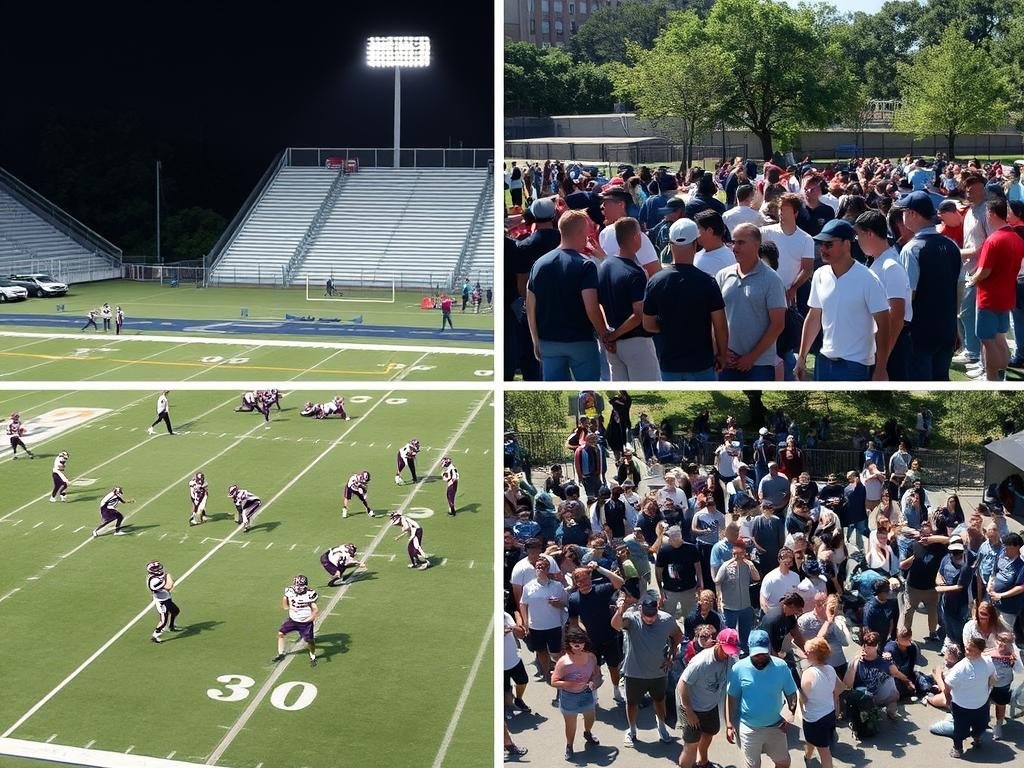
At a school field or club complex, practice follows rules and a plan. On a beach or street, crowds form quickly. This difference affects safety, accountability, and risk management.
Key differences: supervision, permits, medical staff, and liability
Organized teams have certified coaches and trainers. They follow rules and have insurance. This ensures safety and tracks who’s there.
Unsanctioned meetups lack adult supervision and medical care. There’s no emergency plan or liability if someone gets hurt.
How controlled environments mitigate risk compared to street takeovers
Structured sessions include warm-ups and breaks. Coaches can stop drills quickly if needed. This reduces chaos when accidents happen.
Street takeovers are crowded and chaotic. Without clear rules, a small issue can quickly become dangerous for everyone.
“Banned football drills” and the evolution of safer practice standards
Many programs now avoid high-impact drills. They focus on safety and skill over toughness. This shift has sparked debates about the Oklahoma drill.
Coaches question the safety of the Oklahoma drill. It involves head exposure and uncontrolled angles. Now, leagues are banning it to focus on safer, skill-based training.
| Setting | Oversight | Safety Protocols | Medical Response | Collision Management | Liability Coverage |
|---|---|---|---|---|---|
| Organized Football Practice | Certified coaches; attendance logs | Contact limits; banned football drills in policy; heat guidelines | Athletic trainers on site; AED and first-aid kits | Progressive drills; review of oklahoma drill football risks | Facility insurance; waivers and permits |
| Unsanctioned Public Meetup | No formal leadership; fluid crowds | None; no field control or checklists | No assigned med staff; delayed 911 access in crowds | Unplanned hits; no clarity on why is oklahoma drill banned or limits | No permits; unclear responsibility for injuries |
| Program Trend | Data-informed oversight | Standards that keep oklahoma drills banned in many settings | On-call care and return-to-play steps | Technique-first practice; oklahoma football drill banned in policies | Documented risk management |
Recent regional incidents shaping policy and parental awareness
Local incidents are making parents focus on safety and what teens see online. They wonder about oklahoma drills football and if they’re banned. Meetups that look like oklahoma drills are also a topic of discussion.
Orange Park Mall disturbance and law enforcement readiness
Before a July 5 event at Orange Park Mall, the Clay County Sheriff’s Office was ready. They had a quick response to youth disturbances. One juvenile got a civil citation, and many were detained.
This shows how agencies prepare for events that might look like oklahoma drills football. Schools and clubs now teach safer ways to interact. They explain why oklahoma drills are not always allowed.
Jacksonville Beach Pier St. Patrick’s Day shootings as a cautionary tale
On St. Patrick’s Day at Jacksonville Beach, a shooting left one dead. It turned a party into a crisis fast. Families saw the dangers of crowded places.
Local leaders have been trying to explain the difference between practice and stunts. They want to make sure teens know the risks of copying oklahoma drills. Even a casual video can hide real dangers.
Curfew rules in Jacksonville and state driver curfew for juveniles
Jacksonville has a Children’s Curfew that limits when minors can be out. It’s after 11 p.m. on weeknights and midnight on weekends, unless with an adult. Florida also has a curfew for young drivers.
These rules help parents worry less about late-night meetups. They also help coaches explain why oklahoma drills are supervised. Curfews and transport rules keep teens safe and responsible.
Conclusion
Jacksonville’s recent teen meetups show how fast social media can turn a simple plan into a moving crowd. Police moved from Friendship Fountain to Jacksonville Beach with roadblocks and curfews to keep order. Many asked—what is oklahoma drill, or even whats an oklahoma drill—is part of a larger story about culture, safety, and public space.
The oklahoma drill football tradition carries grit and lore, but it belongs in supervised settings with coaches, trainers, and permits. Many teams limit or drop it for health reasons. The local concern is not the drill itself. The issue is unsanctioned events that jam roads, spark fights, and stretch first responders.
Residents see why leaders stress permits and planning, specially near busy spots like Orange Park Mall and the Jacksonville Beach Pier. When crowds shift locations, readiness matters. Understanding what is oklahoma drill and how oklohoma drills evolved helps families talk risk and respect public rules without dismissing football’s pull.
In the end, clarity helps: oklahoma drill interest does not excuse unsafe meetups. Communities thrive when large activities are approved, managed, and medical-ready. That balance honors tradition, answers whats an oklahoma drill with context, and keeps public places open, calm, and safe.
Be the first to comment