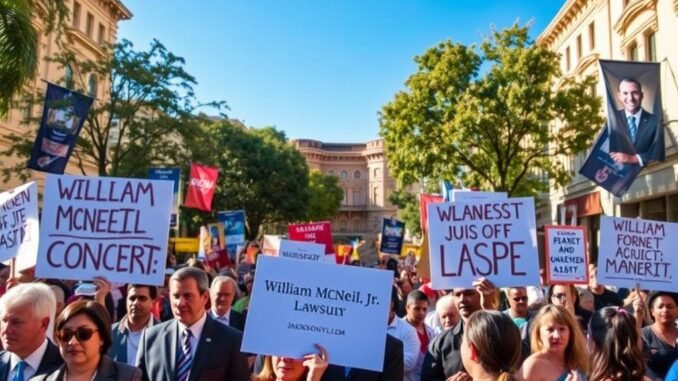

One in three Americans now sees police use of force as a “very serious” problem, according to Pew Research Center. A local protest in Jacksonville grew after a viral arrest video. It showed officers breaking a car window and hitting 22-year-old college student William Mcneil JR during a stop on Feb. 19.
After the video spread, marches started downtown and outside the Jacksonville Sheriff’s Office. Demonstrators questioned JSO’s tactics, training, and accountability. They say the footage and bodycam releases have raised these concerns.
Attorneys Ben Crump and Harry Daniels now represent McNeil. They filed a federal lawsuit on Sept. 10 against the City of Jacksonville and others. The lawsuit claims racial profiling and excessive force, and seeks U.S. Department of Justice oversight.
Sheriff Waters has released videos and said prosecutors found no wrongdoing by the officers. Mayor Donna Deegan called the images disturbing and urged due process. As the protest grows, the stakes are high for JSO, the city, and the community seeking answers.
Jacksonville Protest Calls for Accountability and Transparency
After a viral arrest video in July, a rally in Jacksonville brought together many. They included neighbors, clergy, and advocates. They all wanted accountability and transparency.
Many searched for information on William Mcneil JR. They wondered how JSO policies affected the traffic stop. They looked for ways to rebuild trust.
Community rally highlights demands after viral arrest video
Speakers tied the video to community demands. They called for a timeline, full footage release, and clear officer explanations. They often mentioned William Mcneil JR, seeking answers based on facts and policy.
Organizers urge oversight of Jacksonville Sheriff’s Office policies
Organizers pushed for an independent review of JSO policies. They focused on force standards and training. They said transparency needs data, audits, and public forums.
The rally stressed the importance of regular disclosure. This way, families can compare william mcneil jr information with official records.
Calls for Department of Justice involvement gain momentum
Support for a DOJ investigation grew. Advocates believed outside eyes could check if accountability and transparency meet public expectations. The crowd’s demands included regular policy reviews, independent oversight, and ongoing community engagement.
What Happened During the Traffic Stop and Arrest
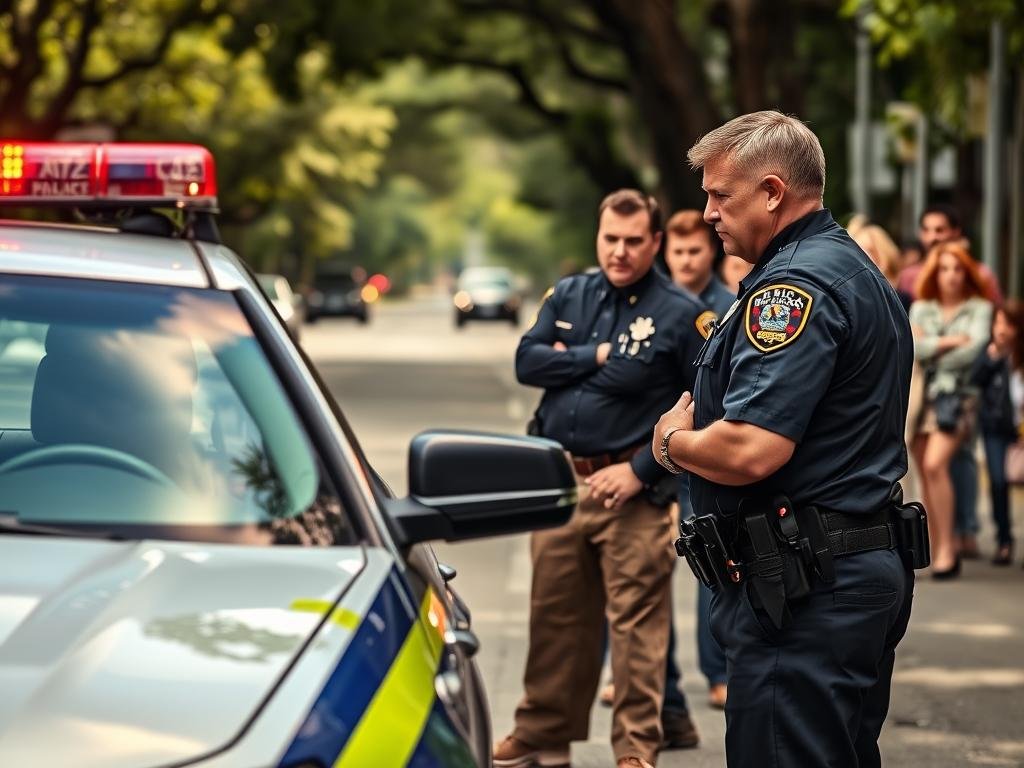
Near Commonwealth Avenue, officers stopped the SUV because the headlights were off during bad weather. The driver said it was raining, but the video showed water on the windshield. The driver, known as William Mcneil JR, asked for a supervisor and said his window didn’t work.
Stop initiated over headlights during reported inclement weather
Officers said the lighting violation was the reason for the stop. William Mcneil JR opened the door to talk, then closed and locked it. He was then asked for documents and to comply.
Window smashed, punches thrown, and extraction from the vehicle
More officers arrived, and permission was given to break the glass. An officer smashed the window and pulled him out. There were more strikes after he was out, leading to questions about resisting without violence.
Bodycam footage shows repeated commands to exit the car
Audio showed a clear order to get out and a warning of arrest. Sheriff T.K. Waters said the driver refused early on, seen in the bodycam footage. The conversation was about compliance, paperwork, and the driver’s request for a supervisor.
Discovery of a serrated knife on the driver’s side floorboard, per police
Police found a large unsheathed blade on the floor by the driver’s seat. This detail is part of the serrated knife claim. It’s also linked to the resisting without violence charge and the broader william mcneil jr profile.
Legal Action: The Federal Lawsuit and Claims of Excessive Force
The federal lawsuit by William Mcneil JR has moved from outrage to the courtroom. It outlines claims from a February traffic stop. Filed on Sept. 10 in federal court, it focuses on excessive force, racial profiling, and policy at the Jacksonville Sheriff’s Office. For more background, readers can check the case overview and william mcneil jr updates.
Suit filed against the City of Jacksonville, JSO, Sheriff T.K. Waters, and officers
The complaint targets the City of Jacksonville, JSO, Sheriff T.K. Waters, and Officers D. Bowers and D. Miller. It was filed in the U.S. District Court for the Middle District of Florida. It uses bodycam and cellphone video as evidence. William Mcneil JR challenges these actions and policies under federal law.
Allegations of racial profiling and unconstitutional use of force
The claim says JSO used too much force against a driver who wasn’t a threat. Attorneys Ben Crump and Harry Daniels say there’s a racial profiling pattern. This pattern erodes trust, as detailed in william mcneil jr biography.
Damages sought exceed $100,000 plus punitive damages
The lawsuit asks for damages over $100,000 and at least $100,000 in punitive damages. It mentions medical harm, like a fractured tooth and a brain injury. These damages aim to cover long-term effects and costs.
Request for DOJ investigation alongside civil litigation
Along with the civil case, the attorneys want a DOJ probe into systemic issues. They say oversight is key after the State Attorney’s Office chose not to charge. This request shows the lawsuit and oversight efforts are parallel.
Official Responses from City and Law Enforcement
City Hall and police leaders talked about the William Mcneil JR case. They focused on the process and transparency. Their words set the stage as william mcneil jr news spread in Jacksonville.
Mayor Donna Deegan called the video “disturbing.” She noted public concern and urged patience. She said Jacksonville’s government is complex, with her and Sheriff T.K. Waters having different roles.
Deegan praised the bodycam release for showing transparency. She stayed neutral on the outcome, saying reviews and possible lawsuits are ongoing.
Sheriff T.K. Waters learned about the incident when the video went public. He released several bodycam angles and started both a criminal and an administrative review. Waters warned that a single video can be misleading without context.
He said the internal review is ongoing as more evidence is looked at.
The State Attorney’s Office found no criminal wrongdoing by the officers. Waters said the internal review continues after that. He explained that criminal checks and agency reviews are separate.
Officials said these steps follow the city’s structure and aim for transparency in william mcneil jr news.
Leaders talked about Jacksonville’s unique government setup. Mayor Donna Deegan pointed out the governance lines. Sheriff T.K. Waters talked about his role in reviews.
Together, they explained how the State Attorney’s Office, the sheriff’s reviews, and public updates aim to inform without bias.
Key Figures: Attorneys Ben Crump and Harry Daniels Speak Out
National civil rights attorney Ben Crump and Harry Daniels are now representing William Mcneil JR. They see his case as part of a bigger fight against police abuse. They say the arrest is linked to racial profiling and want the Jacksonville Sheriff’s Office to be transparent.
Ben Crump sees the lawsuit as a test of policy and culture. He wants the public to see every clip, memo, and log. Harry Daniels calls the force used excessive and says federal oversight is needed. They both want all video released immediately for transparency.
Their appeal has made william mcneil jr information more widely known. They focus on racial profiling, a pattern they’ve seen in cities like Minneapolis and Atlanta. Each update from them brings more attention to seeking accountability.
| Attorney | Focus | Primary Goal | Key Theme | Relevance to Case |
|---|---|---|---|---|
| Ben Crump | Pattern-and-practice concerns | Broad transparency | Public access to records and video | Frames racial profiling claims within national context |
| Harry Daniels | Use-of-force review | Federal oversight | Demand for DOJ involvement | Challenges officer conduct and prosecutorial choices |
| William Mcneil JR | Plaintiff | Accountability | wiliam mcneil jr information and case updates | Central to claims of excessive force and civil rights violations |
The attorneys’ message has struck a chord with many. Neighbors, faith leaders, and students are calling for an independent review. Their words link local events to national debates on reform, focusing on transparency and the strategies they’re using.
Injuries Reported and Medical Evaluations Following the Arrest
Supporters of William Mcneil JR say he has injuries and is getting ongoing care. Records and medical checks were done right after his arrest. These visits keep track of his symptoms. There’s a big debate about the extent of his injuries.
Claims of traumatic brain injury, concussion, and fractured/chipped tooth
William Mcneil JR’s lawyers say he got a traumatic brain injury and concussion. They also mention a broken tooth and other injuries from head impact. These claims are based on medical checks that show brain and dental problems.
Alleged head impact on pavement and lip injury requiring stitches
It’s said his head hit the ground, causing a lip cut that needed stitches. He also got a tooth puncture and swelling. He’s been getting pain treatment and being watched for concussion effects.
Discrepancy between defense claims and response-to-resistance report
The Jacksonville Sheriff’s Office report mentions a chipped tooth and a small lip cut. This is different from the defense’s claims of a traumatic brain injury and lasting concussion symptoms. This difference makes the medical evaluation key to the case.
William McNeil Jr. biography, background, and education context
Not much is known about William Mcneil jr’s background, but he’s a 22-year-old college student. His bio in reports talks about his student status and the timeline of his injuries. Education records are mentioned to show how his treatment has affected his studies.
Both sides look at the same events but draw different conclusions. Supporters believe the concussion and brain injury show the incident’s lasting effects. Officials, on the other hand, stick to the injuries listed in the initial report.
Timeline, Charges, and Case Status Updates
On Feb. 19, near Commonwealth Avenue, officers stopped William Mcneil JR during bad weather. He pleaded guilty to resisting without violence and driving with a suspended license in two days. The court gave him credit for time served and dropped a misdemeanor marijuana charge.
After the bodycam footage was released in July, interest in the case grew. Jacksonville Sheriff T.K. Waters shared multiple camera angles, saying reviews were ongoing. For updates, check the Jacksonville Sheriff’s Office statement and media.
In August, the State Attorney’s Office found no criminal wrongdoing by the officers. A lawsuit was filed on Sept. 10 against the City of Jacksonville, JSO, Sheriff Waters, and Officers D. Bowers and D. Miller. It seeks damages over $100,000 and punitive damages, asking for a federal review.
Supporters have shared William Mcneil JR’s background and profile. They highlight his career and accomplishments. They talk about his personal milestones and community ties, showing the impact of his arrest on his work and family.
Key dates and outcomes are listed below for clarity.
| Date | Event | Charges/Findings | Status Notes |
|---|---|---|---|
| Feb. 19 | Traffic stop near Commonwealth Avenue involving William Mcneil JR | Initial detention | Incident begins the case timeline |
| Feb. 21 | Plea entered | Resisting without violence; suspended license; marijuana count dropped | Two days credited as time served |
| July | Bodycam July release following viral in-car video | Evidence made public | JSO opens internal administrative reviews |
| August | State Attorney’s Office review | No criminal violations by involved officers | Criminal review concluded; admin reviews continue |
| Sept. 10 | Civil filing | Lawsuit filed Sept. 10 seeking damages and DOJ inquiry | Defendants include City of Jacksonville, JSO, Sheriff Waters, Officers Bowers and Miller |
| Ongoing | Administrative process | Internal reviews active | Public protests call for transparency while the william mcneil jr profile and history remain central |
Conclusion
The outcry in Jacksonville shows how one night on February 19 became a test of accountability and transparency in policing. After the arrest of college student William Mcneil JR and the release of bodycam footage, the State Attorney’s Office declined criminal charges against the officers. City Hall urged patience. Sheriff T.K. Waters cited openness through video releases and administrative review. Yet protests continued, pressing for JSO oversight and a credible path to answers.
McNeil’s federal lawsuit alleges racial profiling and excessive force, seeking damages and a DOJ investigation into systemic practices. Attorneys Ben Crump and Harry Daniels argue the case exposes deeper issues, not just one stop gone wrong. Conflicting accounts of injuries, including a possible brain injury and dental damage, keep the debate alive. The william mcneil jr biography and case filings frame him as a student whose future now hinges on the courts and public scrutiny.
As hearings proceed, the community looks for clear william mcneil jr updates, not just statements. People want independent review, consistent JSO oversight, and policies that reduce harm. They expect swift discipline when warranted and training that builds trust. Those goals align with broader calls for transparency in policing across the country.
What happens next will signal how Jacksonville balances safety and civil rights. The william mcneil jr website, court records, and official reports will shape the timeline, but trust will rest on action. If a DOJ investigation advances and reforms follow, residents may see a blueprint for change. Until then, the case stands as a measure of accountability in practice, not promise.
Be the first to comment