

The “Alligator Alcatraz” site in the Everglades was built in just eight days. It was meant for 5,000 people, but by July, 1,800 were living in disaster tents. This situation led to a wave of lawsuits in Florida, touching on Civil Rights.
After months of legal battles, a settlement has been reached. This agreement offers a clear path forward. It comes after a U.S. District Judge ordered relocations and dismantling, but the Eleventh Circuit paused most of that order.
Trump-appointed Judge Rodolfo Ruiz moved the venue and dismissed parts of the case. This set the stage for the alligator alcatraz debate.
Advocates, led by the ACLU, argued for due-process rights. The Miccosukee Tribe challenged environmental aspects of the project. Amnesty International claimed abuses that “amount to torture,” while DHS said standards were met.
This clash involved Gov. Ron DeSantis’s emergency powers and no-bid contracts. It pushed negotiators to find a solution.
This settlement is just the beginning. It sets the stage for future civil rights and detention policy. The public will watch to see if promises are kept and if reforms are made.
Overview of the Settlement and Why It Matters for Florida Lawsuit Dynamics
The settlement is a middle ground that changes how we talk about the florida lawsuit at florida alligator alcatraz. It deals with detention standards, emergency powers, and federal oversight. This outcome impacts how we see Civil Right protections under the civil rights act and leaves room for more court review at alligator alcatraz.
What the settlement resolves and what remains contested
The agreement ensures better access to lawyers, safer transfers, and detention practices that meet federal standards. It also includes some monitoring steps.
But, disputes over harsh conditions, poor sanitation, and punitive isolation, known as “the box,” are not settled. There are also questions about who is responsible for environmental damage at florida alligator alcatraz.
How venue and jurisdiction shifts influenced negotiations
Changes in venue and jurisdiction changed the balance of power. After court decisions clarified Krome immigration court’s role and increased lawyer access, some claims were narrowed. A move from the Southern District to the Middle District changed strategies, timelines, and emergency requests.
An appellate stay also influenced the settlement. It kept operations running, shaping what the settlement could achieve. These changes affected negotiations and the pace of implementation at alligator alcatraz.
Stakeholders: detainees, state officials, federal agencies, and civil rights organizations
Detainees, state officials, federal agencies, and civil rights groups are key players. Judges and appellate panels set limits and pace.
Groups like Amnesty International and the ACLU monitor compliance and document civil rights violations. Companies like IRG and GardaWorld manage daily operations at alligator alcatraz.
Keywords in context: florida lawsuit, florida alligator alcatraz, alligator alcatraz
The florida lawsuit now focuses on obligations at florida alligator alcatraz and similar sites. Advocates push for lasting protections based on Civil Right principles. Appeals and filings at alligator alcatraz show the impact on detention policy and the civil rights act.
How a Trump Judge Shaped the Case: Venue, Access to Counsel, and Transfers
U.S. District Judge Rodolfo Ruiz made key rulings that changed the case. Advocates call it Alligator Alcatraz. The decisions came as pressure grew over detainee transfers and the lawsuit drew national attention.
These rulings involved venue, access to counsel, and jurisdiction changes. They showed how a judge can shape the pace and scope of a case.
Judge Rodolfo Ruiz’s rulings on mootness and improper venue
Judge Ruiz said some claims were no longer valid after detainees were moved and attorney access improved. He ruled parts of the lawsuit moot. Then, he moved the case to the Middle District of Florida because the facility is there.
The florida lawsuit continued, but with a narrower focus. This narrowed the civil rights disputes and changed where filings were made.
Designation of Krome immigration court jurisdiction and its impact
Advocates said unclear jurisdiction was a problem. After the government named the immigration court at Miami’s Krome Detention Center, the judge said the issue was resolved. This clarified where detainees should file, making it easier for attorneys.
This change also affected how attorneys framed Civil Right claims. It made a big difference in case strategy and access.
Access-to-counsel developments and detainee transfers out of Alligator Alcatraz
Attorneys reported better access as sign-in protocols and call times stabilized. The state also transferred many people out of the site, reducing crowding claims. These changes weakened emergency requests and raised questions about representation across facilities.
The blended effect—better access, fewer detainees on-site—reshaped civil rights allegations. It also changed the relief sought in the florida lawsuit.
Interplay with Eleventh Circuit stay that revived the facility
When the Eleventh Circuit stayed a closure order, transfers back into the facility resumed. This created a complex situation: access-to-counsel issues eased, yet operations restarted under protection from above. Negotiations then adjusted to a moving target, with remedies tied to appellate timing and the judge’s role.
For parallel federal filings that trace similar dynamics, see this court docket overview.
| Issue | Pre-Ruling Status | Judge Ruiz’s Action | Practical Effect on Case |
|---|---|---|---|
| Mootness (Access and Transfers) | Alleged barriers to attorney contact and crowded detention at Alligator Alcatraz | Found parts moot after increased access and moves | Narrowed live civil rights disputes; reduced urgency of emergency relief |
| Venue | Filed in Southern District citing Miami-based officials | Transferred to Middle District where the facility is located | Shifted forum and tactics in the florida lawsuit |
| Jurisdiction for Filings | Unclear path for detainee filings and hearings | Recognition after Krome court designation | Streamlined filings; recalibrated Civil Right arguments |
| Appellate Overlay | Closure order pending; operations uncertain | Eleventh Circuit stay allowed renewed transfers | Operational momentum resumed; trump alligator focus intensified |
Inside “Alligator Alcatraz”: Conditions, Capacity, and Emergency Build-Out
The site known as alligator alcatraz quickly gained attention. It was built in just eight days. It’s located in the Everglades, far from towns and clinics.
It was set up to hold up to 5,000 people, with about 1,800 in tents by July. This has sparked debates on civil rights and the rights of all individuals.
Everglades siting on a remote airstrip and tent-based confinement
The compound uses disaster-relief tents in groups of 32. Trucks bring in water and take out waste. The remote location limits access and visitation.
Advocates say it’s hard to document conditions because of the distance. This affects alligator florida and broader alligator policy issues.
Reported conditions: temperature extremes, sanitation failures, mosquito exposure
People have faced extreme temperatures. They’ve reported worm-infested food and flooded floors with fecal waste. There are not enough showers and toilets.
Sewage is hauled out, and drinking water is brought in. Mosquitoes swarm the tents. These issues highlight civil rights concerns.
Allegations of punitive “box” use and constant illumination
Testimonies mention lights on all night and cameras above toilets. Some talk about “the box,” a small outdoor enclosure. It’s said to have restraints and scarce water.
If true, these claims would challenge core Civil Right protections. They would also change how people view alligator oversight.
Contrasting claims: DHS statements that standards are met
In late August, DHS Assistant Secretary Tricia McLaughlin said the facility meets federal standards. She called widespread allegations false. The dispute centers on alligator alcatraz, aligator florida operations, and civil rights issues.
| Facility Aspect | On-the-Ground Reports | Official Position | Potential Rights Implicated |
|---|---|---|---|
| Location & Access | Remote airstrip hampers visits and legal contact | Remote siting framed as operational necessity | Access to counsel; due process under Civil Right norms |
| Housing & Capacity | Tents for groups of 32; scale built for up to 5,000 | Temporary infrastructure deemed adequate | Safe housing standards; humane confinement |
| Climate & Sanitation | Heat/cold extremes; sewage hauling; limited showers | Compliance with health protocols asserted | Health and dignity protections within civil rights issues |
| Privacy & Monitoring | Cameras near toilets; constant illumination | Security measures described as standard | Privacy rights; excessive surveillance concerns |
| Disciplinary Measures | Alleged use of “the box” with restraints | Widespread abuse allegations denied | Treatment standards; possible alligator custody abuse |
DeSantis’s Emergency Powers, No-Bid Contracts, and Political Ties

Florida’s emergency orders changed how detention projects were built. They led to quick spending, a mix of vendors, and debates on accountability. These changes are seen through the lens of Civil Rights and history.
Extended state of emergency enabling expedited contracting
Gov. Ron DeSantis declared a migration emergency in early 2023. He extended it into the fall. This allowed agencies to make quick decisions without normal bidding.
Supporters saw it as decisive. Critics worried it could harm the public purse. The debate grew, with the “trump alligator” becoming a symbol.
Spending without audits and the growth of state-run detention
Amnesty International found over $360 million in no-bid deals for Alligator Alcatraz. Yet, other programs were cut. Audits were slow, making it hard to see costs and risks.
IRG Global Emergency Management got $25.8 million in 2024. $6.2 million was for the remote compound. GardaWorld Federal got an $8 million deal, showing more state detention.
Donations tied to state actors and contractors; implications for oversight
Records show Access Restoration Services US gave over $325,000 to DeSantis and others. IRG also made donations, including $10,000 to the Republican Party on the day of a federal award.
Political scientist Aaron Ettinger calls this “legalized” favor-buying. It may harm fair procurement. This raises concerns about the line between emergency needs and political gain.
Supporters see it as a strong stance on border issues. Opponents point to process issues and the power symbolized by the “trump alligator.” The debate reflects broader political culture and Civil Rights concerns.
Amnesty International’s Findings: Torture Allegations and Enforced Disappearances
Amnesty International’s latest report shines a light on Alligator Alcatraz and Krome. It has caught the attention of civil rights activists and organizations across the U.S. The report touches on human dignity, a key Civil Right often discussed with the civil rights act and broader civl rights reforms in detention policy.
Key conclusions from the report on Alligator Alcatraz and Krome
The report highlights constant light, cameras in private areas, and insect exposure at Alligator Alcatraz. It also mentions sanitation failures, like waste near sleeping spaces, and a punitive “box.” At Krome, it notes crowding, arbitrary isolation, and care lapses after injuries.
These findings have sparked action from civil rights activists and organizations. They see these issues as breaches of Civil Right protections, rooted in the civil rights act and civl rights norms.
Medical neglect, solitary confinement, and overcrowding patterns
Witnesses reported delays in treatment, missed medications, and lack of follow-up after injuries. They also spoke of solitary confinement for minor infractions and overcrowded units. One person described a door slamming on an injured hand while medical help was delayed.
Public interest lawyers and health experts have long warned about these patterns. They say these issues echo warnings from civil rights organizations. For many, these concerns align with Civil Right standards under the civil rights act and broader civl rights jurisprudence.
Calls to close the facility and end mass detention practices
Amnesty called for the closure of Alligator Alcatraz and a reduction in state-run detention. They urged federal leaders to move away from mass detention. Supporters of reform see these steps as aligning with Civil Right principles and the civil rights act, goals championed by civl rights advocates.
Coalitions of faith groups and civil rights organizations also called for change. They advocated for alternatives to detention and stronger oversight. Civil rights activists suggested community release and case management as options that respect due process.
Response from state and federal officials disputing allegations
Officials rejected the findings, stating facilities meet federal standards. DHS Assistant Secretary Tricia McLaughlin disputed the claims and defended existing standards. DHS and ICE did not provide detailed responses to local outlets at the time.
The pushback sparked a familiar debate. Civil rights organizations demanded transparent audits. Civil rights activists called for independent monitoring to verify Civil Right compliance under the civil rights act and related civl rights safeguards.
Corporate Actors and Accountability Gaps: IRG, GardaWorld, and Canadian Links
Money and influence flowed around the remote site nicknamed alcatraz. This raises fresh questions about oversight. Civil rights leaders want to know who controls the money and sets standards.
They also want to know which agency signs off on contracts that span borders. The paper trail shows complex roles for U.S. and Canadian firms. A judge icon might scrutinize these roles in any dispute over duties and risk.
Contracts, timelines, and roles of IRG Global Emergency Management and GardaWorld
IRG Global Emergency Management got $25.8 million from Florida in 2024. $6.2 million was for Alligator alcatraz operations. Florida also added work for emergency services, site shuttles, and arms management.
IRG won federal awards for moving Israeli evacuees for $19.68 million and supporting “migration efforts” for $1.18 million.
GardaWorld Federal, the U.S. arm of Montreal-based GardaWorld, has an $8 million deal. It recruited security and correctional staff for the Everglades site. It acknowledged hazardous conditions that are common in remote postings.
ARS USA says it is independent of IRG and not affiliated with Alligator alcatraz. IRG did not respond to interview requests.
Political contributions and lobbying networks connected to Florida policy
Donations linked to ARS US and related entities reached Friends of Ron DeSantis, the Republican Party of Florida, and Attorney General Ashley Moody. IRG and its leadership gave to Attorney General James Uthmeier’s campaign and to the state party.
ARS retained Ballard Partners to lobby, and Brian Ballard has publicly backed Donald Trump. These ties shape how vendors gain access. Civil rights leaders say procurement in the detention space calls for tighter Civil Right safeguards.
What a judge icon may evaluate is not just legality but the appearance of influence over life-and-safety policy.
Accountability voids across borders: CORE limitations and supply-chain oversight
Canada’s CORE lacks subpoena power and covers only oil, gas, garment, and mining. It is without a permanent ombudsperson. Experts Aidan Gilchrist-Blackwood and James Yap note thin tools to hold Canadian companies to account for extraterritorial abuses.
With no EU-style supply-chain traceability, U.S.-affiliated security contractors sit in a gray zone. The cross-border gap matters when allegations at alcatraz sites hinge on vendor conduct and subcontract chains.
Civil rights leaders argue that a clear Civil Right yardstick should apply across state lines. A judge icon may see recurring blind spots.
Public investment angles and controversies in security operations
Quebec invested $300 million in GardaWorld through Investissement Québec. MNA Andrés Fontecilla questioned using public funds for detention work criticized by advocates. The company has faced disputes over Iraq and Afghanistan work, a training-records lawsuit settled in 2024, and scrutiny in Denver contracting; it maintains compliance and contests many claims.
Public capital, policy favors, and procurement cycles intersect at alcatraz-linked logistics. Civil rights leaders emphasize that transparency, consistent Civil Right standards, and vendor due diligence can guide the next round of review a judge icon might consider.
| Entity | Role in Florida Operations | Key 2024 Funds | Notable Notes | Accountability Issues |
|---|---|---|---|---|
| IRG Global Emergency Management | Site support, emergency services, shuttles, arms management | $25.8M from Florida; $6.2M tied to Alligator alcatraz; $20.86M federal work | Incorporated in February; no response to interviews | Cross-border ownership links; limited external oversight |
| GardaWorld Federal | Security and correctional staffing for remote Everglades site | $8M state contract | Acknowledged hazardous posting conditions | Public investment questions; prior controversies disputed by firm |
| ARS USA / ARS Global Emergency Management | Claims independence from IRG, no Alligator alcatraz affiliation | Political donations noted in Florida | Hired Ballard Partners for lobbying | Political influence optics amid procurement |
| CORE (Canada) | Ombudsperson office for responsible enterprise | Not applicable | No subpoena power; sector-limited; interim leadership | Cannot fully probe security contractors abroad |
| Investissement Québec | Public investor in GardaWorld | $300M investment | Critique by MNA Andrés Fontecilla | Debate over public funds and Civil Right compliance |
Legal Landscape: Due Process, Environmental Challenges, and Appeals
Florida’s detention policy now focuses on due process, protecting the Everglades, and quick appeals. These issues raise big civil rights questions. They show how laws on civil rights work when emergency powers clash with detention.
Advocates use the civil rights act and immigration laws to fight for legal counsel and clear rules.
ACLU due-process claims and environmental suits involving the Miccosukee Tribe
The ACLU and others say there’s no access to lawyers, confusion over where to go to court, and fast removals. One lawyer tried for weeks to reach a client. Another case involved a man with disabilities who was asked to leave without a lawyer.
Environmental groups, like the Miccosukee Tribe, also sued. They say construction in the Everglades harms water, wildlife, and culture. This makes the legal fight about Civil Rights and protecting nature.
District court orders to relocate detainees and dismantle facilities
U.S. District Judge Kathleen M. Williams ordered detainees to move within a certain time. She also stopped new transfers and told parts of the site to be torn down. Her decision was about due process and protecting the environment.
In another case, Judge Rodolfo Ruiz said some claims were no longer valid after Krome court rules were set. This shows how civil rights claims can change based on new facts at a facility.
Eleventh Circuit pause and the practical effects on detainee populations
The state appealed, and the Eleventh Circuit put things on hold. Detainee numbers went back up, affecting who could see a lawyer and when. These changes have big civil rights implications for detainees.
The back-and-forth—trial decisions, stays, and venue changes—highlights the importance of due process. Each step affects the balance between detention and the right to counsel and fair trials.
| Legal Thread | Key Actors | Core Claim | Immediate Effect | Relevant Framework |
|---|---|---|---|---|
| Due Process Access | ACLU, detainees, Judge Rodolfo Ruiz | Blocked or delayed attorney contact | Jurisdiction set at Krome; venue transfer | civil rights act; civil rights legislation |
| Everglades Challenge | Miccosukee Tribe, state officials | Lack of environmental review | Mandates to halt and reassess construction | Cultural protection; civil rights issues |
| Relocation Orders | Judge Kathleen M. Williams | Move detainees; limit transfers | Temporary reduction of onsite population | Court supervision; Civil Right to due process |
| Appellate Stay | Eleventh Circuit | Pause on district directives | Facility activity resumes; transfers restart | Appellate review; civil rights |
Human Impact: Detainee Stories, Legal Access, and Deportation Risks
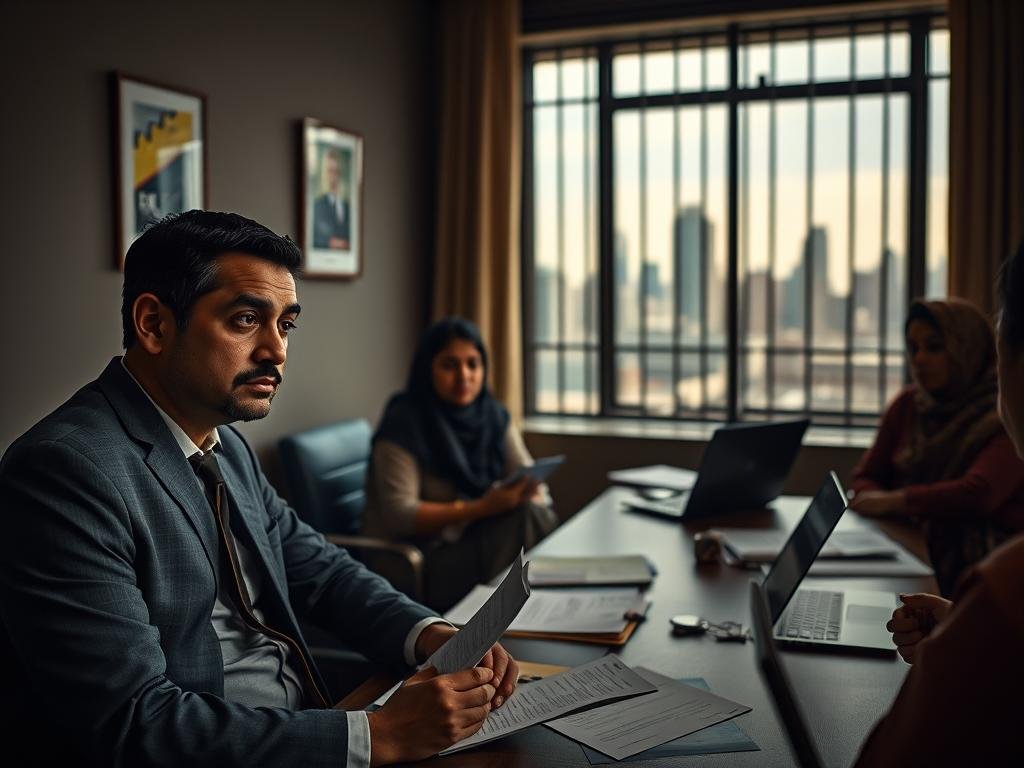
At the edge of the Everglades, life inside the tents is harsh. Detainees, lawyers, and activists share stories of denied counsel, disputed deportations, and tough routines. These stories highlight the importance of due process and fair treatment in custody.
Allegations of wrongful deportation and delayed attorney contact
Lawyers say a wrongful deportation happened due to missed calls and limited phone access. One lawyer waited three weeks to reach a client. Advocates see this as a fight for the right to counsel, a core civil rights issue.
Homeland Security officials deny these claims, saying they follow federal rules. This disagreement raises questions about intake logs, call schedules, and Civil Right protections in remote sites.
Mental disability and consent concerns around voluntary departure forms
A man with a mental disability was pushed to sign a voluntary departure form without legal advice. This raises concerns about informed consent and the need for proper evaluations. It mirrors past debates on capacity, understanding, and the role of counsel.
Civil rights activists see this as a test of basic rights in detention. They question if screenings, translations, and time to consult an attorney are enough for a valid choice.
Life in tents: water, sanitation, and safety challenges day-to-day
Detainees face extreme heat, cold, and mosquito swarms. They deal with spoiled food, flooded floors, and limited privacy. These conditions raise questions about hygiene, sleep, and safety under Civil Right principles.
Surveillance above toilets and punitive “box” confinement also draw attention. While DHS says standards are met, the contrast highlights the importance of lived experience and the rules that govern it.
Context and Controversies: What Is Alcatraz Used for Now and the “Alligator” Moniker
The nickname combines two strong images. It links the Everglades with alcatraz, a place of isolation. It also references Florida’s swamp wildlife, the alligator. People searching for aligator florida often find this, wondering about the comparison in detention debates tied to Civil Right concerns.
Explaining the nickname: alligator alcatraz vs. historic Alcatraz Island
The Everglades facility is hard to reach, making it feel isolated. That’s why it’s called “alligator alcatraz.” It brings to mind images of fences, marsh, and distance, like an alligator landscape. It also references alcatraz, known for its rock, cells, and few visitors.
The nickname highlights isolation more than law. It captures the essence of the old prison without its purpose or rules. People mixing aligator florida with detention news use it to compare geography, control, and public reach.
What is Alcatraz used for now: tourism, history, and civil rights memory
Historic alcatraz no longer holds inmates. Now, it offers guided tours and exhibits by the National Park Service. Ferries bring visitors to see cells, guard towers, and artifacts.
Exhibits explore prison policy and protest, linking to Civil Right memory and American incarceration. Audio features include historic voices and ranger talks that place events in time.
Search intent alignment: aligator florida, arthur jones, alligator
People search for mixed terms—aligator florida, alligator history, and prison questions. They seek clarity between two very different sites. Some also look up figures like arthur jones in public records or media.
They aim to understand the difference: a temporary detention build-out in wetlands versus a museum-like island. Clear terms help them connect policy, place, and the ongoing Civil Right narrative around custody and access.
Conclusion
The settlement marks the end of one chapter, but the story is far from over. The 5,000-bed tent site in the Everglades faced harsh criticism for its conditions. Judge Rodolfo Ruiz’s decisions on venue and mootness have narrowed the fight.
Yet, claims of mistreatment are not forgotten. Amnesty International found evidence of torture and enforced disappearances. This contradicts the Department of Homeland Security’s claims of meeting standards.
Corporate involvement adds to the concerns. Companies like IRG Global Emergency Management and GardaWorld operated under emergency orders. The Miccosukee Tribe supported environmental challenges, while the ACLU fought for due process. An Eleventh Circuit stay has paused a closure order, changing the timeline.
This mix of speed, power, and appeals highlights how policy can outpace safeguards. The future will show if real change happens. Florida’s expansion of state-run detention is a test of transparency and humane care.
The settlement’s success will depend on detainee safety, legal access, and regular monitoring. These goals reflect the Civil Right tradition. They focus on due process, dignity, and fairness within the system.
The debate also draws parallels with the civil rights movement. It challenges civil rights leaders, community groups, and agencies to measure progress by facts. If steps are taken to reduce harm and ensure legal access, the case could mark a shift. If not, it will serve as a warning about emergency powers and the cost of neglecting liberty.
Be the first to comment