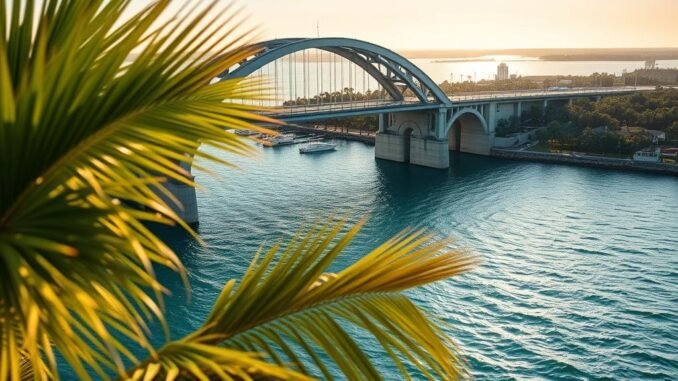

Every year, over 3 million people cross the Destin Bridge. But few know the story of William T. Marler, the boatbuilder. He made over 100 boats by hand. Now, his name is on the Marler Bridge over East Pass on the Emerald Coast.
William T. Marler was not famous. He was the undertaker, coffin maker, and postmaster for 46 years. He also ran a store, held church services, and helped families during storms. The Marler bridge honors his quiet work in the fishing town.
Destin’s story started long before it became a city. Captain Leonard Destin moved from New London to Moreno Point in the early 1850s. His work in the Gulf helped build a village tied to the sea. William T. Marler was a key figure, helping families and connecting the community.
Today, the Marler Bridge links Destin to Okaloosa Island. It’s a steel bridge that connects past and present. It reminds us of Destin’s humble beginnings as a working harbor. This story celebrates William T. Marler and the bridge that bears his name.
Origins of Destin and the people who shaped it
Destin’s story began with the sea, where craft, courage, and water merged. Before the resort towers, the coast was a working place. Families followed the tides, and the Gulf’s narrow doorway set the community’s rhythm.
From American Indian heritage to a fishing village
The American Indian heritage of Destin started with people who read the bay by wind and shell. They used the shoals as guides and harvested seasonal runs. This knowledge was passed on to settlers, who learned the same waters and hazards tied to East Pass history.
By the 1800s, nets and skiffs gathered at the shore. Smokehouses and sheds rose near the calm side of the bay. The work was steady and direct, laying the foundation for Destin’s fishing village history.
Captain Leonard Destin’s arrival and early gulf fishing
Leonard Destin, born in New London in 1813, brought blue-water skill to the wild coast. By the mid-1830s, he was ranging the Gulf, reading tides and bar cuts. He settled at Moreno Point by 1851 with Martha McCullom, choosing a home beside the only deep outlet nearby.
His crews worked the East Pass history in real time, hauling mullet and mackerel through a shifting channel. The catch fed families and markets, establishing proven routes that later made marler bridge significance part of daily travel and trade.
Moreno Point’s growth and the beginnings of a community
As boats clustered at Moreno Point, scattered fish camps turned into streets and shared chores. Sawmills, net menders, and bay pilots built a local economy from tide to table. The rhythms of launch, land, and cure drew neighbors together.
Early needs demanded leaders who could do many jobs at once. Pioneers like William T. “Captain Billy” Marler added services and structure. These steps, rooted in Destin’s origins and East Pass history, later gave context to marler bridge significance across a growing community.
| Era | People and Practices | Waterway Focus | Impact on Community |
|---|---|---|---|
| Pre-19th Century | American Indian heritage Destin, seasonal harvests, shoreline navigation | Choctawhatchee Bay shoals and coastal dunes | Knowledge of tides and passes shaped safe routes |
| 1830s–1850s | Leonard Destin’s Gulf fishing, family settlement at Moreno Point | East Pass history as the lifeline to open water | Regular catches supported trade and steady habitation |
| Late 19th Century | Rise of net sheds, smokehouses, and boat crews | Channel soundings and weather-wise departures | Destin fishing village history took firm root |
| Early 20th Century | Community services expanded by local pioneers | Reliable crossings that later linked to marler bridge significance | Infrastructure prepared the harbor for broader growth |
William T. “Captain Billy” Marler: the patriarch of Destin
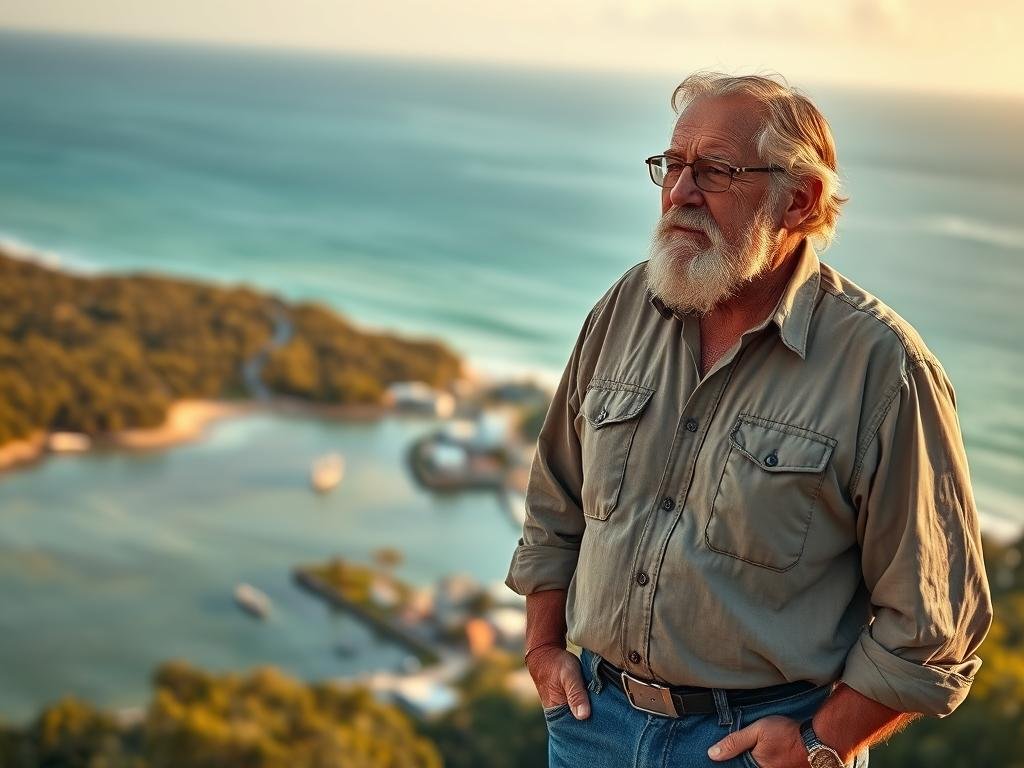
William T. Marler came with a steady hand and a gift for service. Neighbors called him Captain Billy Marler, a name earned on shore and at sea. His home was a key spot for work, worship, and the village’s rhythm. Today, stories and landmarks remember his daily contributions.
From Boggy (Niceville) to Moreno Point: a teen apprentice to Leonard Destin
As a teenager in the early 1880s, he moved from Boggy—now Niceville—to Moreno Point. There, he worked under Leonard Destin. He brought his family to the shore, linking them to his job. This apprenticeship taught him about the sea and its ways.
Undertaker, coffin maker, and community caretaker
With no undertaker in town, he made coffins and led burials from 1884 until 1960. This task was serious, but he always helped neighbors. Today, many Marlers rest at Marler Memorial Cemetery, showing his long-lasting care.
Postmaster, storekeeper, and church host: Destin’s early civic backbone
Destin postmaster history starts in his home, where he ran the mail for 46 years. His front room was also a store and a church on Sundays. His daughter Nellie later took over the post, showing the family’s lasting impact.
Boatbuilding legacy and leadership on the water
Destin boatbuilding thrived under his hands. Captain Billy Marler built over 100 boats, each designed for local waters. These boats supported families and a charter trade, and now, landmarks like the marler bridge honor his life’s work.
How Destin got its name
Locals often wonder how Destin got its name. The answer is right along East Pass Destin. The village grew around Moreno Point, where the Destin family worked hard.
Short reads like the complete history of Captain Leonard Destin tell us how it started. A small camp became a community. Boats filled the harbor, creating a shared identity.
Village identity and the Destin family’s influence
Captain Leonard Destin was known for his Gulf skills. His family and partners kept the nets in good shape. They taught others the channels and led the runs through East Pass Destin.
This steady presence shaped Destin village identity. The docks and homes along the Gulf spoke with one name. This daily rhythm guided outsiders and new settlers to call it home.
The turn-of-the-century adoption of the name “Destin”
By the late 1800s, the mail, store, and fleet all shared the same shoreline. People started using “Destin” in everyday talk. This choice reflected reality, not just formality.
Many stories say Leonard chose the name. But records and local talk suggest it was a community choice. This grassroots naming, rooted in Destin family history, explains the marler bridge’s significance later on.
East Pass and the lifeline to the Gulf
East Pass Destin was the only practical route to deep water for years. It supplied icehouses, filled skiffs, and kept skippers close to their familiar shoals.
Because the pass supported the fleet, it also supported the name. Waterways, families, and work came together. This turned maritime routine into a lasting identity for Destin village.
Marler Memorial Cemetery and the pioneers of the East Pass
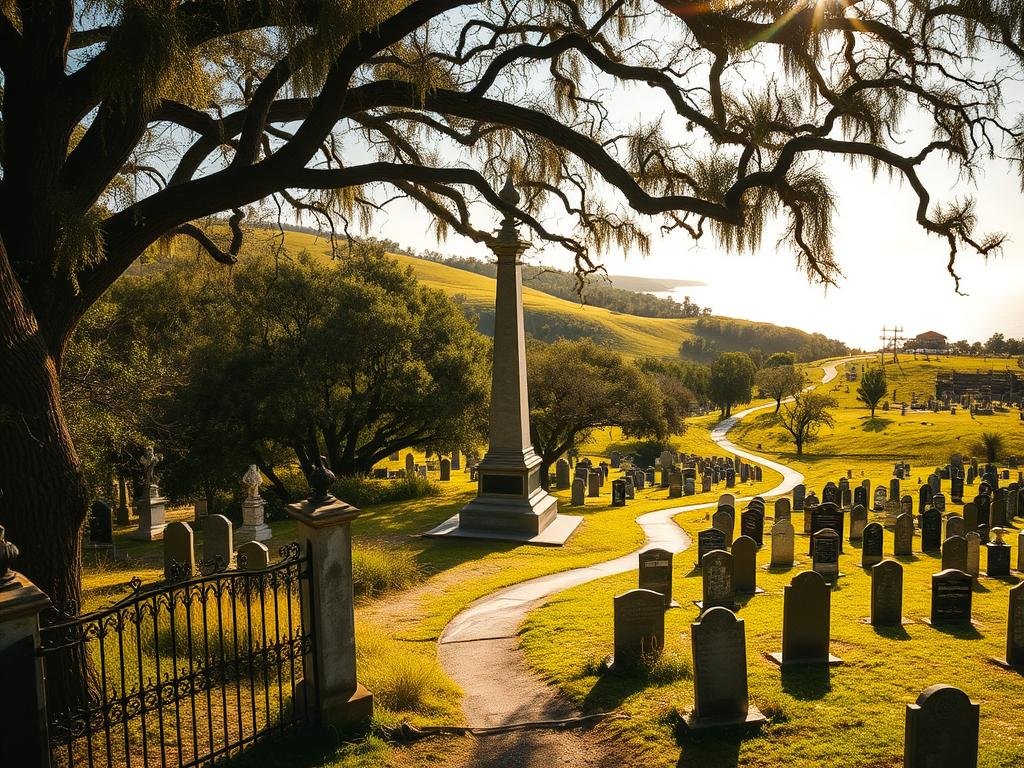
Marler Memorial Cemetery tells the story of a fishing village born at the water’s edge. It is near the First Presbyterian Church of Destin. Here, visitors meet Destin pioneers who worked the Gulf and kept faith with the tides.
First burials: Willie (1868) and Gaines Destin (1873)
The first graves are from the home of Leonard and Martha Destin. Their son Willie, age 10, was buried on August 1, 1868. His brother Gaines followed in 1873. These early markers guide Destin East Pass pioneers who came after.
Today, the grounds list hundreds of memorials. Visitors can park across the way. Each stone adds to Destin history, where the Gulf’s wind moves through the pines and across the sand.
Why the cemetery bears the Marler name
The cemetery bears the Marler name because William “Captain Billy” Marler served as undertaker and coffin maker from 1884 to 1960. He arrived from Boggy—now Niceville—in the early 1880s to work with Leonard Destin. He tended the dead with the same care he gave to boats and mail. More than 60 Marlers rest within these gates, a testament to steady service and marler bridge heritage.
For a deeper look at the site’s timeline and the people remembered here, see the account at Marler Memorial Cemetery, which traces the ground from its first burials to the present.
Capt. Billy and Camella: “Patriarch” and “Matriarch” of Destin
His marker reads “Patriarch of Destin,” a nod to decades of care for neighbors and crews. Nearby lies his second wife, Camella Catherine Brooks Marler, the “Matriarch of Destin,” who lived to 92. Together, their resting place honors the rhythm of nets, tides, and homes built along the pass.
Their names help visitors read cemetery Destin history at human scale. Everyday duties—mail runs, boat carpentry, and burials—built the bones of a town. They fed marler bridge heritage that spans the water today.
Glen Marler’s voice for keeping Destin a fishing town
Glen Marler, a grand-nephew of Capt. Billy, carried that voice forward. Born in 1924, he worked and lived on these shores. He urged leaders to guard the charter fleet.
In public debate during the 1980s, he called for rules that kept working boats at the docks. He protected a way of life. His grave by the East Pass lineage reminds visitors that Destin East Pass pioneers did more than fish—they spoke up for the harbor.
| Figure | Role in Destin | Dates | Connection to the Cemetery | Heritage Theme |
|---|---|---|---|---|
| Willie Destin | Child of Leonard and Martha Destin | Died 1868 | First recorded burial | Origins of cemetery Destin history |
| Gaines Destin | Child of Leonard and Martha Destin | Died 1873 | Second recorded burial | Destin East Pass pioneers |
| William “Captain Billy” Marler | Undertaker, coffin maker, civic leader | Service 1884–1960 | Oversaw burials; family plot on site | Marler Memorial Cemetery identity, marler bridge heritage |
| Camella Catherine Brooks Marler | Community matriarch | Died 1979 | Buried beside Capt. Billy | Family continuity among Destin pioneers |
| Glen Marler | Advocate for charter fleet | 1924–2012 | Buried on the grounds | Guarding working-waterfront traditions |
Marler bridge history and the story behind the name
The Marler bridge is more than a road. It’s a bridge of memories. It connects the community to a rich history of service and a bustling waterfront.
Honoring Capt. Billy’s lifetime of service to Destin
William T. “Captain Billy” Marler was a key figure in Destin. He was the postmaster, undertaker, and storekeeper. He also built boats and welcomed worship in his home.
The bridge is named after him. It honors his dedication to the community. It links the past to the present, showing the town’s growth.
Connecting Destin to Okaloosa Island across East Pass
The bridge carries US 98 from Destin to Okaloosa Island. Before it was built, crossing was a challenge. Now, it’s safe and easy.
Every day, the bridge is filled with activity. Fishermen, families, and visitors use it. It connects the harbor, shore, and Gulf.
From sleepy village to Emerald Coast destination
Destin used to be a quiet place. But as the Emerald Coast grew, so did the bridge. It supported the town’s growth, keeping its charm.
The bridge is a symbol of Destin’s history. It shows how the town evolved. It connects today’s vibrant waterfront to its humble beginnings.
Marler bridge location and travel essentials
The marler bridge is right in the heart of Destin. It’s close to the beach, harbor, and places for family fun. This makes it a great spot to start your day in Destin.
US 98 crossing over East Pass in Destin, Florida
The US 98 Destin bridge connects Destin to Okaloosa Island. It offers easy access to Gulf beaches and the harbor. This makes it easy to find fuel, food, and parking.
Access to beaches, charter boats, and waterfront attractions
Destin’s waterfront is right there when you cross the bridge. You’ll find public beaches, seafood places, and fun spots like mini golf. The harbor is close to the charter boats, where you can see the town’s lively waterfront.
Tips for visitors exploring Destin’s historic core
Try to cross the bridge during less busy times. Park near the harbor and walk to the docks, restaurants, and views. A visit to Marler Memorial Cemetery adds history before exploring the harbor.
Pro tip: Plan your day in loops. Start with the beach at sunrise, then the harbor in the morning. End with a sunset drive over the marler bridge for the best views.
Marler bridge design, engineering, and architecture
The span over East Pass is where tide, wind, and traffic meet. Its design focuses on strength and clear views without being too big. The bridge’s architecture uses strong materials and simple shapes for safety and ease of use.
Local crews know the water shifts daily. That’s why the bridge’s engineering is key. It balances deck height, pier spacing, and fenders for smooth traffic flow and safe navigation, even in strong currents.
Function-first coastal span over a dynamic pass
This coastal span in Destin faces salt spray, storms, and heavy summer traffic. Its design deflects wind and limits drag. It also drains water quickly and uses materials that resist corrosion.
Deep foundations anchor the bridge in shifting sands. This engineering ensures the bridge stays steady with each tide.
Navigational clearance for fishing and charter fleets
Destin bridge navigation is key for captains of commercial fishing boats and charters. The bridge’s arching design gives enough room for boats’ equipment. This makes navigation easier and safer.
The bridge’s alignment and lighting help boats navigate. Its fender systems protect boats and piers, keeping the area open during busy times.
How bridge engineering supports tourism and local commerce
The bridge’s design keeps US 98 open to marinas, restaurants, and beaches. This access boosts bookings for charters, hotels, and events, supporting the local economy.
Every detail, from lane width to barrier placement, shows the bridge’s focus on people. It balances the needs of the road and the water, serving both well.
Marler bridge facts and local significance
The bridge is more than just a path for cars. It holds memories, work, and a sense of place. These facts show why the name Marler is important. It marks the bridge as a trusted gateway to the Emerald Coast.
A naming that reflects community roots and service
The bridge is named after William T. “Captain Billy” Marler (1866–1960). He was Destin’s first postmaster for 46 years. He also ran a store, hosted church meetings, and built over 100 boats. This is why locals wanted the state to honor him.
Generations visit Marler Memorial Cemetery, where early Destin residents are buried. Willie Destin and Gaines Destin were the first to rest there. More than 60 Marlers, including Capt. Billy and Camella, are buried there. This shows the bridge’s connection to real lives and service.
A gateway for millions visiting the Emerald Coast
The bridge carries US 98 over East Pass, connecting Destin to Okaloosa Island. It’s a key entry point for beachgoers, crews, and supplies. Destin attracts a large share of the region’s visitors, making the bridge vital for travel and trade.
The bridge supports the harbor, charter docks, and waterfront businesses. It’s seen as a road and a lifeline by locals.
Details that tie the bridge to Destin’s fishing heritage
The channel under the bridge allows charter boats to pass. In 1986, Glen Marler fought to keep Destin a fishing town. This history is reflected in the bridge’s design, favoring working boats.
The bridge links old village streets to modern resorts. It connects bait shops, boatyards, and the harbor with new hotels and restaurants. These facts show the bridge’s importance for work, tourism, and memory.
| Aspect | Key Data | Local Meaning | Relevance |
|---|---|---|---|
| Namesake | William T. “Captain Billy” Marler, postmaster 46 years, boatbuilder 100+ boats | Embeds service and craft in daily travel | Core marler bridge facts that anchor identity |
| Route | US 98 over East Pass | Links Destin and Okaloosa Island | Defines Emerald Coast gateway status |
| Tourism Flow | Destin draws a majority share of 4.5M regional visitors | High year-round traffic | Underscores marler bridge significance for access |
| Heritage Sites | Marler Memorial Cemetery with early Destin burials | Real family ties to the bridge name | Authentic Destin Bridge facts for context |
| Working Waterway | Clearance supports charter fleet operations | Keeps fishing at the heart of the harbor | Practical marler bridge details for commerce |
Conclusion
The Marler Bridge is more than just a bridge on US 98. It’s a piece of Destin’s history. From Leonard Destin’s first fishing trip to today’s bustling harbor, it shows the passage of time. It’s named after William T. “Captain Billy” Marler and the families who made this area a working waterfront.
Captain Billy was a jack-of-all-trades, from undertaker to boatbuilder. His work is remembered at Marler Memorial Cemetery. Here, early settlers like Willie Destin and Gaines Destin are buried, along with over 60 Marlers. This place keeps alive the story of Destin’s fishing history and the community’s spirit.
Now, the bridge is a key route for those visiting the Emerald Coast. It leads to beaches, docks, and a growing maritime economy. It ensures the safety of local fleets and keeps the town connected. The bridge is a symbol of progress and respect for the past.
The marler bridge is a bridge and a tribute. It carries millions of people while sharing a story of concrete and steel. It connects a lively resort town to its rich history, keeping Destin’s fishing heritage alive for all who travel across East Pass Destin.
Be the first to comment